What Is Corruption? Understanding Its Definition, Causes, Impacts, and Prevention
Gusti Ayu Tita P
22 September 2026
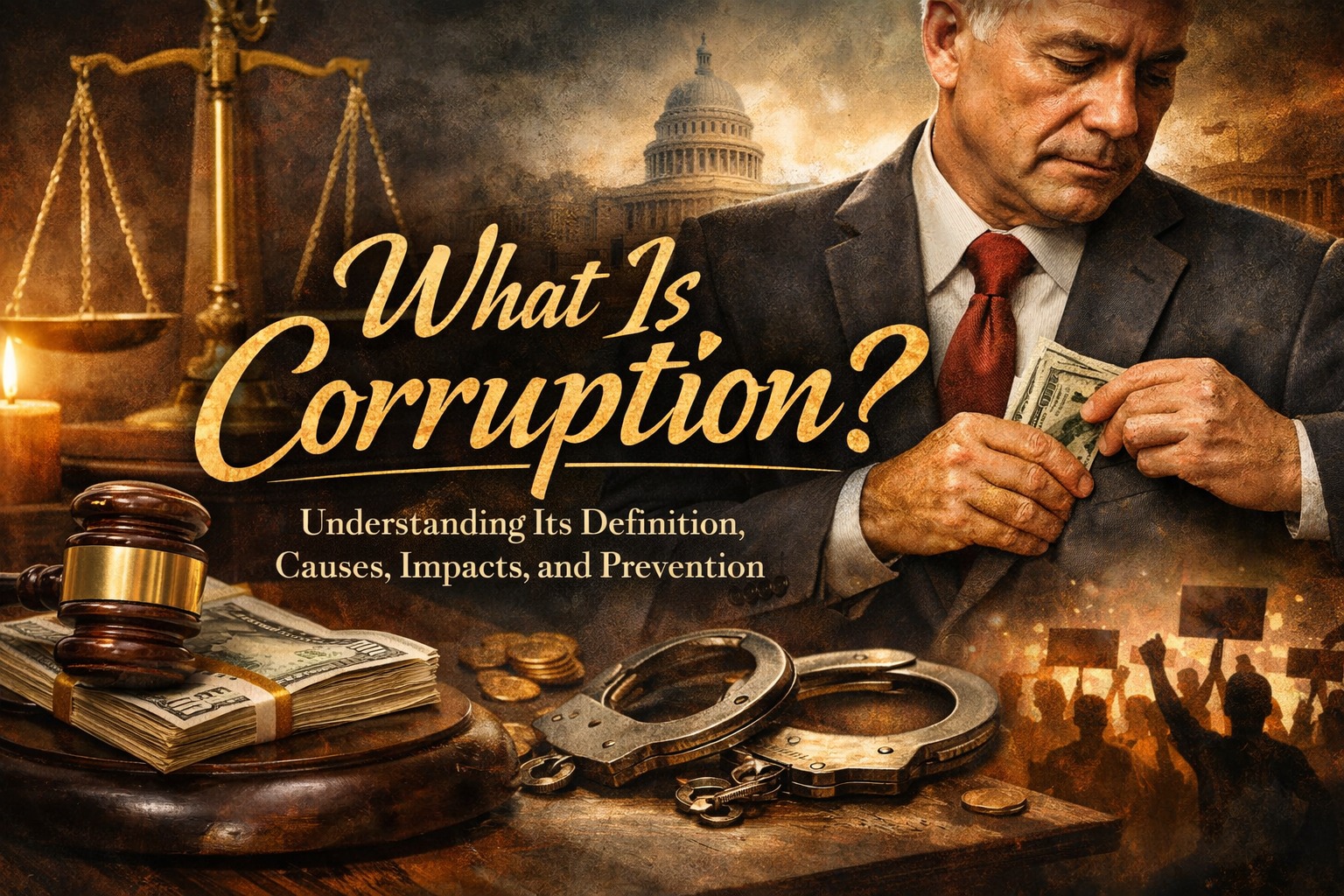
Corruption is one of the most significant challenges affecting governments, businesses, and societies worldwide. It weakens economic growth, damages public trust, reduces the quality of public services, and creates unfair opportunities for individuals who misuse their power. Whether it occurs in politics, business, education, or healthcare, corruption prevents resources from being distributed fairly and limits social progress.
Understanding what corruption is, why it happens, its consequences, and the best ways to prevent it is essential for building transparent institutions and promoting sustainable development. By recognizing the warning signs and encouraging accountability, individuals and organizations can contribute to reducing corrupt practices.
WHAT IS CORRUPTION?
Corruption refers to the abuse of entrusted power for personal gain. It occurs when individuals or organizations misuse their authority to obtain money, influence, privileges, or other benefits in ways that violate laws, regulations, or ethical standards. Corruption can take many forms, including bribery, embezzlement, fraud, favoritism, nepotism, and abuse of authority.
Corruption is not limited to government institutions. It can also occur in private companies, educational institutions, healthcare systems, and nonprofit organizations. Regardless of where it happens, corruption undermines fair competition, weakens public confidence, and creates inequality by giving unfair advantages to certain individuals or groups.
COMMON CAUSES OF CORRUPTION
Several factors contribute to the growth of corruption. One major cause is the lack of transparency in decision-making processes. When financial transactions, government spending, or procurement activities are hidden from public scrutiny, opportunities for corruption increase significantly. Weak law enforcement and ineffective oversight also allow corrupt individuals to avoid punishment.
Another important factor is poor governance, combined with low ethical standards and inadequate salaries in some sectors. In environments where accountability is weak, individuals may be tempted to misuse their authority for personal benefit. Additionally, excessive bureaucracy, political interference, and cultural acceptance of unethical behavior can create conditions that encourage corrupt practices.
THE IMPACTS OF CORRUPTION ON SOCIETY
The effects of corruption extend far beyond financial losses. Economically, corruption discourages domestic and foreign investment because businesses prefer operating in transparent and predictable environments. It also increases project costs, reduces government revenue, and slows overall economic development.
Socially, corruption widens the gap between the rich and the poor by limiting equal access to education, healthcare, employment, and public services. It weakens trust in public institutions, reduces citizen participation, and creates frustration among communities. Over time, corruption can damage democratic values and hinder long-term national development.
TYPES OF CORRUPTION
There are several common forms of corruption found around the world. Bribery involves offering or accepting money, gifts, or favors in exchange for special treatment. Embezzlement occurs when individuals steal or misuse funds entrusted to them, while fraud involves intentional deception for financial or personal gain.
Other forms include nepotism, where family members receive unfair advantages, and favoritism, where personal relationships influence decisions instead of qualifications or merit. Abuse of authority, extortion, and conflicts of interest are also recognized as serious forms of corruption that negatively affect organizations and governments.
EFFECTIVE WAYS TO PREVENT CORRUPTION
Preventing corruption requires cooperation between governments, businesses, civil society, and individuals. One of the most effective strategies is improving transparency through open financial reporting, public access to information, and digital governance systems. Strong auditing processes and independent oversight institutions also help identify and prevent corrupt activities.
Education plays an equally important role in preventing corruption. Teaching ethical values, integrity, and accountability from an early age encourages responsible behavior throughout society. Organizations should also establish clear codes of conduct, provide whistleblower protection, and enforce strict penalties for individuals who engage in corrupt practices.
THE ROLE OF INDIVIDUALS IN FIGHTING CORRUPTION
Every individual has a responsibility to help reduce corruption. People can refuse to participate in bribery, report suspicious activities, support transparent organizations, and promote honesty in their daily lives. Even small actions that prioritize fairness and integrity contribute to building stronger communities.
Citizens can also encourage accountability by participating in elections, monitoring public policies, and supporting independent media that investigate corruption cases. When people actively demand transparency and ethical leadership, governments and institutions become more accountable to the public.
CONCLUSION
Corruption is a serious issue that affects economic growth, social equality, public trust, and institutional effectiveness. Understanding its definition, recognizing its causes, identifying its impacts, and implementing effective prevention strategies are essential steps toward creating a fairer society. While eliminating corruption completely may be difficult, consistent efforts through transparency, accountability, strong law enforcement, and ethical education can significantly reduce its occurrence and strengthen sustainable development.
Tentang Penulis
Gusti Ayu Tita P
Penulis — Universitas STEKOM
Penulis aktif yang berfokus pada isu-isu akademik, teknologi pendidikan, dan pengembangan sumber daya manusia di lingkungan kampus.