What Is KUA and What Are Its Functions?
Gusti Ayu Tita P
19 September 2026
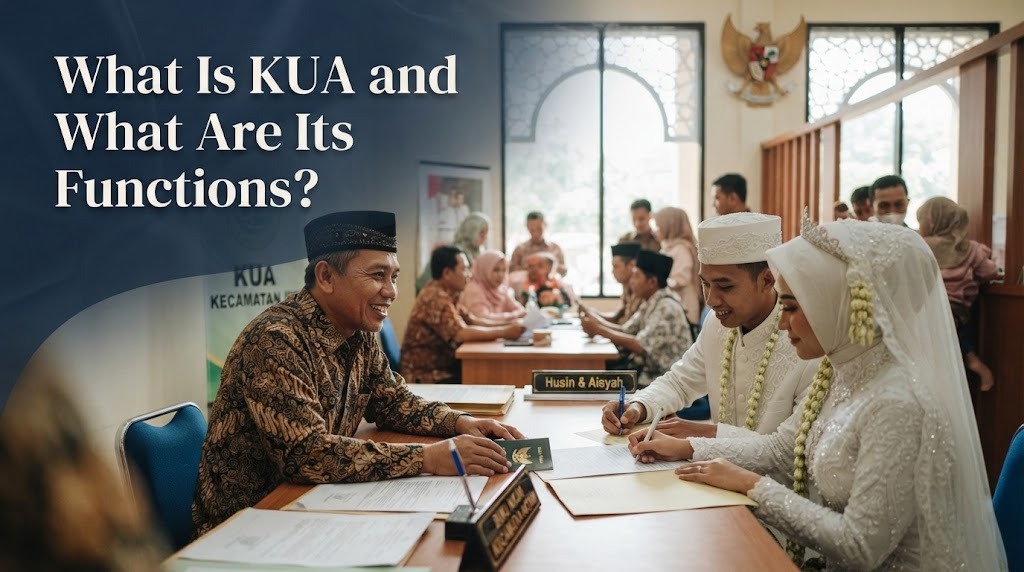
KUA stands for Kantor Urusan Agama, which means Office of Religious Affairs in Indonesia. It is a government service office under the Ministry of Religious Affairs that operates at the district or subdistrict level. KUA mainly provides Islamic religious services and helps people manage various religious and family matters. Although many people know KUA as a place for marriage registration, its functions are broader than marriage services.
KUA plays an important role in providing accessible religious services to the Muslim community. Its services can include marriage and reconciliation registration, marriage guidance, mosque affairs, religious counseling, and guidance related to zakat and waqf. The exact services available may vary depending on local needs and the regulations applied by each KUA.
WHAT IS KUA?
KUA is a government institution that provides religious affairs services for the Muslim community at the district level. It operates under the Ministry of Religious Affairs and serves as a local point for various Islamic religious administration and guidance services. One of its most recognized responsibilities is handling marriage registration for Muslims. Through this service, KUA helps ensure that marriages are properly recorded according to applicable regulations.
KUA also provides information and guidance related to religious and family matters. People can contact their local KUA to ask about available services, required documents, and administrative procedures. This makes KUA an important part of public religious services in Indonesia. Its role is not limited to marriage because it also supports wider religious activities in the community.
MARRIAGE AND RECONCILIATION SERVICES
Marriage and reconciliation are among the main services associated with KUA. Muslim couples can register their marriage through KUA according to the applicable requirements and procedures. KUA officers check the required documents and information before the marriage is officially recorded. After the marriage is completed and recorded, the couple receives an official Marriage Book as proof of marriage registration.
KUA can also provide services related to reconciliation after divorce in accordance with Islamic and administrative regulations. The registration process helps ensure that important family events are properly documented. Couples should prepare the required documents and register their marriage within the required period. Registration may be completed through the available KUA service system, including the SIMKAH system for marriage administration.
MARRIAGE GUIDANCE AND FAMILY SERVICES
Another important KUA function is providing marriage and family guidance. These services can help prospective couples understand their responsibilities before entering married life. Guidance may cover communication, family responsibilities, religious values, and preparation for household life. Such programs are intended to help couples build families that are harmonious and responsible.
KUA may also provide information or guidance for families facing various issues. The available programs can differ between regions based on local needs and government programs. People can ask their local KUA about marriage guidance schedules and registration procedures. Getting information before marriage can help couples prepare themselves more carefully for family life.
RELIGIOUS COUNSELING SERVICES
KUA also supports religious counseling for the Muslim community. Religious counselors can provide guidance on Islamic teachings and everyday religious matters. The topics may include worship, family life, social relationships, and other aspects of religious practice. These services provide a place for people to seek information and guidance from authorized religious service personnel.
Religious counseling can also support community education programs. KUA may work with religious counselors and community organizations to provide activities that are relevant to local needs. The goal is to make religious guidance easier for people to access. Through these services, KUA contributes to religious education and community development.
MOSQUE AND RELIGIOUS FACILITY SERVICES
KUA also has responsibilities related to mosque affairs. These services can include guidance and administration related to mosque management and religious activities. In certain areas, KUA may assist with administrative matters involving mosque identification and registration. Such services help support more organized management of mosques within the community.
Mosques have an important role beyond being places of worship. They can also serve as centers for education, social activities, and community development. KUA can provide guidance according to its authority and applicable regulations. The exact administrative services available can depend on the local KUA and the needs of the community.
ZAKAT AND WAQF GUIDANCE
KUA can provide guidance related to zakat and waqf as part of its broader religious affairs services. Zakat is an important form of Islamic charitable giving, while waqf involves dedicating assets for religious or social purposes. People may seek information from KUA about the procedures and requirements related to these matters. KUA can provide guidance within its authority and explain the administrative steps that may be required.
For waqf matters, for example, people may need information about documents, procedures, and the parties involved in the process. KUA can help explain the process and direct people to the appropriate institution when further action is required. This service shows that KUA has a broader role in supporting Islamic social and religious activities. It also helps communities understand religious administration more clearly.
RELIGIOUS INFORMATION AND COMMUNITY GUIDANCE
KUA also provides religious information and community guidance. People can ask about available religious services, administrative requirements, and relevant procedures. This information can help residents understand where to go and what documents they need to prepare. Accurate information is especially important for services involving official documents and legal administration.
KUA may also support religious education and community development activities. These activities can involve different groups, including young people, families, and local religious communities. The programs are generally adjusted to the needs of the local community. People should contact their local KUA for the latest information about specific programs and services.
HOW TO ACCESS KUA SERVICES
The first step to accessing KUA services is identifying the type of service needed. People should then contact the relevant KUA to confirm the requirements, documents, service schedule, and procedure. For marriage registration, some administrative processes can be supported by digital services such as SIMKAH. Other services may require people to visit the KUA office directly.
Preparing complete and accurate documents can make the process easier. Personal information such as names, identification numbers, dates of birth, and family information should be checked carefully. If someone has a special situation, such as a previous marriage or missing documents, it is better to ask KUA officers about the appropriate procedure. Requirements may differ depending on the service and individual circumstances.
WHY IS KUA IMPORTANT FOR THE COMMUNITY?
KUA is important because it provides religious and administrative services close to the community. Its role helps people manage important religious and family matters through an official government institution. Marriage registration is particularly important because it provides official documentation of a marriage. Other religious services also help communities access guidance and administrative support.
The existence of KUA makes religious services more accessible at the local level. Its activities can support families, mosques, religious education, and community development. KUA also helps connect local communities with the wider religious administration system of the Ministry of Religious Affairs. For this reason, understanding KUA functions can help people use the available services more effectively.
CONCLUSION
KUA or Kantor Urusan Agama is a local government religious affairs office under the Ministry of Religious Affairs in Indonesia. Although it is widely known for marriage registration, its functions also include marriage guidance, religious counseling, mosque affairs, and guidance related to zakat and waqf. KUA therefore has a broader role in supporting Islamic religious services and community needs.
The services and procedures may vary depending on the type of service and local implementation. People should contact their local KUA to confirm the latest requirements and procedures before submitting an application. By understanding its functions, the community can make better use of KUA services for marriage, family, religious, and administrative needs.
Tentang Penulis
Gusti Ayu Tita P
Penulis — Universitas STEKOM
Penulis aktif yang berfokus pada isu-isu akademik, teknologi pendidikan, dan pengembangan sumber daya manusia di lingkungan kampus.