What Is the Difference Between NISN and School Student Numbers?
Gusti Ayu Tita P
19 September 2026
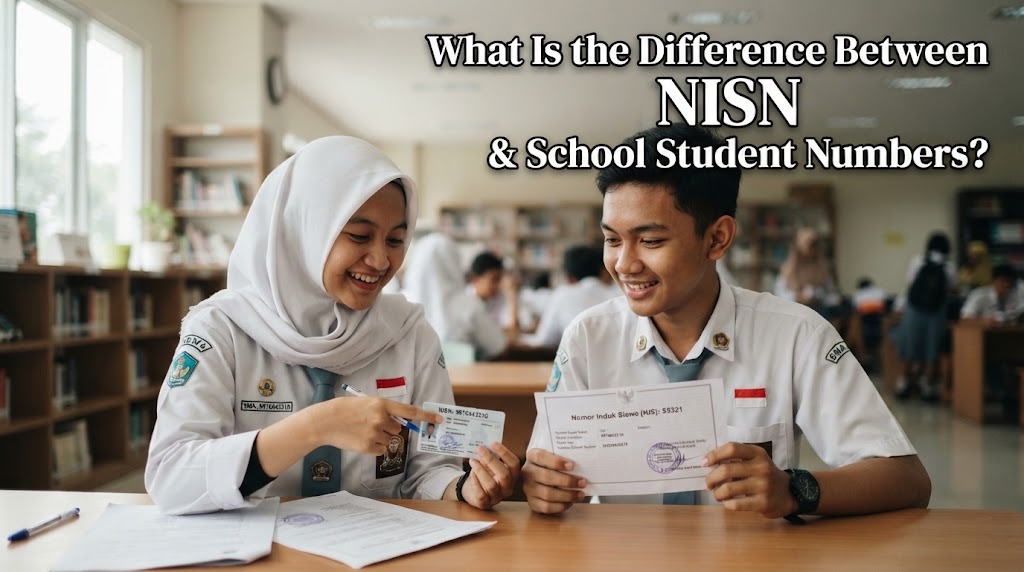
Students in Indonesia may have several identification numbers during their education. Two numbers that are often confused are the National Student Identification Number (NISN) and the school student number. Although both are used to identify students, they have different purposes and are managed in different contexts. Understanding the difference can help students provide the correct number when completing educational administration. It can also prevent confusion when students change schools or continue their education.
UNDERSTANDING NISN
NISN stands for National Student Identification Number. It is a unique identification number used to identify students within the Indonesian education system. NISN is associated with a student's education records and serves as a national reference for student identification. Students should keep their NISN information accurately because it can be relevant to various education administration processes.
The main purpose of NISN is to distinguish one student from another within the education data system. Students with similar names can still be identified through their unique NISN. This makes student records easier to organize and verify. Therefore, NISN has a broader identification role than a number created only for one school.
THE ROLE OF SCHOOL STUDENT NUMBERS
A school student number is an identification number assigned by an individual school. Schools may use their own numbering systems to organize students and manage internal administration. The number can be used for school-related activities, records, or other administrative purposes. Its use is generally connected to the particular educational institution that assigns it.
Because the school student number belongs to the school's internal system, it may be different from the NISN. A student who changes schools may receive a different school student number at the new institution. This does not necessarily mean that the student's NISN changes. Understanding this distinction helps students avoid using the wrong identification number.
KEY DIFFERENCES BETWEEN THE TWO NUMBERS
The main difference is the scope of identification. NISN functions as a national student identifier, while a school student number is used within the administration of a particular school. NISN is connected to national education records, whereas the school number is mainly related to the institution's own records. Both numbers can be useful, but they serve different administrative purposes.
Another difference is how the numbers are assigned and managed. NISN is part of the national education data system, while school student numbers are determined by individual educational institutions. Students should therefore check which number is requested when completing a form. Providing the correct information can make education administration more accurate and efficient.
WHEN STUDENTS MAY NEED NISN?
Students may need their NISN when completing certain education-related administrative processes. It can be used to identify a student and connect information with the appropriate education records. The exact requirements can vary depending on the program or administrative service. Students should follow the instructions provided by their school or the relevant education institution.
Students may also need to confirm their NISN when checking their education information. If the number cannot be found or the information appears incorrect, students should contact their school for verification. They should not assume that a school student number can replace an NISN. Each number should be used according to its intended purpose.
KEEPING BOTH NUMBERS ORGANIZED
Students should record their NISN and school student number separately. Keeping both numbers in a safe place can make it easier to complete school and education administration tasks. Students should also check the name and other personal information connected to their records. Accurate student data helps prevent confusion when identification information is requested.
Students should protect both numbers from unnecessary public exposure. They should provide the information only through appropriate educational channels when it is required. If students are unsure which number they need, they can ask their school administration for clarification. This simple habit can help reduce administrative errors.
CONCLUSION
NISN and school student numbers are both used for student identification, but they have different purposes. NISN serves as a national student identifier connected to the Indonesian education data system, while a school student number is used mainly for a school's internal administration. A school student number may change when a student moves to another school, while NISN is intended to provide consistent student identification. Students should understand the difference and use each number appropriately. Keeping both numbers accurate and secure can support smoother education administration.
Tentang Penulis
Gusti Ayu Tita P
Penulis — Universitas STEKOM
Penulis aktif yang berfokus pada isu-isu akademik, teknologi pendidikan, dan pengembangan sumber daya manusia di lingkungan kampus.