Who Can Become a Kaprogdi?
Gusti Ayu Tita P
19 September 2026
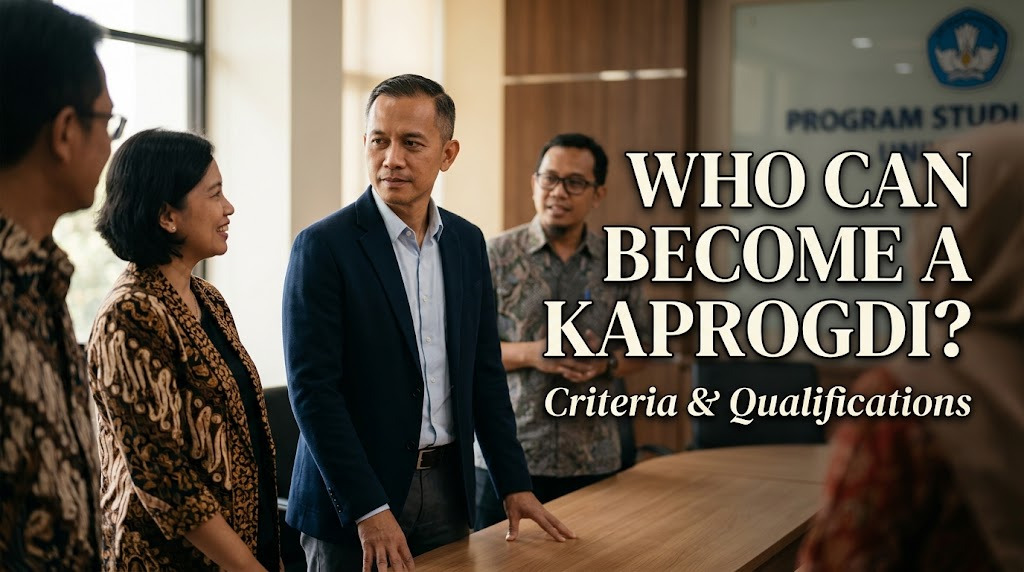
A Kaprogdi or Head of a Study Program is a position that generally involves managing and coordinating academic activities within a study program. Because the role has responsibilities related to academic management, coordination, and program development, it is generally entrusted to a lecturer who meets the requirements established by the university.
There is no single set of requirements that applies identically to every higher education institution. The criteria for becoming a Kaprogdi may depend on the university's regulations, organizational structure, academic field, and appointment procedures. Therefore, anyone interested in this position should refer to the official rules of the relevant university.
LECTURERS WITH RELEVANT ACADEMIC QUALIFICATIONS
A person who becomes a Kaprogdi is generally a lecturer with an academic background relevant to the study program being managed. Relevant qualifications can help the Kaprogdi understand the academic direction, curriculum, learning activities, and needs of the program. The specific educational requirements may differ depending on the university and study program.
Academic qualifications are important because a Head of a Study Program may be involved in discussions about curriculum, learning quality, academic activities, and program development. A strong understanding of the relevant field can support the Kaprogdi when coordinating with lecturers and other academic stakeholders. However, qualifications alone are not necessarily the only consideration in the appointment process.
LECTURERS WITH ACADEMIC AND PROFESSIONAL EXPERIENCE
A potential Kaprogdi may also be expected to have experience as a lecturer and understand the academic processes within higher education. Experience in teaching, academic activities, research, community service, or other activities can provide useful knowledge for managing a study program. The exact experience requirements depend on the regulations of the respective institution.
Experience can help a Kaprogdi understand the challenges faced by lecturers and students. It can also support communication and coordination when the study program needs to evaluate academic activities or plan improvements. For this reason, universities may consider academic experience when selecting candidates for the position.
PEOPLE WITH MANAGERIAL AND COMMUNICATION SKILLS
Managing a study program requires more than academic knowledge. A Kaprogdi needs managerial skills to organize activities, coordinate people, monitor implementation, and follow up on academic needs. Good communication skills are also important because the position requires regular interaction with lecturers, students, faculty administrators, and other university units.
A candidate for Kaprogdi may therefore need to demonstrate the ability to work collaboratively and handle academic coordination responsibly. The ability to listen to different perspectives can also be useful when identifying problems and discussing possible solutions. These skills can support the effective management of the study program.
MEETING THE UNIVERSITY'S APPOINTMENT REQUIREMENTS
The final consideration is whether a candidate meets the Kaprogdi requirements established by the university. Each institution may have its own rules concerning qualifications, academic position, experience, appointment procedures, term of office, and other criteria. Some universities may also establish additional requirements based on their internal organizational structure.
Because these rules can differ, prospective Kaprogdi candidates should check the applicable regulations of their university. Meeting the formal requirements does not necessarily mean that a person is automatically appointed, because the appointment process may involve institutional procedures and decisions by authorized officials.
CONCLUSION
A person who can become a Kaprogdi is generally a lecturer who has appropriate academic qualifications, relevant experience, and the managerial and communication skills needed to coordinate a study program. These abilities can help the Kaprogdi manage academic activities and support the development of the program.
However, the specific requirements to become a Kaprogdi vary between higher education institutions. Therefore, the most accurate reference is the official regulation and appointment mechanism of the university where the position is being considered.
Tentang Penulis
Gusti Ayu Tita P
Penulis — Universitas STEKOM
Penulis aktif yang berfokus pada isu-isu akademik, teknologi pendidikan, dan pengembangan sumber daya manusia di lingkungan kampus.