Why Can Volcanic Eruptions Cause Lahar Floods?
Gusti Ayu Tita P
19 September 2026
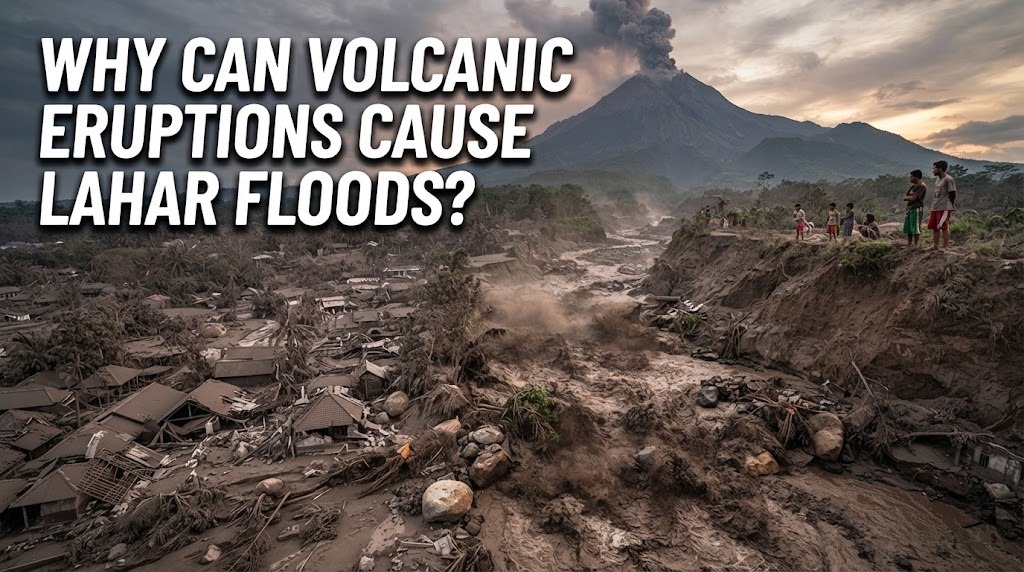
Volcanic eruptions can create several hazards, including lava flows, ashfall, volcanic gases, and lahars. A lahar is a fast-moving mixture of water and volcanic materials such as ash, rocks, and soil. It can flow down volcanic slopes and through river valleys, sometimes reaching areas far from the volcano. Lahars can occur during an eruption or even after the eruption has ended.
VOLCANIC MATERIALS BUILD UP ON THE SLOPES
During an eruption, large amounts of ash, rocks, and loose volcanic materials can accumulate on the slopes of a volcano. These materials may remain unstable because they are not firmly connected to the ground. Thick deposits can become especially dangerous when heavy rainfall occurs. The loose materials provide the sediment needed for a lahar to develop.
The risk can remain even after the main eruption has stopped. Volcanic deposits may stay on the mountain for months or years until they are removed by natural processes. Rainfall can trigger the movement of these materials downhill. This is why communities near volcanoes may remain at risk after an eruption.
HEAVY RAIN MIXES WITH VOLCANIC MATERIALS
One of the main causes of lahars is heavy rainfall. When intense rain falls on loose volcanic ash and rocks, the water can mix with these materials and create a thick flowing mixture. The mixture becomes heavier as it collects more sediment while moving downhill. Gravity then pulls the flow toward lower areas.
Lahars can move quickly and follow existing valleys and river channels. They may carry large rocks, mud, ash, and debris along their path. The speed and size of a lahar depend on factors such as the amount of water, available volcanic material, slope, and channel shape. This makes lahars difficult to stop once they begin moving.
RIVERS CAN BECOME LAHAR PATHWAYS
River channels around volcanoes can provide natural pathways for lahars. Volcanic materials deposited near streams can be picked up by flowing water during heavy rain. As the mixture moves downstream, it can increase in volume by collecting additional sediment. This allows a lahar to travel beyond the immediate volcanic area.
Communities located along rivers and valleys may therefore face significant risks. A lahar can damage bridges, roads, houses, farmland, and other infrastructure along its route. People should pay attention to warnings about rivers and valleys after volcanic eruptions. Avoiding river channels during heavy rainfall can reduce exposure to this hazard.
LAHARS CAN OCCUR AFTER AN ERUPTION
A common misunderstanding is that lahars only happen while a volcano is erupting. In reality, post eruption lahars can occur when rain remobilizes volcanic deposits left on the mountain. This means the danger may continue long after ashfall and other eruption activity have decreased. The risk can remain until loose volcanic materials are reduced or stabilized.
The timing and frequency of lahars depend on local conditions. Areas with heavy rainfall and large amounts of loose volcanic deposits may face greater risk. Monitoring rainfall and river conditions can help authorities identify potential hazards. Communities should continue following official warnings even after an eruption appears to be over.
LAHARS CAN DAMAGE COMMUNITIES
Lahars can have serious effects because they can carry heavy materials at high speeds. They may destroy roads, bridges, buildings, farmland, and public facilities in their path. Flood-like flows can also block transportation and disrupt daily activities. The impact depends on the size and route of the lahar.
People living near volcanic rivers should know their evacuation routes and safe areas. When authorities issue warnings, residents should move away from river valleys and other dangerous locations. Early evacuation is important because lahars can develop and move rapidly. Community preparedness can help reduce injuries and property losses.
CONCLUSION
Lahar floods can occur when water, especially heavy rainfall, mixes with loose volcanic materials left by an eruption. The mixture can flow rapidly down slopes and through river channels, carrying rocks, ash, mud, and debris. The risk can continue after an eruption has ended, particularly during periods of heavy rain. Understanding lahar hazards and following official warnings can help communities stay safer.
Tentang Penulis
Gusti Ayu Tita P
Penulis — Universitas STEKOM
Penulis aktif yang berfokus pada isu-isu akademik, teknologi pendidikan, dan pengembangan sumber daya manusia di lingkungan kampus.