Why Is a New SAR Team Important for Emergency Response?
Gusti Ayu Tita P
29 September 2026
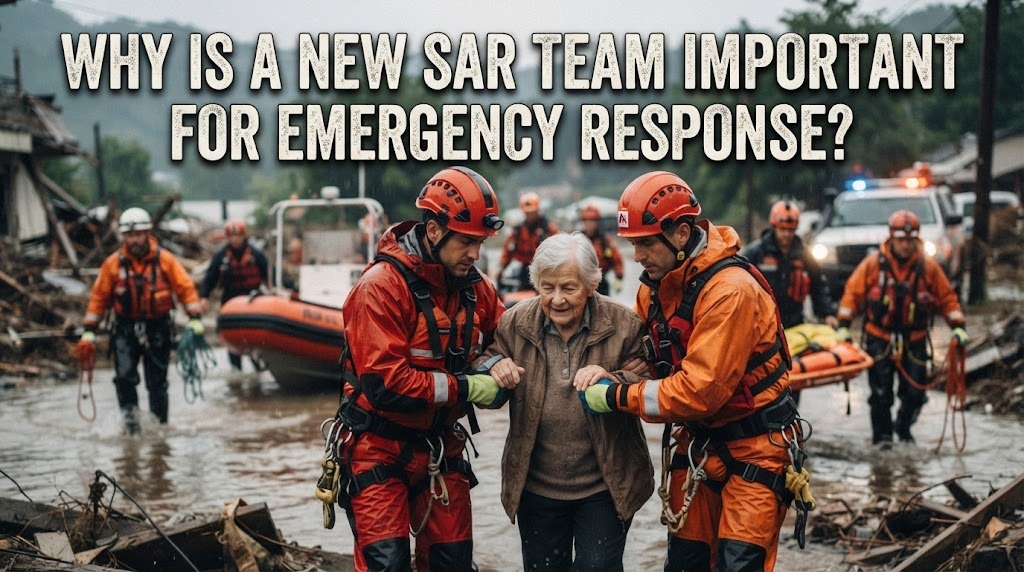
A new SAR team can play an important role in helping communities respond to emergencies. Search and rescue operations may be needed after natural disasters, accidents, missing-person cases, or other situations where people need immediate assistance. A trained team can help locate victims, provide initial assistance, and support evacuation. Its presence can also strengthen the overall capacity of emergency response in an area.
Building a new team is not simply about adding more rescuers. Team members need appropriate training, equipment, communication systems, and clear responsibilities before participating in real operations. When these elements are developed properly, a search and rescue team can work together with other emergency services more effectively. This preparation allows the team to contribute to emergency response while maintaining safety for both rescuers and victims.
PROVIDING ADDITIONAL RESCUE CAPACITY
Emergencies can involve many victims or cover a large geographical area, making additional rescue personnel important. A new SAR team can increase the number of trained people available to support search and rescue activities. More trained personnel can allow response organizations to divide tasks across different locations when operational conditions require it. This can be particularly useful during large-scale incidents.
However, additional personnel must be properly trained before being deployed. New members need to understand their roles, operational procedures, and safety responsibilities. Qualified rescue personnel can provide useful support without creating unnecessary risks for existing teams. Training and supervision are therefore essential when developing a new SAR unit.
SUPPORTING FASTER SEARCH AND RESCUE
Time can be an important factor during many emergency situations. A new SAR team can provide additional resources for search operations, allowing trained personnel to cover assigned areas and gather information more efficiently. Teams can use appropriate navigation methods, communication systems, and search procedures according to the situation. Their work can support efforts to identify the location of people who need assistance.
A faster response does not mean rescuers should ignore safety procedures. Before entering an area, teams need to consider hazards, terrain, weather, and available resources. Effective emergency response combines timely action with proper risk assessment. This approach helps rescuers avoid turning one emergency into additional incidents.
HELPING WITH EVACUATION AND VICTIM SUPPORT
Finding a victim is only one part of a rescue operation. SAR members may also assist with victim evacuation, basic first aid, transportation, and communication with medical personnel, depending on their training. These activities can be especially important when victims are located in difficult or remote areas. Properly trained rescuers can help move people toward safer locations while following established procedures.
New team members should understand their limitations when providing assistance. They should perform medical or technical tasks according to their level of training and authorization. Victim safety should remain a central consideration during every stage of an operation. Coordination with medical teams can also help ensure that victims receive appropriate further care.
STRENGTHENING COMMUNITY EMERGENCY RESPONSE
A new SAR team can become part of a wider emergency response system. Rescue teams may coordinate with government agencies, medical services, firefighters, police, disaster management organizations, and community groups. Each organization can have different responsibilities, so clear coordination helps reduce confusion during an emergency. A new team can contribute additional skills and resources within this larger system.
Community readiness can also benefit from SAR activities outside emergency operations. Depending on its responsibilities, a team may participate in preparedness exercises, safety education, or training activities. Emergency preparedness can help communities understand how to respond before a disaster or accident occurs. These activities can strengthen awareness and encourage people to follow appropriate safety procedures.
IMPROVING TEAMWORK AND COMMUNICATION
Emergency operations often involve several teams working at the same time. A new SAR team needs strong communication and teamwork skills to coordinate effectively with other responders. Members should know how to report information, follow operational instructions, and communicate changes in conditions. Clear information can help different teams understand what has already been done and what still needs attention.
Regular exercises can help new members develop these abilities before an actual emergency occurs. Training scenarios can simulate communication problems, changing weather, difficult terrain, or multiple rescue tasks. After each exercise, the team can review its performance and identify areas for improvement. Continuous evaluation can help build more reliable emergency response practices.
PREPARING FOR DIFFERENT TYPES OF EMERGENCIES
Emergency situations can vary considerably, so a new SAR team needs preparation that matches its operational environment. Possible missions may involve missing-person searches, floods, landslides, earthquakes, accidents, or other emergencies. Each situation can require different equipment, procedures, and technical skills. Training should therefore cover the types of incidents that the team is expected to handle.
Specialized rescue activities should only be performed by members with appropriate training. For example, water rescue, rope rescue, confined-space rescue, and urban search and rescue can involve specific hazards and procedures. Specialized SAR training helps members understand these risks and use appropriate techniques. This preparation allows the team to respond within its capabilities and request additional support when necessary.
CONCLUSION
A new SAR team can strengthen emergency response by adding trained personnel, supporting search activities, assisting victims, and improving coordination with other responders. Its effectiveness depends on more than simply having additional members. Training, equipment, communication, teamwork, and clear operational responsibilities are essential parts of a capable rescue team.
When a new team is developed through continuous training and realistic exercises, its members can become better prepared for different emergency situations. They can support existing response organizations while maintaining appropriate safety procedures. A well-prepared search and rescue team can therefore become a valuable part of a broader emergency response system.
Tentang Penulis
Gusti Ayu Tita P
Penulis — Universitas STEKOM
Penulis aktif yang berfokus pada isu-isu akademik, teknologi pendidikan, dan pengembangan sumber daya manusia di lingkungan kampus.