
A Gap Year as the Bridge to Understanding the Real World of Work
Gusti Ayu Tita P
1 April 2026
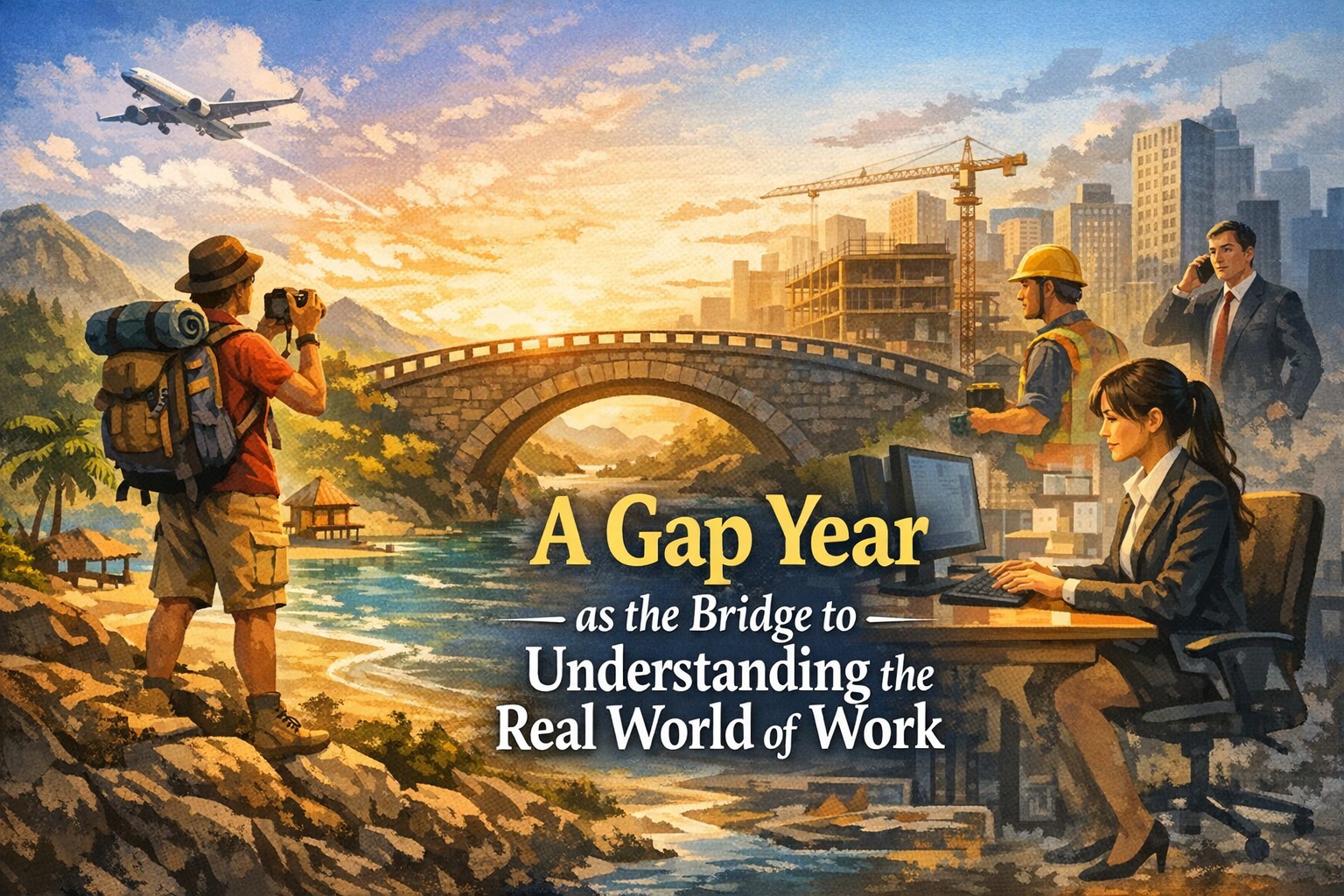
A gap year can serve as a bridge between formal education and the real world of work. During this period, students can gain practical experience through internships, part time jobs, volunteering, training, or personal projects. These activities allow them to experience responsibilities that are different from those found in a classroom. A well planned gap year can help students understand how workplaces operate while preparing them for future career challenges.
The transition from school to professional life can feel difficult when students have little practical experience. A gap year provides time to explore different work environments before making important decisions about education and careers. Students can discover their strengths, improve useful skills, and understand professional expectations. This experience can make their future choices more realistic and informed.
UNDERSTANDING THE PURPOSE OF A GAP YEAR
A gap year is not simply a period for taking a break from education. It can be used as a structured opportunity to learn through experiences outside the classroom. Students can set goals related to career exploration, skill development, personal growth, or work experience. A purposeful gap year can provide valuable lessons that support future education and employment.
Before starting a gap year, students should determine what they want to achieve. They can identify specific skills they want to develop or career fields they want to explore. Having clear objectives makes it easier to choose suitable activities and measure progress. Without proper planning, a gap year may become less productive and fail to provide meaningful benefits.
EXPERIENCING THE REAL WORLD OF WORK
One of the most valuable aspects of a gap year is direct exposure to the real world of work. Students can experience workplace schedules, deadlines, teamwork, communication, and professional responsibilities. They may also learn how organizations serve customers, manage projects, and solve problems. These experiences provide practical knowledge that cannot always be gained through academic lessons.
Even entry level work can teach important lessons about professional behavior. Students may learn the importance of punctuality, following instructions, meeting deadlines, and communicating respectfully. They can also observe how employees cooperate to achieve shared goals. Such experiences can help students develop a more realistic understanding of professional life.
BUILDING CONFIDENCE AND INDEPENDENCE
Starting a new work experience can be challenging for students who have never worked before. They may need to communicate with unfamiliar people, follow workplace procedures, and complete tasks independently. Overcoming these challenges can build confidence and independence. Each successful experience can make students more comfortable with unfamiliar situations.
Independence also develops when students take responsibility for finding opportunities and managing their own schedules. They learn to make decisions and solve problems instead of waiting for others to provide solutions. This can encourage greater maturity and initiative. These qualities can become valuable when students enter university or begin their careers.
CONNECTING EXPERIENCE WITH FUTURE EDUCATION
A gap year can influence decisions about future education. After experiencing a particular field, students may better understand which university major or training program matches their interests. For example, workplace experience in business may encourage a student to explore management, marketing, or entrepreneurship. Practical experience can therefore provide useful information when choosing an educational path.
Students can also identify the skills they need to strengthen before entering higher education. If their work experience reveals weaknesses in communication, technology, or organization, they can use their remaining time to improve those areas. This creates a clearer connection between work experience and future learning. Education decisions become more purposeful when students understand why certain skills are important.
MAKING A GAP YEAR PRODUCTIVE
A productive gap year requires more than simply staying busy. Students should choose activities that provide meaningful learning and support their personal goals. They can combine work with courses, volunteering, independent projects, or other activities that develop relevant skills. Clear goals and careful planning can help students make better use of their time.
Students should also document their experiences throughout the year. Work samples, certificates, project results, and records of responsibilities can later support a CV or portfolio. Regular reflection can help students identify what they have learned and what they still need to improve. These habits can turn a temporary experience into long term career preparation.
PREPARING FOR THE NEXT STEP
A gap year should have a clear direction toward the next stage of life. Students may choose to continue their education, pursue professional training, or enter the workforce. Preparing for this transition before the gap year ends can make the process easier. Future planning allows students to use their new knowledge and skills more effectively.
Students can research university programs, update their CV, organize certificates, and review their achievements. They can also evaluate whether their original career goals still match their interests after gaining real experience. Changing direction based on new knowledge can be a positive result of a gap year. What matters is finishing the experience with greater clarity and readiness.
CONCLUSION
A gap year can become a valuable bridge between classroom learning and the real world of work. Through internships, jobs, volunteering, training, and personal projects, students can develop practical skills and understand professional responsibilities. They can also explore different careers and discover which paths match their interests and abilities.
The value of a gap year depends on how intentionally it is used. Students who set clear goals, choose meaningful activities, reflect on their experiences, and prepare for their next step can gain lasting benefits. A well planned gap year can build confidence, independence, and workplace readiness. Ultimately, it can help students enter higher education or employment with a clearer career direction and stronger practical skills.
About the Author
Gusti Ayu Tita P
Author — STEKOM University
An active author focused on academic issues, educational technology, and human resource development in the campus environment.















