
Impact of the Indonesia–European Union Free Trade Agreement (IEU-CEPA)
Gusti Ayu Tita P
12 Juni 2025
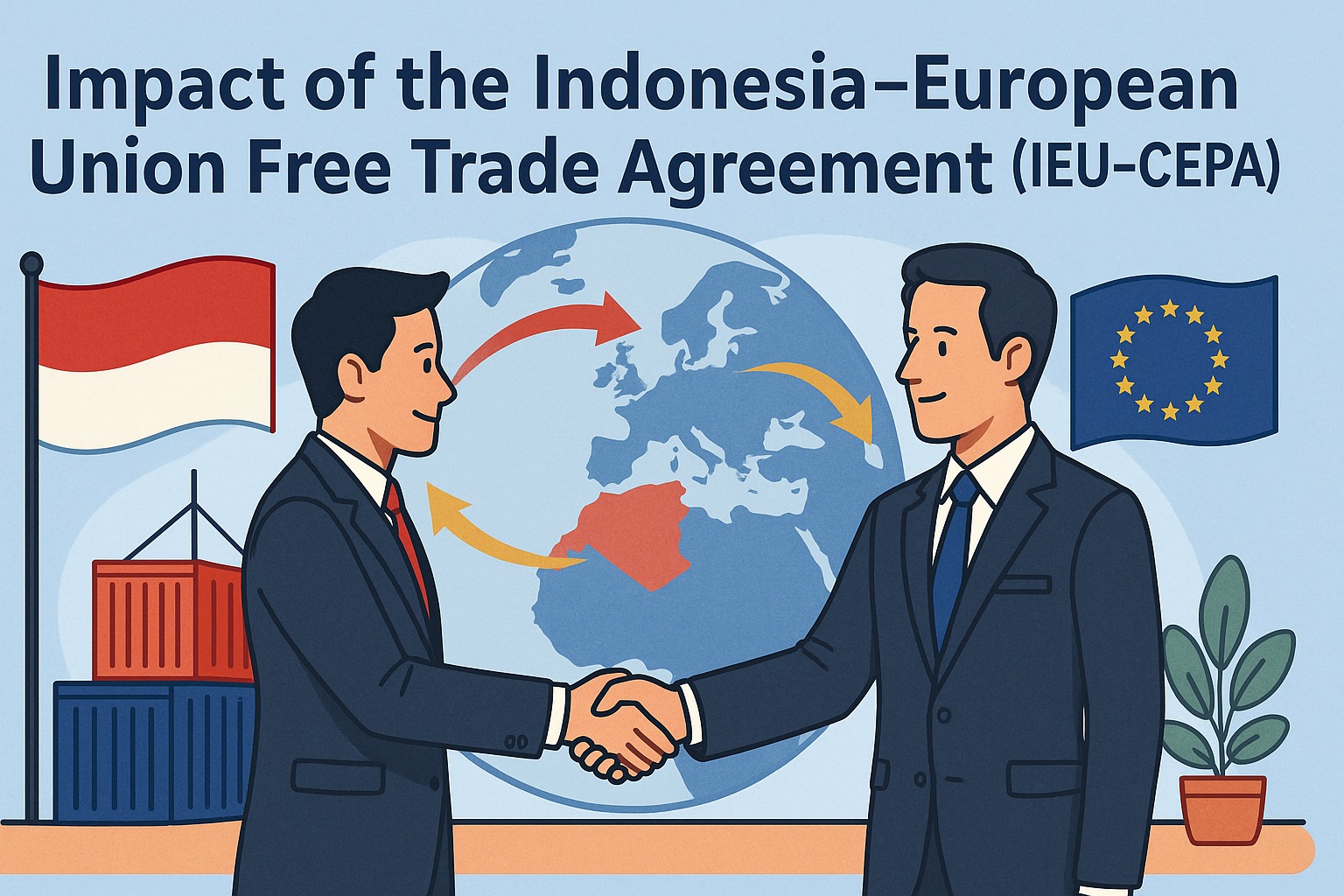
Impact of the Indonesia–European Union Free Trade Agreement (IEU-CEPA)
The Free Trade Agreement between Indonesia and the European Union, officially known as the Indonesia–European Union Comprehensive Economic Partnership Agreement (IEU-CEPA), has become a hot topic in global economic discussions. This agreement aims to strengthen trade and investment ties between the two regions. However, behind the opportunities lie several challenges and potential impacts that must be carefully considered.
What is IEU-CEPA?
IEU-CEPA is a comprehensive agreement that covers tariff elimination, reduction of non-tariff barriers, and cooperation in areas such as regulations, labor standards, and environmental protection. Negotiations between Indonesia and the EU began in 2016 with the goal of boosting trade volumes and generating job opportunities.
Positive Impacts of the Indonesia–EU Free Trade Agreement
1. Wider Market Access
With the removal of many import tariffs, Indonesian products such as coffee, cocoa, sustainable palm oil, textiles, and furniture can enter the European market at more competitive prices.
2. Increase in Foreign Investment
The EU is one of Indonesia’s largest sources of foreign direct investment. Through IEU-CEPA, European investors are expected to become more confident in investing in key sectors such as manufacturing, renewable energy, and green technology.
3. Technology Transfer and Human Resource Development
This agreement facilitates knowledge and technology transfer, including workforce training programs to help Indonesian workers become more globally competitive.
4. Boost in Environmental and Social Standards
The EU upholds high standards regarding environmental protection and workers' rights. Indonesia has the opportunity to align its domestic regulations with these standards, supporting sustainable development.
Negative Impacts and Challenges
1. Increased Competition for Local Products
European goods—such as electronics, automobiles, and pharmaceutical products—may flood the Indonesian market. This could pressure local producers, especially MSMEs that are not yet prepared to compete in terms of quality and price.
2. Stringent Market Requirements
Entering the European market requires compliance with strict environmental certifications, product traceability, and human rights regulations. This poses a challenge for Indonesian exporters who have yet to meet these standards.
3. Potential Social and Ecological Issues
Sectors like palm oil are often scrutinized by the EU due to deforestation and human rights concerns. Without careful management, this agreement could trigger social and environmental pressures.
Conclusion
The Indonesia–EU Free Trade Agreement presents a significant opportunity for Indonesia’s economy to grow and integrate into the global market. However, the success of its implementation depends on the readiness of industrial sectors, protection for small businesses, and alignment of domestic policies with international standards.
As a developing country, Indonesia must seize this momentum to enhance competitiveness, improve trade infrastructure, and upgrade workforce skills. With the right strategy, IEU-CEPA could become a catalyst for inclusive and sustainable economic transformation.
About the Author
Gusti Ayu Tita P
Author — STEKOM University
An active author focused on academic issues, educational technology, and human resource development in the campus environment.