The rapid growth of digital technology has transformed the education sector in many ways. One of the most popular innovations in modern education is hybrid learning. This learning method combines face-to-face classroom sessions with online learning activities, creating a more flexible and effective educational experience. Hybrid learning is now widely adopted by schools, universities, and training institutions because it offers numerous benefits for both students and lecturers.
WHAT IS HYBRID LEARNING?
Hybrid learning is a teaching approach that integrates traditional classroom instruction with digital learning platforms. Students can attend some sessions in person while completing other learning activities online. This system allows educational institutions to provide more adaptable learning environments that suit modern lifestyles and technological advancements.
The combination of online and offline learning gives students greater access to educational materials, while lecturers can use various digital tools to improve the teaching process. As a result, hybrid learning has become an important solution in today’s educational landscape.
FLEXIBILITY FOR STUDENTS
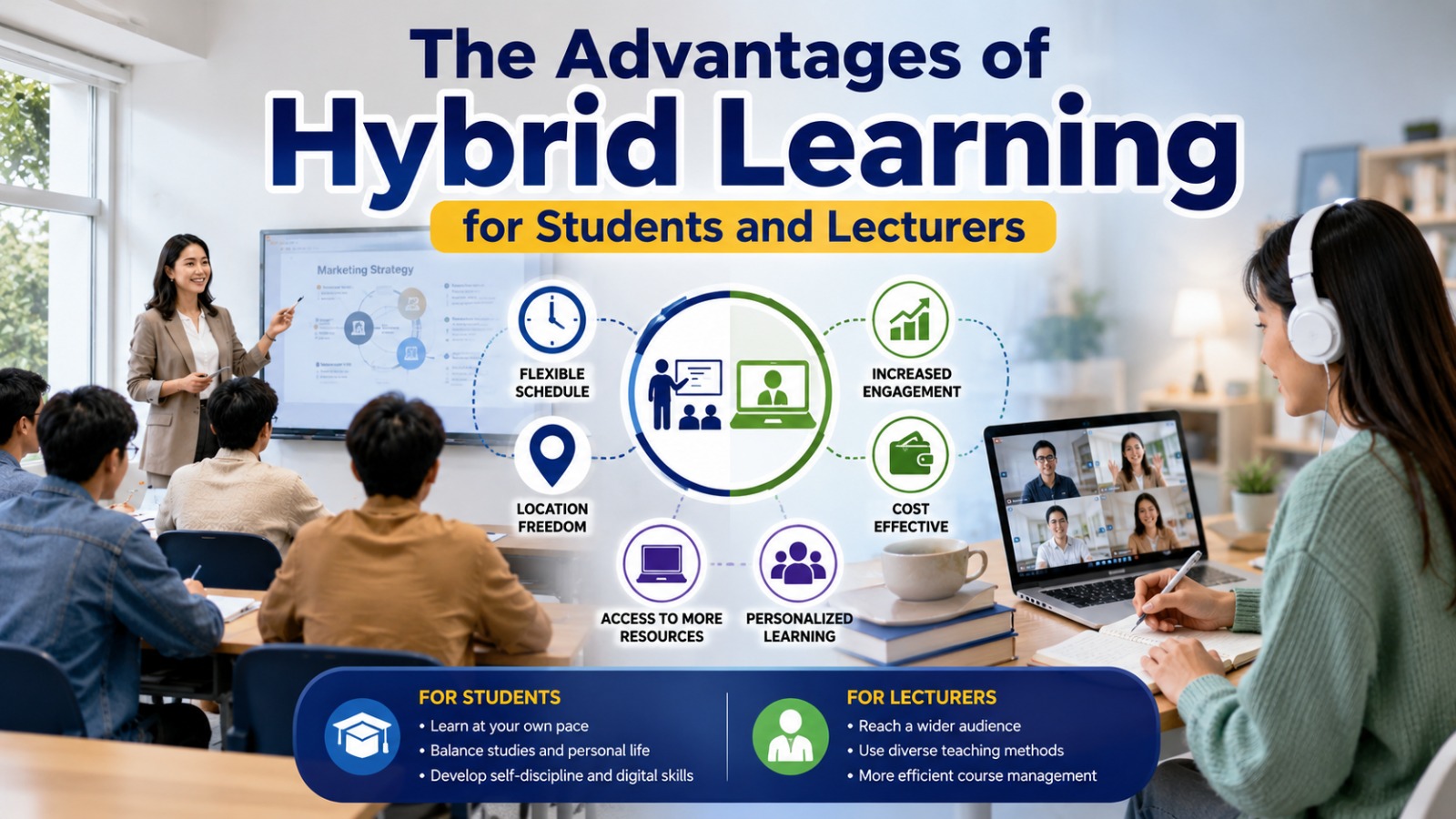
One of the main advantages of hybrid learning is flexibility. Students can access learning materials anytime and anywhere using laptops, tablets, or smartphones. This flexibility is especially helpful for students who have part-time jobs, family responsibilities, or live far from campus.
With hybrid learning, students are no longer limited by classroom schedules alone. They can review recorded lectures, download study materials, and participate in online discussions according to their own learning pace. This approach helps students manage their time more effectively and reduces academic pressure.
IMPROVED LEARNING EXPERIENCE
Hybrid learning creates a more engaging and interactive learning experience. Lecturers can combine classroom discussions with multimedia presentations, online quizzes, and virtual collaboration tools. These methods make lessons more interesting and easier to understand.
In addition, students can interact with classmates through online forums and group projects. This encourages active participation and improves communication skills. The availability of digital resources also helps students explore topics more deeply beyond classroom explanations.
BETTER ACCESS TO EDUCATIONAL RESOURCES
Another important benefit of hybrid learning is easier access to educational resources. Students can access e-books, recorded lectures, research journals, and online libraries without needing to visit campus physically.
For lecturers, hybrid learning allows them to share learning materials quickly and efficiently. They can update course content regularly and provide additional resources to support student understanding. This accessibility improves the overall quality of education.
ENHANCED TECHNOLOGY SKILLS
Hybrid learning encourages both students and lecturers to develop digital skills. In today’s competitive world, technological competence is highly valuable in academic and professional environments.
Students become familiar with video conferencing tools, online collaboration platforms, and digital communication systems. Meanwhile, lecturers gain experience in using educational technology to create more innovative teaching methods. These skills can increase productivity and prepare both parties for future career challenges.
INCREASED STUDENT INDEPENDENCE
Hybrid learning promotes independent learning habits. Since students have greater control over their study schedules, they learn how to manage their responsibilities and stay disciplined.
This method encourages students to become more proactive in completing assignments, participating in discussions, and finding additional learning resources. Independent learning also improves problem-solving abilities and critical thinking skills, which are essential for academic success.
GREATER EFFICIENCY FOR LECTURERS
Lecturers also benefit significantly from hybrid learning systems. Digital platforms make it easier to organize assignments, monitor student progress, and provide feedback efficiently.
Online assessments can save time and reduce paperwork, while virtual meetings allow lecturers to communicate with students more conveniently. Hybrid learning also gives lecturers opportunities to experiment with creative teaching strategies that can improve student engagement and academic performance.
SUPPORT FOR DIFFERENT LEARNING STYLES
Every student has a unique learning style. Some students learn better through direct interaction, while others prefer independent online study. Hybrid learning accommodates these differences by combining various teaching methods.
Visual learners can benefit from videos and presentations, auditory learners can focus on recorded lectures, and kinesthetic learners can participate in practical classroom activities. This balanced approach helps improve student comprehension and learning outcomes.
CHALLENGES OF HYBRID LEARNING
Although hybrid learning offers many advantages, it also presents certain challenges. Stable internet access and digital devices are essential for effective participation. Some students may struggle with technical issues or lack motivation during online sessions.
Lecturers must also invest time in preparing digital materials and adapting teaching strategies. However, with proper planning and institutional support, these challenges can be managed successfully.
CONCLUSION
Hybrid learning has become an effective educational method in the digital era. By combining traditional classroom instruction with online learning, this approach offers flexibility, accessibility, and improved learning experiences for students and lecturers alike.
The advantages of hybrid learning include better time management, enhanced technology skills, greater independence, and more engaging educational environments. As technology continues to evolve, hybrid learning is expected to play an even more important role in shaping the future of education worldwide.
About the Author
Gusti Ayu Tita P
Author — STEKOM University
An active author focused on academic issues, educational technology, and human resource development in the campus environment.