Do Students Achieve Better Outcomes in Online or Offline Learning?
Gusti Ayu Tita P
26 Februari 2026
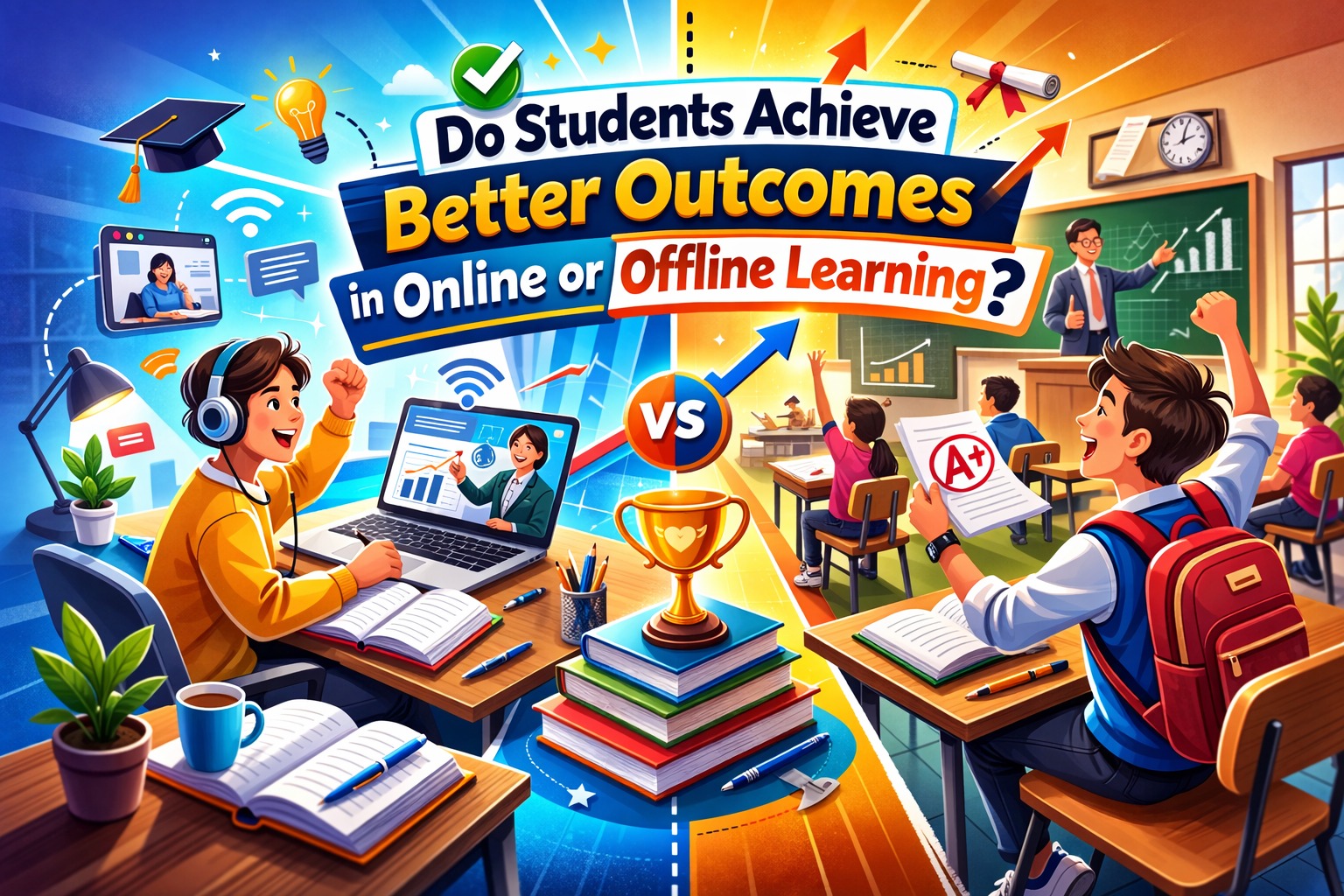
Learning outcomes are an important indicator of education quality. Many people believe that offline learning produces better academic results. However, the rapid development of technology has made online learning increasingly popular.
The learning outcome depends on student discipline, teaching quality, and learning environment.
LEARNING MATERIAL UNDERSTANDING
Offline learning is often considered better for understanding complex materials. Direct explanation from teachers helps students grasp difficult concepts more easily.
Classroom discussion also allows students to ask questions immediately.
STUDENT DISCIPLINE AND SELF MANAGEMENT
Online learning requires strong self-discipline. Students must manage their study time without direct supervision.
If students have good time management skills, online learning can still produce optimal results.
ACADEMIC INTERACTION QUALITY
Offline learning offers more active classroom discussion. Students can communicate directly with teachers and classmates.
Online learning requires structured digital communication to maintain learning interaction.
ENVIRONMENTAL INFLUENCE ON LEARNING
Campus environments usually support learning focus. Classroom atmosphere helps students reduce distractions.
However, home environments can also be comfortable if students can manage interruptions.
INDIVIDUAL LEARNING CHARACTERISTICS
Learning outcomes are strongly influenced by student personality and learning style. Some students understand materials better through face-to-face classes.
Others prefer independent learning through online systems.
CONCLUSION
There is no absolute answer about which method produces better outcomes. Online and offline learning both can be effective depending on student motivation and discipline.
The best learning results are achieved when students choose methods that match their learning style.
About the Author
Gusti Ayu Tita P
Author — STEKOM University
An active author focused on academic issues, educational technology, and human resource development in the campus environment.