How Can A Trip Itinerary Improve Your Organizational Skills?
Gusti Ayu Tita P
17 September 2026
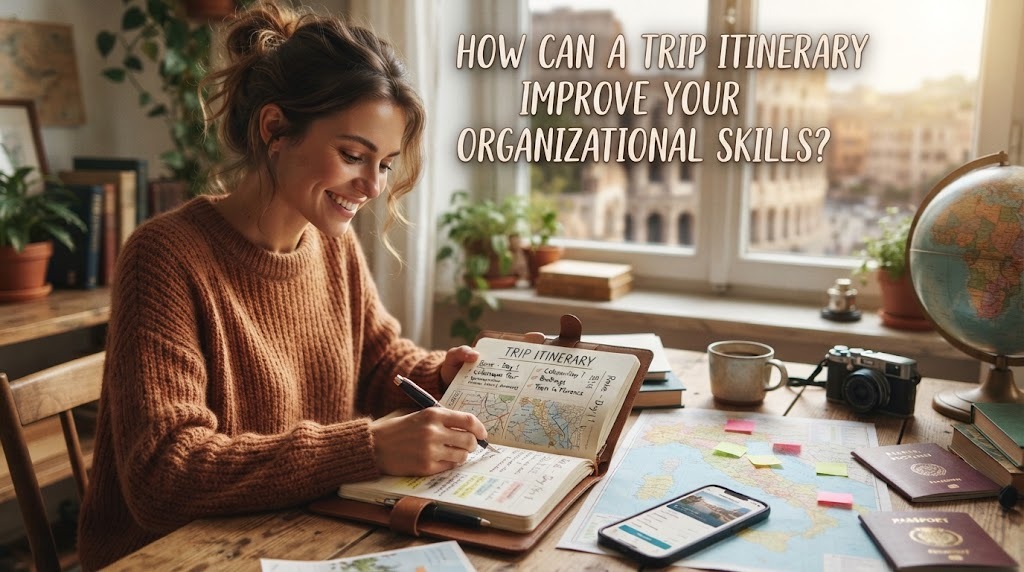
Creating a Trip Itinerary is a useful way to organize travel plans before starting a journey. A good itinerary contains important information such as destinations, schedules, transportation, accommodation, and activities. Arranging these details requires careful planning and a clear system. This process can gradually improve Organizational Skills because travelers learn how to manage information and activities in an orderly way. The habits developed through travel planning can also be applied to school, work, and daily activities.
ORGANIZING TRAVEL INFORMATION
A Trip Itinerary helps travelers collect important information in one organized plan. Details about destinations, transportation, accommodation, meal times, and activities can be arranged according to the travel schedule. This makes information easier to find when it is needed during the journey. Organizing information also reduces the possibility of forgetting important details. Through this process, travelers can practice Information Management in a simple and practical situation.
The ability to organize information is useful in many professional environments. Employees often need to manage documents, schedules, contacts, and task-related information. Travel planning provides an opportunity to practice arranging different details according to their importance. When information is structured clearly, people can work more efficiently and avoid unnecessary confusion. Therefore, creating an itinerary can support the development of better organizational habits.
SCHEDULE PLANNING AND DAILY ACTIVITIES
A well-prepared itinerary helps travelers arrange activities based on available time. Each destination and activity can be placed at a suitable time to create a clear schedule. Travelers can also include breaks and travel time between locations. This type of Schedule Planning helps prevent activities from overlapping. It also teaches travelers to consider realistic time limits when organizing their plans.
Schedule organization is not only useful during vacations. Students can use similar methods to arrange study sessions, assignments, and other responsibilities. Employees can apply the same habit when organizing meetings, projects, and daily tasks. Learning to divide time properly can make activities more manageable. As a result, itinerary planning can strengthen organizational skills that are useful beyond travel.
ATTENTION TO DETAIL IN TRAVEL PREPARATION
Creating an itinerary requires attention to many small details. Travelers need to check departure times, destination locations, transportation routes, booking information, and activity schedules. Missing one important detail may affect other parts of the travel plan. Therefore, itinerary preparation encourages people to develop Attention To Detail. This habit can help travelers create a more complete and reliable plan.
Attention to detail is also valuable in professional activities. Small mistakes in documents, schedules, or work instructions can sometimes affect the completion of a task. By carefully checking travel information, people can practice identifying errors before they cause problems. This encourages a habit of reviewing information before using it. Such a habit can contribute to more organized and accurate work.
MANAGING MULTIPLE TRAVEL TASKS
Travel preparation often involves several tasks that need to be completed before departure. These tasks may include booking accommodation, checking transportation, preparing luggage, planning activities, and managing expenses. A Trip Itinerary can help travelers arrange these responsibilities in a clear sequence. This makes Task Management easier because each activity can be identified and prepared separately. Travelers can also check which tasks have already been completed and which still need attention.
Managing multiple tasks is a common requirement in school and professional environments. Students may have several assignments with different deadlines, while employees may handle multiple responsibilities at the same time. An organized task list can help people determine which activities should receive attention first. This reduces the risk of forgetting important responsibilities. Practicing task management through travel planning can therefore build useful organizational habits.
BUILDING BETTER TRAVEL ORGANIZATION HABITS
Regularly creating a Trip Itinerary can encourage people to develop consistent planning habits. Before traveling, they become accustomed to checking information, arranging schedules, and preparing necessary items. These activities create a structured approach to completing responsibilities. Over time, Travel Organization can become a natural part of the preparation process. The same approach can also be applied to other activities that require careful organization.
Good organizational habits can make daily responsibilities easier to manage. People who plan their activities clearly may find it easier to understand what needs to be completed and when it should be done. They can also identify possible problems earlier and prepare alternative solutions. This approach supports greater efficiency and reduces unnecessary confusion. Therefore, itinerary planning can provide practical experience for developing organizational skills in everyday life.
CONCLUSION
A Trip Itinerary can improve Organizational Skills by teaching people how to arrange information, schedules, details, and multiple tasks. The process encourages travelers to develop Information Management, Schedule Planning, Attention To Detail, and Task Management habits. These skills are useful not only during travel but also in school, work, and daily activities. A well-organized itinerary can make a journey easier to manage while providing practical planning experience. For this reason, creating a Trip Itinerary can be a simple way to strengthen organizational skills for different situations.
About the Author
Gusti Ayu Tita P
Author — STEKOM University
An active author focused on academic issues, educational technology, and human resource development in the campus environment.