How to Communicate with Recruiters at a Job Fair?
Gusti Ayu Tita P
27 Agustus 2026
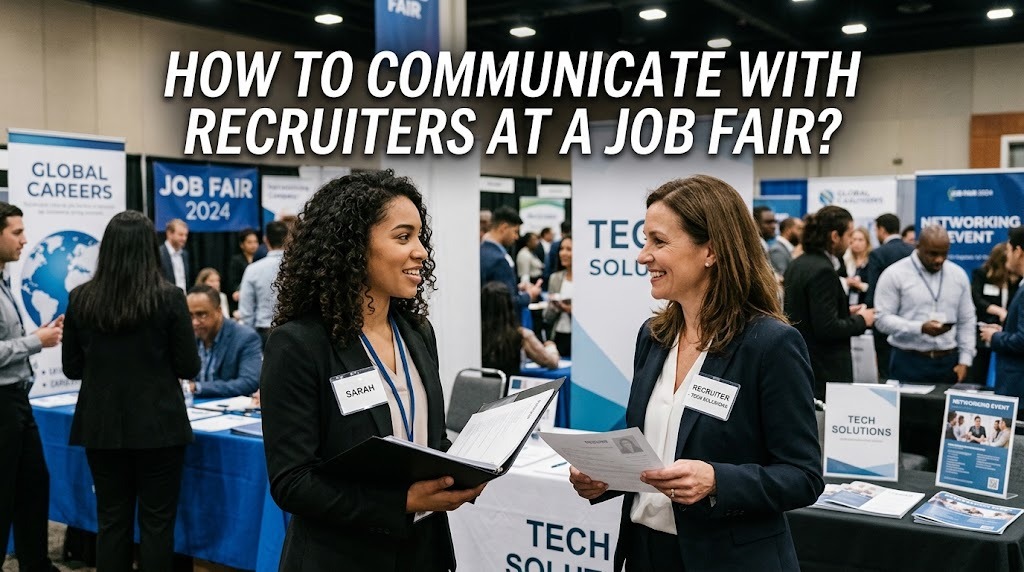
A job fair gives students, fresh graduates, and job seekers a valuable opportunity to meet recruiters directly. Unlike online applications, this setting allows candidates to introduce themselves, ask questions, and create a professional first impression. Good communication can help recruiters remember a candidate beyond what is written on a resume.
However, speaking with recruiters can feel challenging, especially for people attending their first job fair. Candidates need to communicate clearly, confidently, and politely without making the conversation too long. With proper preparation, a short conversation can become an important step toward a potential job opportunity.
PREPARE A SHORT SELF INTRODUCTION
Prepare a brief introduction before approaching a recruiter. Mention your name, educational background, relevant experience, and the type of position you are interested in. Keep the introduction focused instead of explaining every detail on your resume. A clear introduction helps the recruiter understand your profile quickly.
Practice your introduction several times before the event so it sounds natural. Avoid memorizing every word because a conversation should feel genuine rather than rehearsed. Speak clearly and maintain a friendly expression while introducing yourself. This simple preparation can also reduce nervousness when approaching different companies.
RESEARCH THE COMPANY BEFORE THE EVENT
Research the companies attending the job fair before you arrive. Learn about their main business, products or services, available positions, and basic requirements. This information helps you decide which companies are most relevant to your career goals. It also gives you useful topics to discuss with recruiters.
Showing basic knowledge about a company can demonstrate genuine interest. For example, you can explain why a particular position matches your educational background or previous experience. Avoid asking questions that are already clearly answered in the company's job advertisement. Good preparation makes the conversation more focused and professional.
ASK RELEVANT QUESTIONS
A job fair conversation should not be one-sided. After introducing yourself, ask questions that help you understand the position and recruitment process. You might ask about the main responsibilities of the role, skills the company values most, or what the next recruitment stage looks like. Relevant questions can show that you are seriously considering the opportunity.
Avoid asking too many questions when other candidates are waiting. Keep your questions concise and related to the position. It is also better not to make salary the main topic during the first conversation unless the recruiter brings it up or the event specifically encourages such discussions. Focus first on the role, expectations, and recruitment process.
LISTEN CAREFULLY TO THE RECRUITER
Good communication is not only about speaking well. You should also listen carefully when the recruiter explains the position, requirements, or application process. Do not interrupt while the recruiter is speaking. Pay attention to important details so you do not ask the same question again.
Active listening also helps you give more relevant responses. If the recruiter mentions an important skill, you can briefly explain how you have developed that skill through an internship, organization, or academic project. This creates a more natural two-way conversation. It also allows you to demonstrate your qualifications without turning the discussion into a long sales pitch.
CONNECT YOUR EXPERIENCE TO THE POSITION
Students and fresh graduates may not have extensive professional experience, but they can still discuss relevant activities. Internships, student organizations, academic projects, competitions, volunteer work, and campus committees can demonstrate useful abilities. Choose examples that relate directly to the position you are discussing.
For example, experience coordinating a campus event can demonstrate teamwork, communication, planning, and time management. Explain what you did, what responsibility you had, and what result you achieved. Keep the explanation short and specific. This approach helps recruiters understand how your background could contribute to the company.
SHOW CONFIDENCE WITHOUT OVERSELLING YOURSELF
Confidence can make a positive difference when communicating with recruiters. Stand or sit with good posture, maintain natural eye contact, and speak in a clear voice. A friendly and professional attitude can make the conversation more comfortable for both sides.
However, confidence does not mean claiming to be an expert in everything. Be honest about your current abilities and acknowledge areas where you are still learning. If you do not know an answer, respond honestly instead of inventing information. Recruiters are generally more likely to value authenticity and self-awareness than exaggerated claims.
USE PROFESSIONAL BODY LANGUAGE
Your body language can support the message you communicate verbally. Greet the recruiter politely, maintain appropriate eye contact, and avoid constantly looking at your phone while talking. A natural smile and attentive posture can help create a positive impression.
Professional body language should still feel natural rather than forced. Avoid crossing your arms for long periods, speaking while looking away, or appearing distracted. Remember that job fairs can be busy environments, so remain patient and respectful even when recruiters are handling many candidates at once.
END THE CONVERSATION PROFESSIONALLY
When the conversation is finished, thank the recruiter for their time. If the recruiter has explained a next step, make sure you understand what you need to do and when you should do it. You can also ask for clarification about where or how to submit additional documents if necessary.
End the conversation politely rather than leaving abruptly. A simple expression of appreciation can help maintain a positive impression. If the recruiter provides contact information or directs you to an online application, follow the instructions carefully after the event.
AVOID COMMON COMMUNICATION MISTAKES
Several communication mistakes can reduce the effectiveness of a job fair conversation. Avoid speaking too much, interrupting the recruiter, using overly casual language, or asking questions without first understanding the position. Do not criticize previous employers, lecturers, or organizations while talking about your experience.
You should also avoid treating every recruiter exactly the same way. Adjust the conversation according to the company and position. Most importantly, never provide false information about your education, experience, or skills. Honest and respectful communication is more valuable than trying to create an unrealistic impression.
CONCLUSION
Knowing how to communicate with recruiters at a job fair can help students and job seekers make stronger professional connections. Prepare a short introduction, research companies in advance, ask relevant questions, listen carefully, and connect your experience with the position. Confidence, honesty, and professional body language can further strengthen the impression you make.
A job fair is more than an opportunity to hand out resumes. It is a chance to introduce yourself and learn directly from employers about available career opportunities. By preparing your communication before the event and following up appropriately afterward, you can make better use of every conversation with a recruiter.
About the Author
Gusti Ayu Tita P
Author — STEKOM University
An active author focused on academic issues, educational technology, and human resource development in the campus environment.