
Is Mental Resilience More Important Than Just a Degree?
Gusti Ayu Tita P
10 Maret 2026
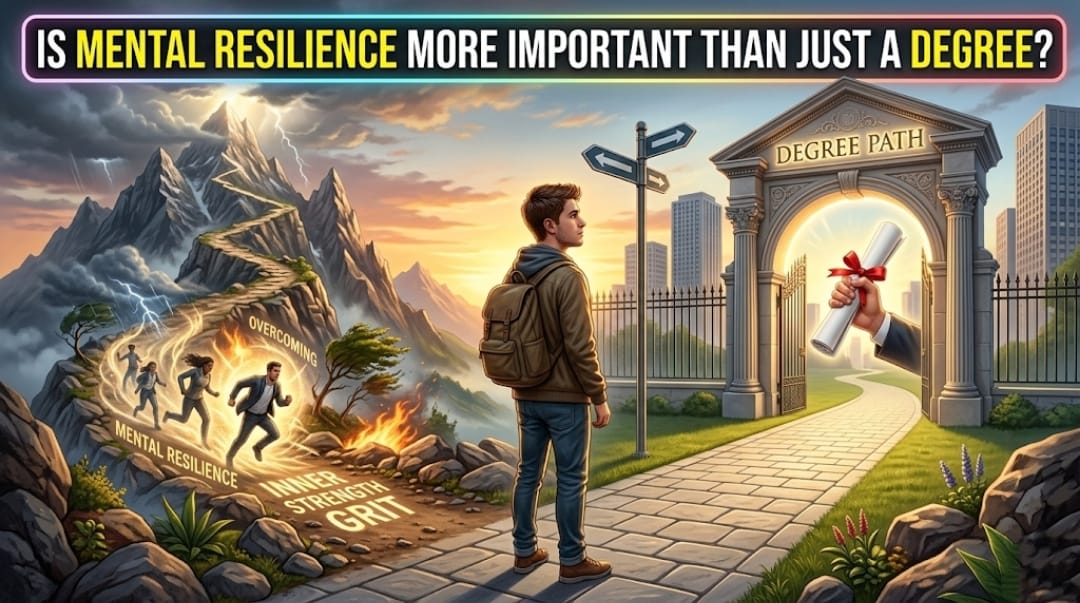
For many students, earning a university degree is seen as a major milestone that opens the door to professional opportunities. Academic qualifications often represent years of dedication, discipline, and intellectual development. Because of this, a degree is commonly viewed as the primary key to career success.
However, the realities of the modern workplace suggest that success depends on more than academic credentials. Alongside formal education, mental resilience has become an increasingly valuable quality. The ability to handle pressure, overcome setbacks, and remain motivated during difficult situations often determines how individuals progress in their careers.
THE VALUE OF A UNIVERSITY DEGREE
A university degree still plays an important role in professional life. It provides structured knowledge, analytical skills, and exposure to specific fields of study. Many industries also require formal qualifications as a minimum requirement for employment.
Degrees often signal that an individual has completed a rigorous academic process and possesses the foundational knowledge needed for a particular profession. In certain fields such as medicine, engineering, or law, academic credentials are essential.
Nevertheless, while a degree can open doors, it does not always guarantee long-term success in a competitive work environment.
UNDERSTANDING MENTAL RESILIENCE
Mental resilience refers to the ability to remain stable and productive when facing stress, challenges, or unexpected changes. It involves emotional strength, adaptability, and the capacity to recover from difficult experiences.
In professional settings, employees frequently encounter demanding deadlines, complex responsibilities, and changing expectations. Individuals with strong mental resilience are better equipped to manage these pressures while maintaining focus and motivation.
This quality allows professionals to continue growing even when situations become challenging.
HANDLING FAILURE AND SETBACKS
Career paths rarely develop without obstacles. Many professionals experience job rejections, project failures, or unexpected career transitions. These experiences can become discouraging if individuals lack the emotional strength to manage them effectively.
Mental resilience helps people interpret setbacks as opportunities to learn rather than as permanent barriers. By analyzing mistakes and identifying areas for improvement, individuals can transform difficult experiences into valuable lessons.
Over time, this ability to recover and move forward contributes significantly to professional growth.
BALANCING KNOWLEDGE AND EMOTIONAL STRENGTH
Although mental resilience is crucial, academic education remains an important foundation. Knowledge gained through higher education helps individuals understand their chosen field and perform specialized tasks.
The most effective professionals often combine strong academic backgrounds with emotional strength and adaptability. This balance allows them to apply knowledge effectively while navigating complex work environments.
In other words, a degree may provide the technical foundation, while mental resilience supports long-term career sustainability.
DEVELOPING RESILIENCE DURING UNIVERSITY YEARS
Students can begin building mental resilience long before entering the workforce. University life presents various challenges, including academic pressure, deadlines, and collaborative responsibilities.
Participating in group projects, internships, and student organizations can help individuals develop problem-solving abilities and emotional endurance. These experiences teach students how to manage stress, communicate with others, and respond to unexpected situations.
Such experiences gradually strengthen the mindset needed to succeed in professional environments.
CONCLUSION
A university degree remains an important component of career preparation. It provides knowledge, credibility, and access to many professional opportunities. However, academic qualifications alone may not determine long-term career success.
Mental resilience plays a critical role in helping individuals navigate challenges, recover from setbacks, and continue developing their abilities. When combined with strong academic foundations, resilience allows professionals to adapt, grow, and maintain progress throughout their careers.
About the Author
Gusti Ayu Tita P
Author — STEKOM University
An active author focused on academic issues, educational technology, and human resource development in the campus environment.















