
Is ASEAN Free Trade Beneficial for Indonesia?
Gusti Ayu Tita P
12 Juni 2025
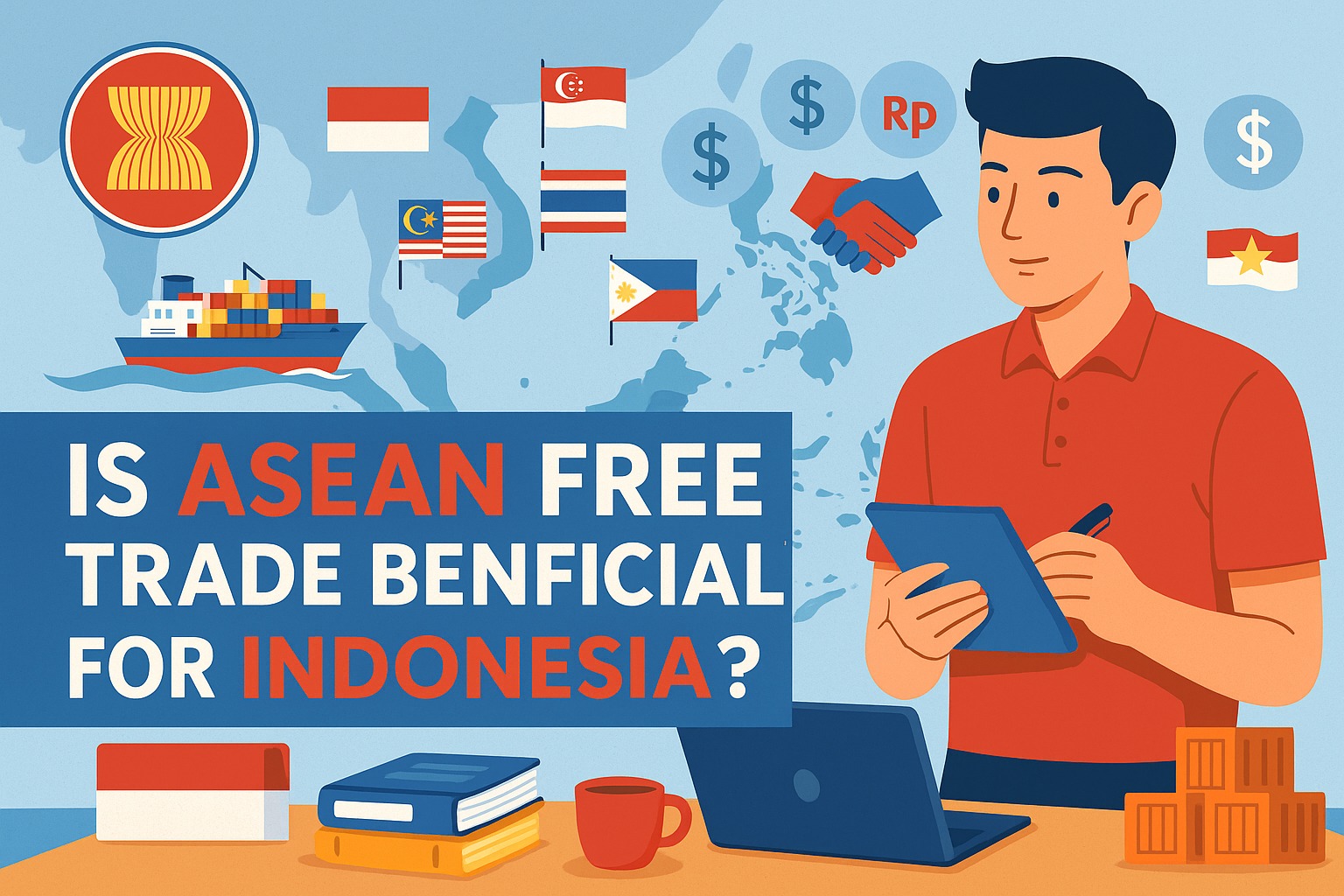
Is ASEAN Free Trade Beneficial for Indonesia?
Free trade in Southeast Asia has gained momentum with the establishment of the ASEAN Free Trade Area (AFTA)—a regional economic agreement aimed at creating a single market and integrated production base among ASEAN member states. As one of the largest economies in the region, Indonesia holds a significant stake in AFTA’s implementation. But the big question remains: Is ASEAN free trade truly advantageous for Indonesia?
What is AFTA?
The ASEAN Free Trade Area (AFTA) was launched in 1992 as a major step toward economic integration. Through the Common Effective Preferential Tariff (CEPT) scheme, member countries agreed to reduce import duties on goods traded within ASEAN to nearly 0%.
The goal is to boost production efficiency, expand market access, and increase regional competitiveness in the global economy.
Positive Impacts of ASEAN Free Trade on Indonesia
1. Broader Market Access
With reduced tariffs among ASEAN countries, Indonesian products—such as automotive parts, processed foods, textiles, and furniture—can enter regional markets more easily without major trade barriers.
2. Export Growth
ASEAN free trade has led to increased Indonesian exports, especially to Malaysia, Thailand, Vietnam, and the Philippines. High demand exists for key export sectors like agribusiness and manufacturing.
3. Improved Product Competitiveness
Regional competition encourages Indonesian industries to enhance efficiency, drive innovation, and deliver higher-quality goods.
4. Foreign Direct Investment (FDI)
AFTA sends a positive signal to investors. Indonesia is increasingly seen as a strategic production base for exporting to other ASEAN nations, thanks in part to its large domestic market.
Challenges and Negative Impacts for Indonesia
1. Intensified Import Competition
Low-cost imports from other ASEAN countries—such as electronics from Vietnam or agricultural goods from Malaysia—flood the Indonesian market, often pressuring local producers and small businesses (SMEs).
2. Infrastructure and Regulatory Gaps
Indonesia still lags behind other ASEAN nations in infrastructure, logistics efficiency, and ease of doing business, which affects its regional trade competitiveness.
3. Rising Import Dependency
Free trade can increase reliance on foreign goods, especially raw materials and certain consumer products, contributing to trade imbalances and current account deficits.
4. Uneven Distribution of Benefits
The advantages of ASEAN free trade have not been evenly felt—particularly among small businesses and regions outside Java. Limited access to information, technology, and export markets remains a key barrier.
So, Is ASEAN Free Trade Truly Beneficial for Indonesia?
The answer is: yes—but with conditions. If approached strategically, ASEAN free trade offers significant economic opportunities for Indonesia. However, the government and private sector must work together to:
- Enhance local productivity and product quality
- Encourage digital transformation and SME exports
- Accelerate logistics and infrastructure development
- Offer incentives and training for domestic industries
Only then can Indonesia go beyond being a passive market and emerge as a strong competitor in the ASEAN free trade landscape.
Conclusion
ASEAN free trade can bring meaningful benefits to Indonesia—if backed by structural reforms, improved national competitiveness, and support for industries and SMEs. In this era of economic integration, Indonesia’s domestic readiness will determine whether it merely survives or leads Southeast Asia’s economic future.
About the Author
Gusti Ayu Tita P
Author — STEKOM University
An active author focused on academic issues, educational technology, and human resource development in the campus environment.