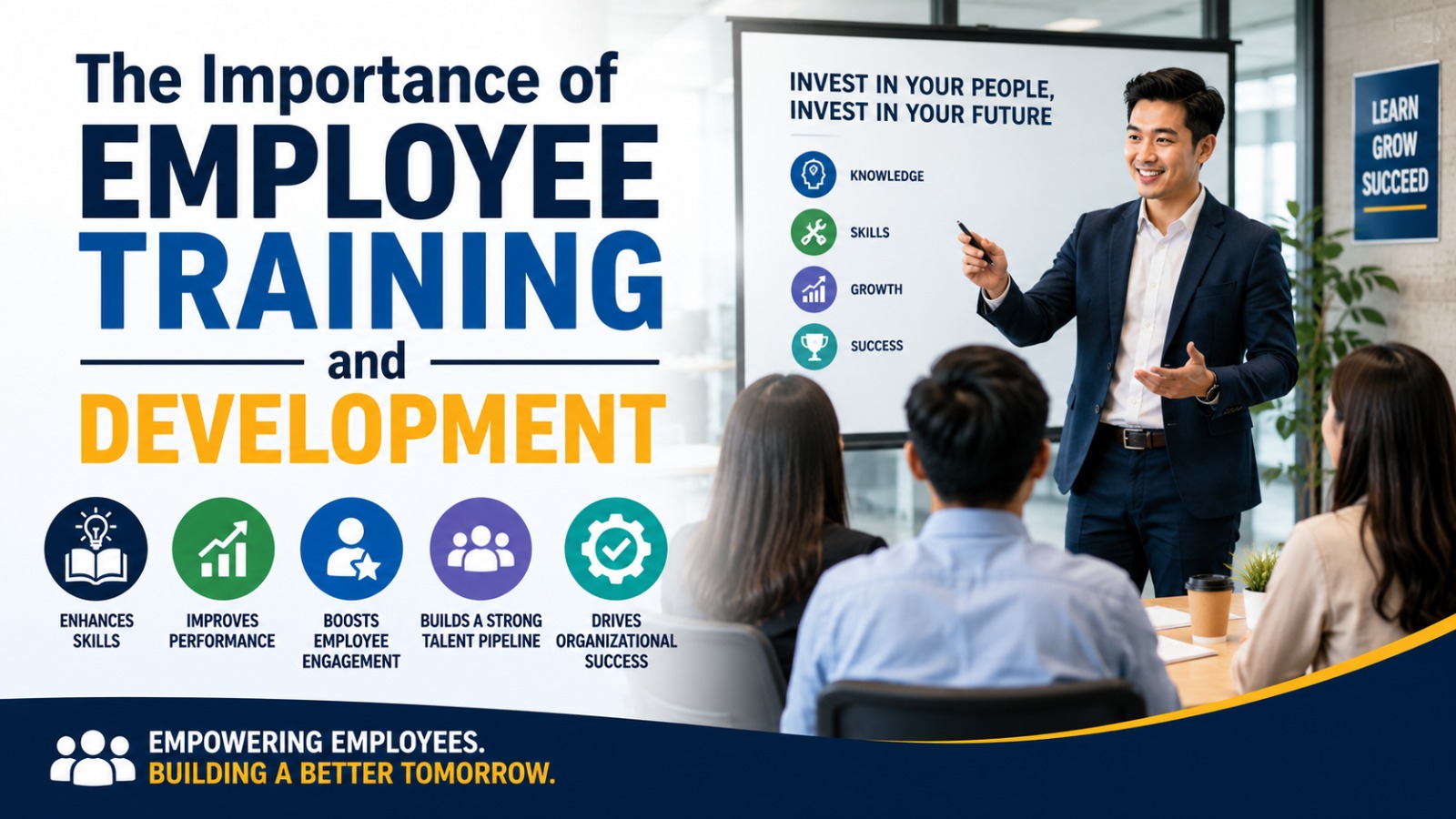
Employee training and development are essential components of a successful organization. In today’s fast-changing business environment, companies must continuously improve employee skills and knowledge to remain competitive. Training programs not only enhance employee performance but also contribute to business growth, productivity, and long-term success.
Organizations that invest in employee development often experience higher employee satisfaction, stronger teamwork, and better overall performance. Training is no longer considered an optional activity but a strategic investment for both employees and companies.
WHY EMPLOYEE TRAINING MATTERS
Employee training helps workers improve their abilities, understand their responsibilities, and adapt to workplace changes. Proper training ensures employees can perform tasks efficiently and confidently.
Well-trained employees are more likely to:
- Produce higher-quality work
- Make fewer mistakes
- Adapt to new technologies
- Improve productivity
- Contribute to company success
Training also helps organizations maintain professional standards and improve operational efficiency.
IMPROVES EMPLOYEE PERFORMANCE
One major benefit of training and development is improved employee performance. Employees who receive proper instruction and guidance can complete their tasks more effectively.
Training programs help employees strengthen both technical and soft skills, including:
TECHNICAL SKILLS
Employees learn industry-specific knowledge, software systems, equipment handling, and job procedures required for their roles.
COMMUNICATION SKILLS
Training improves workplace communication, teamwork, and professional interaction with coworkers and clients.
LEADERSHIP SKILLS
Development programs prepare employees for future leadership responsibilities and management positions.
When employees improve their skills, companies benefit from increased efficiency and better business results.
INCREASES EMPLOYEE CONFIDENCE
Employees who understand their work responsibilities clearly tend to feel more confident in their roles. Training reduces uncertainty and helps workers perform tasks with greater accuracy and professionalism.
Confident employees are more willing to take initiative, solve problems, and contribute new ideas to the organization.
SUPPORTS CAREER GROWTH
Many employees value opportunities for professional growth. Companies that provide development programs demonstrate commitment to employee success.
Training can help employees:
- Gain new qualifications
- Prepare for promotions
- Expand professional knowledge
- Improve career opportunities
Employees who see growth opportunities within a company are often more motivated and loyal.
BOOSTS EMPLOYEE MOTIVATION AND JOB SATISFACTION
Training programs show employees that the company values their development. This recognition can increase employee motivation and overall job satisfaction.
Workers who feel supported are more likely to remain engaged and committed to their organization. As a result, companies may experience lower employee turnover and stronger workplace morale.
HELPS COMPANIES ADAPT TO CHANGE
Technology and business trends continue to evolve rapidly. Employee training helps organizations adapt to industry changes and remain competitive in the market.
Regular development programs allow employees to stay updated with:
- New technologies
- Industry regulations
- Market trends
- Workplace innovations
Adaptable employees help businesses respond more effectively to challenges and opportunities.
IMPROVES TEAMWORK AND COLLABORATION
Training activities often encourage employees to work together, share ideas, and improve communication. Team-building exercises and collaborative learning programs strengthen workplace relationships.
Strong teamwork creates a more positive work environment and improves overall organizational performance.
REDUCES WORKPLACE ERRORS
Employees who lack proper training may make costly mistakes that affect productivity and customer satisfaction. Training programs help reduce errors by teaching employees correct procedures and best practices.
Well-trained employees are also more likely to follow company policies and safety regulations properly.
ENHANCES COMPANY REPUTATION
Organizations known for investing in employee development often attract talented professionals. A strong reputation for training and career growth can improve recruitment efforts and strengthen the company’s image.
Employees who receive continuous development opportunities may also become better representatives of the company.
CREATES FUTURE LEADERS
Leadership development is an important part of employee training. Companies that prepare employees for future management roles can ensure smoother business continuity and stronger leadership succession.
Developing internal talent reduces the need for external recruitment and strengthens organizational stability.
CONCLUSION
Employee training and development are crucial for improving performance, increasing motivation, and supporting business growth. Companies that invest in employee learning create a more skilled, confident, and productive workforce.
By providing continuous training opportunities, organizations can improve employee satisfaction, reduce turnover, and remain competitive in an evolving business environment. In the long term, employee development benefits both individuals and the overall success of the company.
About the Author
Gusti Ayu Tita P
Author — STEKOM University
An active author focused on academic issues, educational technology, and human resource development in the campus environment.