
The Impact of Corruption on the Economy and Public Welfare
Gusti Ayu Tita P
14 September 2026
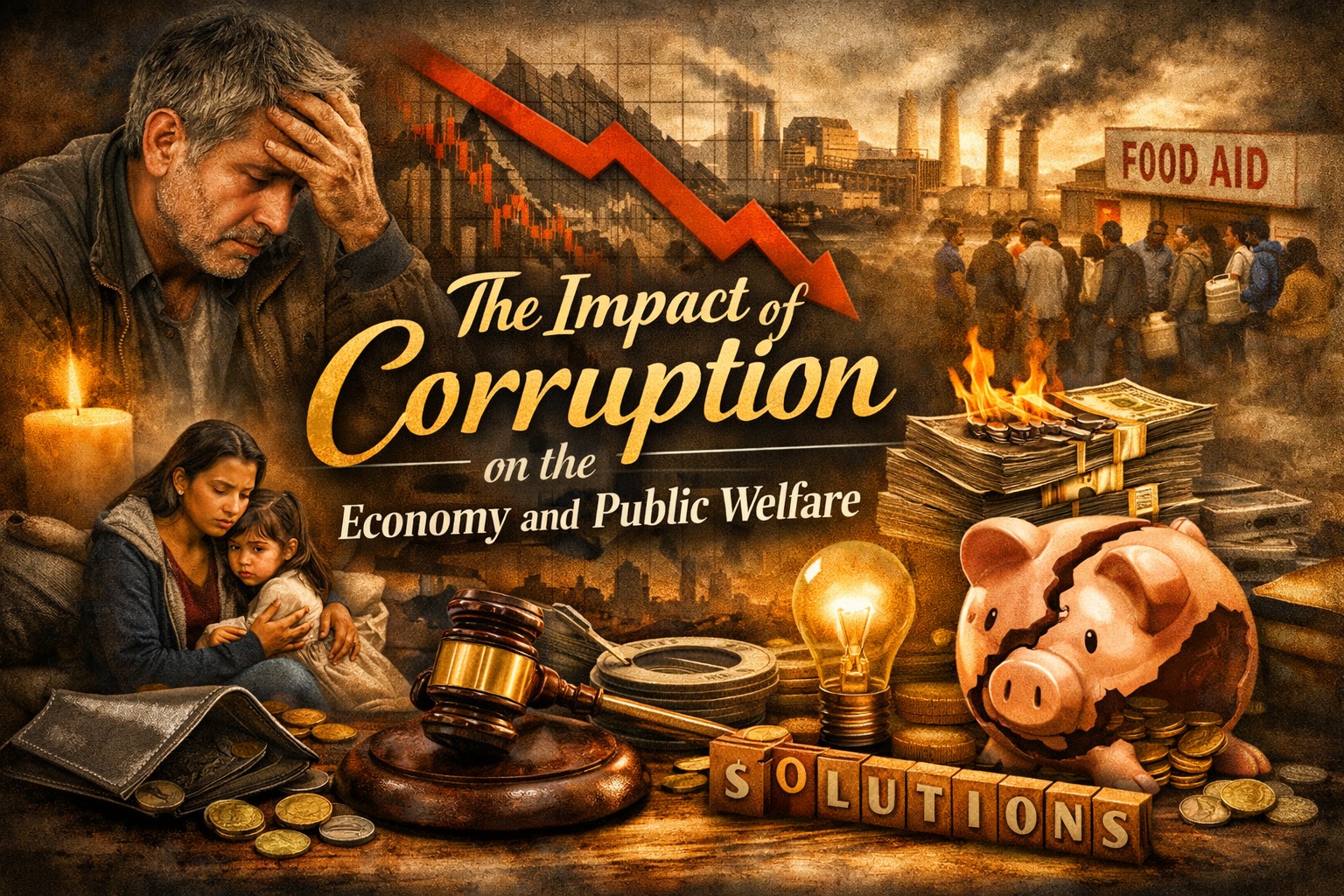
Corruption remains one of the biggest challenges facing many countries around the world. It occurs when individuals or institutions misuse public power for personal gain, often through bribery, fraud, embezzlement, or abuse of authority. While corruption may seem like an isolated problem, its consequences extend far beyond government offices and directly affect businesses, communities, and ordinary citizens.
The impact of corruption on the economy and public welfare is significant because it weakens trust, reduces investment, increases inequality, and slows national development. Understanding these effects is essential for governments, organizations, and citizens who want to create a fair, transparent, and prosperous society.
UNDERSTANDING CORRUPTION AND ITS FORMS
Corruption takes many forms and can occur in both the public and private sectors. Common examples include bribery, nepotism, embezzlement, kickbacks, and favoritism in awarding contracts or government positions. These unethical practices allow a small group of people to benefit unfairly while harming the interests of society as a whole.
The seriousness of corruption depends on its scale, but even small acts can gradually weaken institutions and reduce public confidence. When corruption becomes widespread, it creates an environment where dishonest behavior is accepted, making it more difficult to enforce laws and maintain good governance.
HOW CORRUPTION DAMAGES ECONOMIC GROWTH
One of the most damaging consequences of corruption is its negative effect on economic growth. Investors often avoid countries where corruption is common because business operations become unpredictable, expensive, and legally risky. As a result, fewer investments are made, reducing job creation and limiting economic expansion.
Corruption also causes governments to misuse public funds that should be allocated to infrastructure, healthcare, education, and social services. Instead of supporting long-term development, valuable resources are diverted into private accounts or inefficient projects. This weakens productivity and slows national progress over time.
THE EFFECTS ON PUBLIC WELFARE
The decline in public welfare is another major consequence of corruption. When government budgets are mismanaged, citizens receive lower-quality public services such as hospitals, schools, transportation, and clean water systems. Poor communities often suffer the most because they depend heavily on government assistance.
Corruption also increases income inequality by allowing wealthy and powerful individuals to gain unfair advantages. Citizens may lose confidence in public institutions when they believe that opportunities depend on personal connections instead of merit. This lack of trust can reduce civic participation and weaken social unity.
IMPACT ON BUSINESSES AND EMPLOYMENT
Businesses are directly affected by corruption because they may face illegal payments, unfair competition, and complex bureaucratic procedures. Companies that refuse to pay bribes may struggle to obtain permits, licenses, or government contracts, while dishonest competitors receive unfair advantages.
These conditions discourage entrepreneurship, reduce market competition, and limit innovation. As businesses face higher operating costs and uncertainty, economic productivity decreases, leading to fewer employment opportunities and slower wage growth for workers.
SOCIAL CONSEQUENCES OF CORRUPTION
Beyond economic losses, corruption creates serious social problems. It weakens public trust in government institutions, law enforcement agencies, and the justice system. When citizens believe that laws are applied unfairly, they become less willing to cooperate with authorities or participate in democratic processes.
Corruption can also contribute to higher poverty rates, reduced educational quality, and limited access to healthcare. These long-term effects reduce the overall quality of life and make it more difficult for future generations to achieve equal opportunities.
STRATEGIES TO REDUCE CORRUPTION
Reducing corruption requires strong transparency, effective accountability, and strict law enforcement. Governments should establish independent anti-corruption agencies, strengthen financial oversight, and ensure that public procurement processes remain open and competitive. Digital government services can also reduce opportunities for bribery by minimizing unnecessary human interaction.
Citizens, businesses, educational institutions, and the media all play important roles in preventing corruption. Promoting ethical values, protecting whistleblowers, encouraging public participation, and improving access to information help create a culture that rejects dishonest behavior and supports good governance.
CONCLUSION
The impact of corruption extends far beyond financial losses because it damages economic growth, reduces public welfare, weakens institutions, and increases inequality. It prevents countries from reaching their full development potential while reducing public trust and limiting opportunities for future generations.
Combating corruption requires continuous cooperation between governments, businesses, and society. By promoting transparency, accountability, and ethical leadership, countries can strengthen their economies, improve public services, and build a more prosperous and fair future for everyone.
About the Author
Gusti Ayu Tita P
Author — STEKOM University
An active author focused on academic issues, educational technology, and human resource development in the campus environment.