
Tips to Ensure Your Village BLT Recipient Data Is Accurate
Gusti Ayu Tita P
9 September 2026
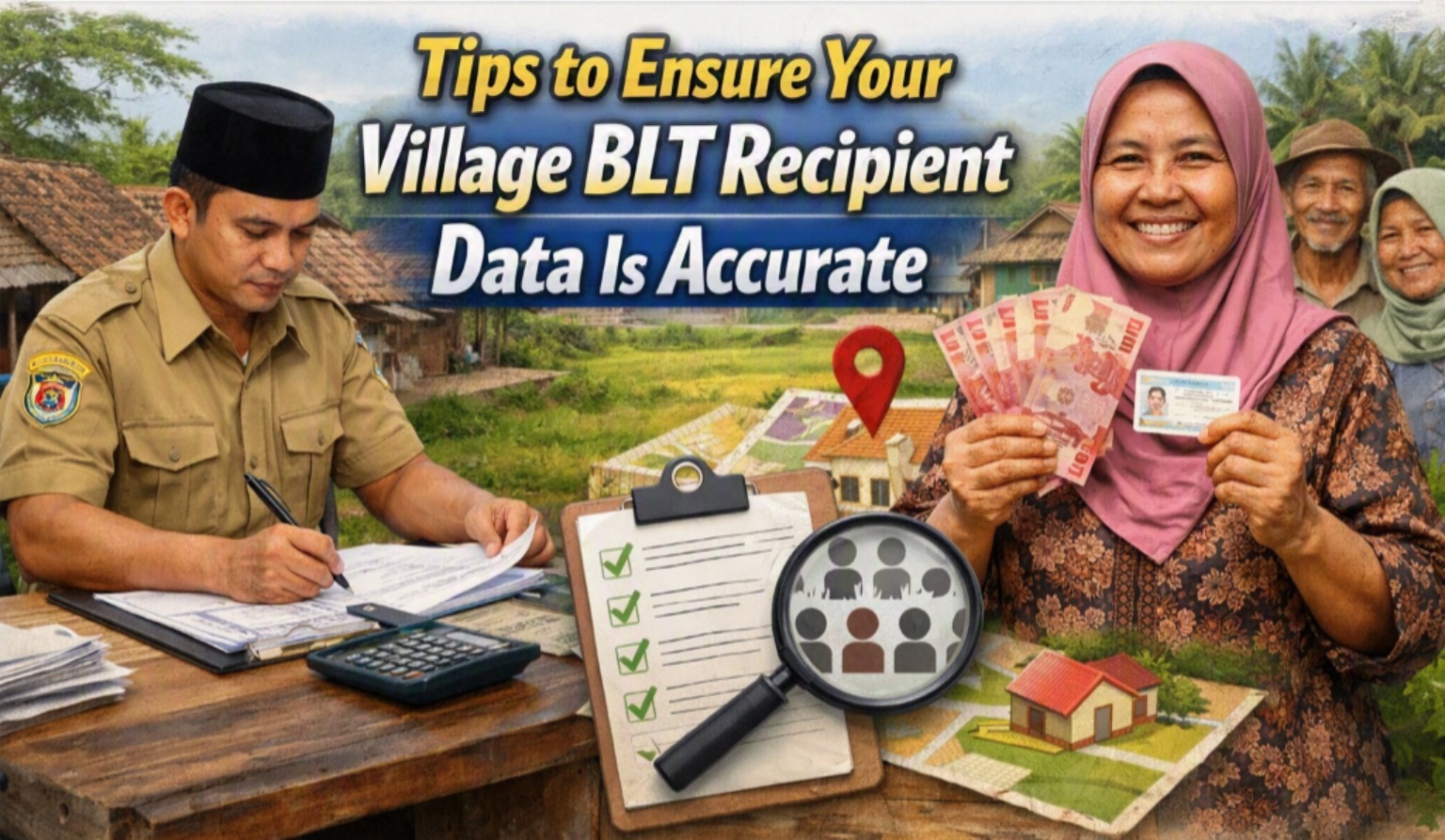
Village BLT is an important form of social protection intended to help eligible families facing severe economic difficulties. Because public funds are involved, accurate recipient data is essential to make sure assistance reaches the right people. Incorrect data can cause eligible families to be missed while households that no longer meet the criteria may remain on the list. For this reason, villages need a clear process for collecting, checking, and updating recipient information. In 2026, the use of Village Funds for BLT Desa continues to be directed toward extreme poverty reduction, with government data allowed as a reference for identifying potential beneficiaries.
UNDERSTAND THE ELIGIBILITY CRITERIA
The first step is to understand the eligibility criteria used for Village BLT recipients. Villages should identify households that genuinely experience serious economic hardship and require social protection. The selection process should not be based only on personal relationships, assumptions, or temporary circumstances. Relevant social and economic conditions should be considered when assessing a household's situation. This helps ensure that the recipient list reflects the actual needs of the community.
Villages should also pay attention to changes in a family's circumstances. A household that was previously vulnerable may become financially stable, while another family may suddenly experience a significant loss of income. Recipient eligibility should therefore be reviewed regularly rather than treated as permanent. Local rules and the applicable national regulations should always be checked before finalizing the list. This approach reduces the risk of outdated or inaccurate beneficiary information.
VERIFY RESIDENT INFORMATION
Accurate population information is an important foundation for Village BLT data verification. The village government should check basic information such as the beneficiary's name, family details, residential status, and other relevant administrative information. Population records should be compared with available government or civil registration data whenever possible. This is important because errors in identity or household information can make assistance difficult to distribute correctly. Previous Village BLT guidance also emphasizes verifying the population status of prospective beneficiaries using village administrative records or information from the local civil registration authority.
The verification should also identify situations such as duplicate records, deceased residents, moved households, or incorrect personal information. If there is a discrepancy, the village should confirm the information before making changes. Residents should have an opportunity to report incorrect information about themselves. Careful administrative verification can prevent one household from appearing multiple times or an eligible household from being excluded because of a simple data error.
CONDUCT FIELD VERIFICATION
Administrative records alone may not fully describe a family's current economic condition. Field verification can help the village understand the real circumstances of households listed as potential recipients. Officials and community representatives can collect relevant information by visiting households or confirming conditions through local community structures. This process should be conducted objectively and respectfully. The goal is to verify information, not to embarrass or stigmatize vulnerable families.
Field checks can examine whether the information recorded by the village is consistent with the household's current situation. For example, officials may need to clarify changes in household members, employment, living conditions, or other factors relevant to eligibility. Community input can be useful because local residents may know about changes that have not yet appeared in administrative records. However, community information should still be verified before it becomes the basis for a final decision.
INVOLVE THE COMMUNITY TRANSPARENTLY
Community participation is another important element in creating accurate BLT recipient data. Village data collection and verification can involve local community structures so that information is not gathered solely from one source. Earlier Village BLT guidance describes data collection from neighborhood, community, and hamlet levels, followed by consolidation and verification by the village government. This wider process can help identify households that may have been overlooked during initial data collection. It can also provide an opportunity to correct information that residents believe is inaccurate.
The final determination should follow the applicable Village Deliberation process and local administrative requirements. Decisions should be based on verified conditions rather than pressure from individuals or groups. Clear documentation of the verification process can make the decision easier to explain and review. Transparency also helps build public trust in the management of Village Funds. When residents understand how recipients are selected, disputes and misunderstandings may be reduced.
UPDATE THE DATA REGULARLY
Recipient data should not be considered accurate forever because household conditions can change. Villages should establish a routine for data updating and review information whenever significant changes occur. Updates may be needed when a household moves, loses a source of income, experiences a major change in family composition, or no longer meets the applicable criteria. New information should be checked against administrative records before it is entered into the official list. Regular updating helps keep the recipient database relevant to current conditions.
Villages should also keep supporting documents and verification records in an organized manner. A clear record can help officials explain why a household was included, excluded, or updated. It can also support monitoring, reporting, and accountability in the use of Village Funds. The 2026 Dana Desa framework includes requirements concerning use, administration, accountability, monitoring, and evaluation, making proper data management an important part of responsible implementation. By maintaining reliable records and reviewing them periodically, villages can make Village BLT distribution more targeted and accountable.
USE DATA CAREFULLY AND PROTECT PRIVACY
Using government data as a reference can make the verification process more consistent, but government data should not automatically replace local verification. The village still needs to ensure that information reflects the household's actual situation and follows the applicable rules. Different data sources may contain differences caused by changes in residence, family composition, or administrative updates. Officials should resolve important discrepancies before finalizing the beneficiary list. This creates a stronger basis for determining who should receive assistance.
At the same time, recipient information should be handled responsibly. Personal data should only be collected, accessed, and shared for legitimate administrative purposes and according to applicable data protection and government procedures. Public transparency should not mean exposing unnecessary private information about vulnerable families. The village can communicate general information about the selection process without publishing sensitive personal details. Responsible data management helps protect residents while supporting a fair and accountable Village BLT program.
CONCLUSION
Ensuring accurate Village BLT recipient data is not a one-time administrative task. It requires careful collection, administrative verification, field checking, community participation, regular updating, and proper documentation. Each stage helps reduce different types of errors in the beneficiary list. Village officials should also coordinate with relevant government institutions when population or eligibility information needs confirmation. The process should always follow the latest applicable regulations because the rules governing Village Funds can change between budget years. For 2026, PMK Number 7 of 2026 governs the management of Village Funds and is currently in force.
Ultimately, accurate data is essential for making Village BLT fair, targeted, transparent, and accountable. A reliable recipient list protects public funds while helping ensure that assistance reaches households that genuinely need it. Villages can strengthen public confidence by documenting each verification stage and providing appropriate channels for residents to report errors. Regular review is also important because economic and population conditions can change over time. With a consistent and transparent approach, Village BLT can provide stronger social protection for vulnerable communities.
About the Author
Gusti Ayu Tita P
Author — STEKOM University
An active author focused on academic issues, educational technology, and human resource development in the campus environment.