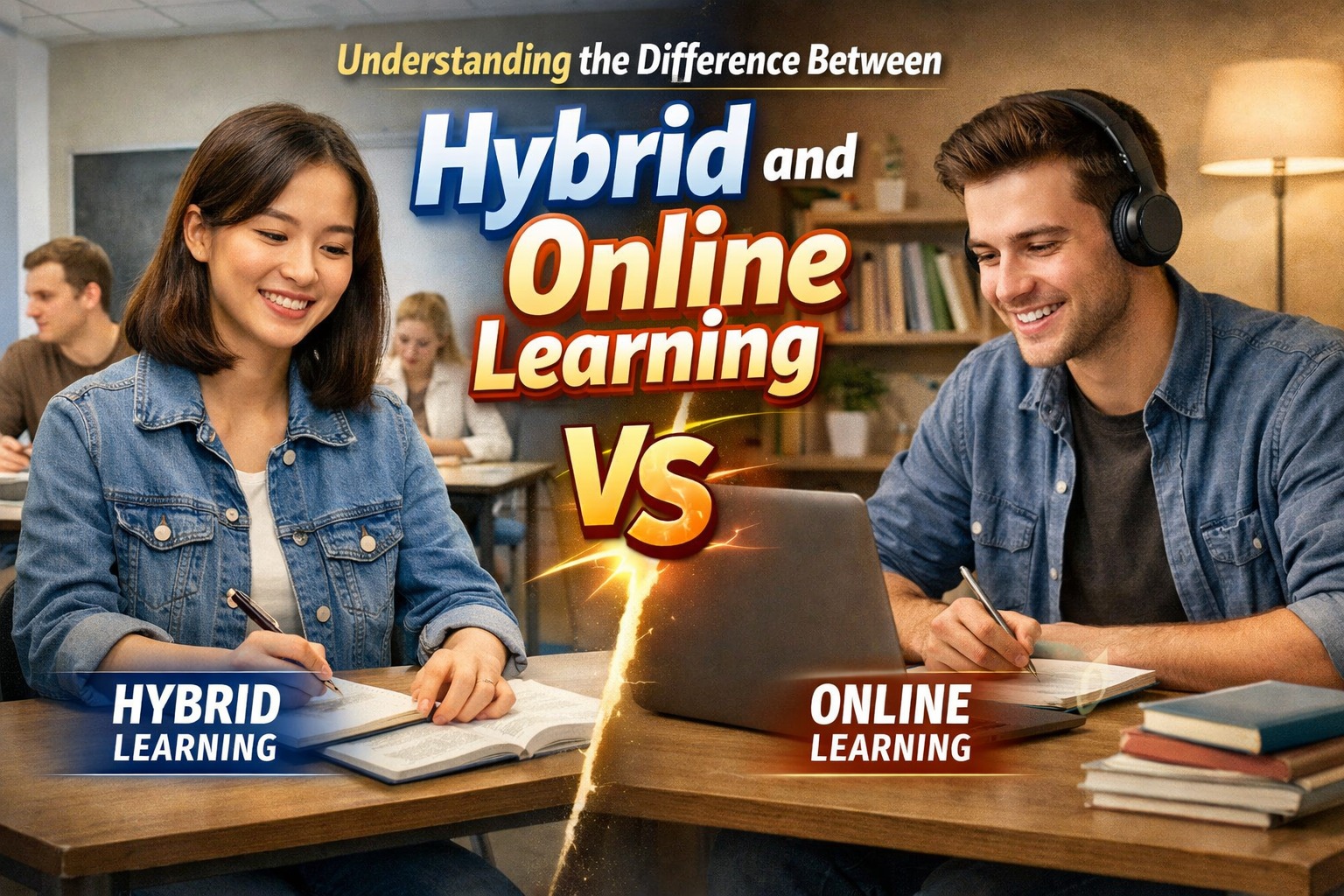
The rapid development of digital technology has transformed the way people learn. Educational institutions now offer various learning models that provide greater flexibility for students. Among the most popular approaches are hybrid learning and online learning. Although these terms are often used interchangeably, they have significant differences that affect the learning experience.
Understanding the difference between hybrid learning and online learning helps students, educators, and institutions choose the most suitable educational method. Each model offers unique advantages, challenges, and opportunities depending on learning goals and personal preferences.
WHAT IS HYBRID LEARNING?
Hybrid learning is an educational approach that combines traditional face-to-face classroom instruction with online learning activities. Students participate in both physical classroom sessions and virtual learning experiences, creating a balanced and flexible educational environment.
This model allows learners to benefit from direct interaction with instructors and classmates while also enjoying the convenience of digital resources. Hybrid learning is widely adopted by universities and training institutions because it offers flexibility without completely removing the value of in-person engagement.
WHAT IS ONLINE LEARNING?
Online learning is a learning method conducted entirely through digital platforms and internet-based technologies. Students access lessons, assignments, discussions, and assessments remotely without attending a physical classroom.
The main advantage of online learning is accessibility. Learners can study from virtually anywhere as long as they have an internet connection. This model is especially beneficial for working professionals, distance learners, and individuals who require flexible schedules.
KEY DIFFERENCES BETWEEN HYBRID AND ONLINE LEARNING
The most noticeable difference is the presence of physical classroom sessions. In hybrid learning, students attend some classes on campus while completing other activities online. In contrast, online learning takes place entirely in a virtual environment.
Another difference involves interaction. Hybrid learning typically provides more opportunities for direct communication with instructors and peers through face-to-face meetings. Online learning relies heavily on digital communication tools such as video conferencing, discussion forums, and messaging platforms.
Additionally, hybrid learning often requires students to travel to campus occasionally, whereas online learning eliminates geographical barriers completely. As a result, online learning offers greater location flexibility, while hybrid learning provides a more balanced educational experience.
ADVANTAGES OF HYBRID LEARNING
One of the biggest benefits of hybrid learning is its ability to combine flexibility with personal interaction. Students can access digital materials at their convenience while still participating in classroom discussions and collaborative activities.
Hybrid learning also supports different learning styles. Some students learn better through direct instruction, while others prefer self-paced study. By blending both approaches, hybrid learning creates a more engaging and adaptable educational experience.
ADVANTAGES OF ONLINE LEARNING
Online learning offers exceptional convenience and accessibility. Students can learn from any location without the need for commuting, reducing both travel time and related expenses.
This learning model also encourages independent learning. Students develop valuable skills such as time management, self-discipline, and digital literacy. These competencies are increasingly important in today's technology-driven workplace.
CHALLENGES OF BOTH LEARNING METHODS
Despite their benefits, both learning models present challenges. Hybrid learning requires effective coordination between online and in-person activities. Students must manage schedules carefully to keep up with both learning environments.
Online learning can sometimes lead to feelings of isolation due to limited face-to-face interaction. Technical issues, internet connectivity problems, and reduced engagement may also affect the overall learning experience. Success in either model depends on strong motivation, organization, and consistent participation.
WHICH LEARNING MODEL IS RIGHT FOR YOU?
Choosing between hybrid learning and online learning depends on individual needs and preferences. Students who value personal interaction and classroom experiences may prefer hybrid learning because it provides both flexibility and direct engagement.
On the other hand, individuals seeking maximum convenience and location independence may find online learning more suitable. Evaluating personal learning styles, schedules, and educational goals can help determine the best option for long-term success.
CONCLUSION
Both hybrid learning and online learning play important roles in modern education. While hybrid learning combines classroom instruction with digital activities, online learning delivers education entirely through virtual platforms. Understanding their differences allows students to make informed decisions and maximize their learning outcomes. As technology continues to evolve, both methods will remain valuable solutions for accessible and flexible education.
About the Author
Gusti Ayu Tita P
Author — STEKOM University
An active author focused on academic issues, educational technology, and human resource development in the campus environment.