
What a Gap Year Teaches You About Work That School Never Does
Gusti Ayu Tita P
1 April 2026
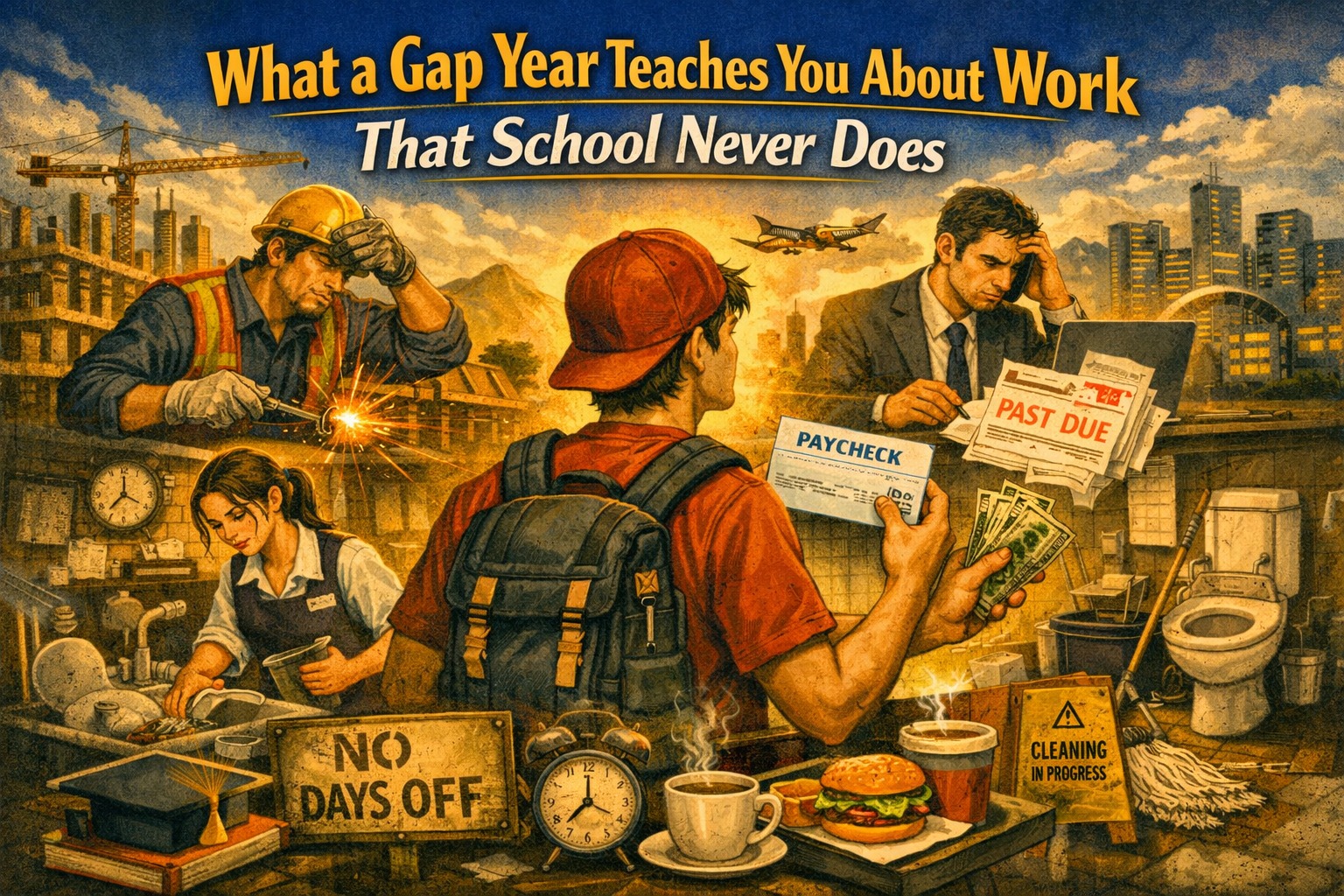
Education plays a vital role in shaping knowledge and building a strong academic foundation. However, when it comes to understanding the realities of work, school often has its limitations. This is where a gap year becomes incredibly valuable. Rather than simply taking a break, a gap year can offer lessons about work that are difficult if not impossible to learn in a classroom.
Through real-life experiences, individuals gain practical insights, develop essential skills, and build a mindset that prepares them for the challenges of the professional world.
WHY SCHOOL CANNOT TEACH EVERYTHING ABOUT WORK
Schools are designed to deliver structured knowledge, focusing on subjects, exams, and measurable achievements. While this system is important, it often does not fully prepare students for real-world situations.
The working world involves unpredictability, collaboration, and responsibility. These elements require hands-on experience, which is something a gap year can provide. By stepping outside the classroom, individuals begin to understand how work truly functions.
REAL WORLD RESPONSIBILITIES AND EXPECTATIONS
One of the most important lessons a gap year teaches is responsibility. Whether working in an internship, part-time job, or freelance role, individuals are expected to complete tasks, meet deadlines, and contribute to a team.
Unlike school assignments, workplace responsibilities have real consequences. This teaches individuals accountability, discipline, and the importance of consistency in delivering results.
LEARNING THROUGH EXPERIENCE NOT THEORY
A gap year emphasizes experiential learning. Instead of memorizing concepts, individuals learn by doing. They face real challenges, solve problems, and adapt to changing situations.
This type of learning is more dynamic and impactful. It allows individuals to understand not just what to do, but how and why things work in real scenarios.
DEVELOPING ESSENTIAL WORKPLACE SKILLS
During a gap year, individuals develop a range of skills that are crucial for success in any career. These include:
- Communication and teamwork
- Time management and organization
- Problem solving and critical thinking
- Adaptability and flexibility
- Professional behavior and work ethic
These skills are often developed more naturally through experience than through formal education.
UNDERSTANDING WORKPLACE CULTURE
Another important lesson from a gap year is understanding workplace culture. Individuals learn how to interact with colleagues, respect professional boundaries, and navigate different working environments.
They also gain insight into workplace expectations, such as punctuality, collaboration, and maintaining a positive attitude. These social and professional skills are essential for long-term success.
GAINING CLARITY ABOUT CAREER GOALS
Many students leave school without a clear idea of what career path to pursue. A gap year helps bridge this gap by providing exposure to different roles and industries.
Through exploration, individuals can discover what they enjoy and what they do not. This clarity makes it easier to make informed decisions about future education or career choices.
OVERCOMING CHALLENGES AND BUILDING CONFIDENCE
A gap year is not without challenges. Individuals may face uncertainty, self-doubt, or pressure from others. However, overcoming these challenges helps build confidence and resilience.
By navigating real-world situations, individuals become more independent and better prepared to handle future responsibilities.
LONG TERM BENEFITS OF GAP YEAR LEARNING
The lessons learned during a gap year often have a lasting impact. Individuals return to education or enter the workforce with greater confidence, stronger skills, and a more realistic understanding of work.
This early exposure gives them a competitive advantage and helps them adapt more quickly to professional environments.
CONCLUSION
A gap year teaches valuable lessons about work that school never does. It provides real-world experience, builds essential skills, and helps individuals understand the realities of the workplace. Rather than being a pause, a gap year can be a transformative journey that prepares individuals for success in both their careers and personal lives.
About the Author
Gusti Ayu Tita P
Author — STEKOM University
An active author focused on academic issues, educational technology, and human resource development in the campus environment.















