Why Are Digital Skills Becoming Important for College Students?
Gusti Ayu Tita P
28 September 2026
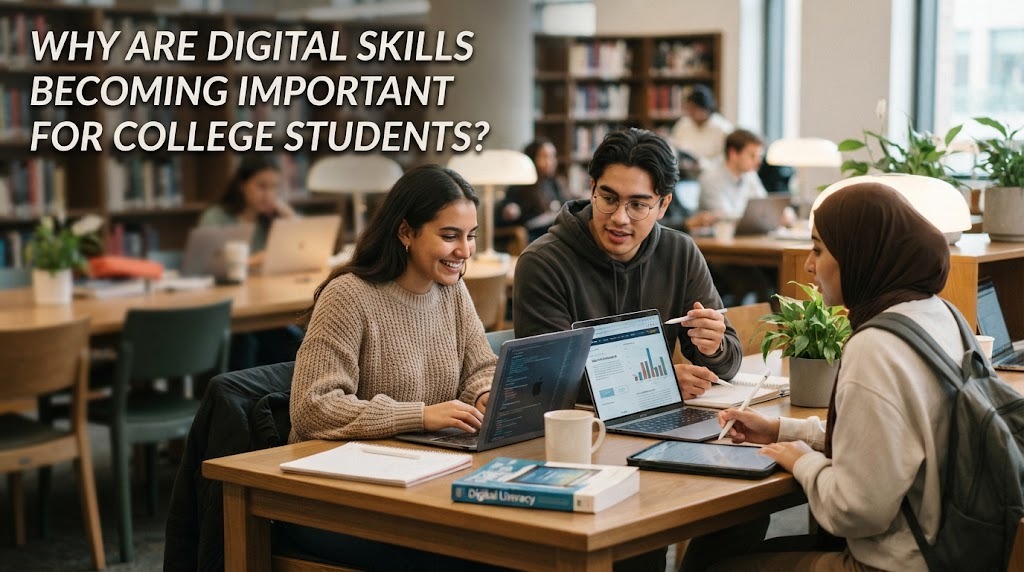
Technology has become an important part of education, communication, and professional life. College students use digital platforms for learning, completing assignments, communicating with lecturers, and finding information. Digital skills are therefore becoming an important part of student development, especially as workplaces continue to use technology in many areas.
Having digital skills does not simply mean knowing how to use a smartphone or social media. Students also need to understand how to use digital tools effectively, evaluate information, protect personal data, and adapt to new technologies. Developing digital skills during college can help students become more prepared for academic challenges and future careers.
DIGITAL SKILLS SUPPORT EFFECTIVE LEARNING
Digital tools can make learning more flexible and accessible for college students. Students can use online libraries, educational platforms, digital journals, presentation tools, and collaboration applications to support their studies. Technology allows students to access learning resources beyond the traditional classroom.
Students can also use digital tools to organize notes, manage assignments, and collaborate on group projects. However, technology needs to be used wisely because excessive digital distractions can reduce concentration. The ability to choose and use the right digital tools is an important part of effective learning.
DIGITAL SKILLS ARE NEEDED IN THE WORKPLACE
Many modern workplaces depend on digital systems for communication, data management, project coordination, and daily operations. Students who understand common digital tools may find it easier to adapt to professional environments. Digital competence can support students when they transition from university to the workplace.
The specific skills required can vary depending on the career field. Students in business may need data and presentation skills, while students in creative fields may need design and content creation abilities. Technology-related fields may require more advanced technical knowledge. Students should develop digital skills that match their academic interests and career goals.
DIGITAL LITERACY HELPS STUDENTS EVALUATE INFORMATION
The internet provides students with a huge amount of information, but not all online information is reliable. Students need to learn how to identify trustworthy sources, compare information, and recognize misleading content. Digital literacy helps students become more careful when using information from online sources.
These skills are especially important when students conduct research or write academic assignments. They should check the credibility of websites, authors, publications, and supporting evidence. Being able to evaluate digital information can improve both academic work and everyday decision-making.
ARTIFICIAL INTELLIGENCE IS CHANGING STUDENT ACTIVITIES
Artificial Intelligence is becoming increasingly visible in education and professional environments. Students may use AI tools for brainstorming, summarizing information, language support, coding assistance, or other learning activities. Understanding how to use AI responsibly can become an important part of modern digital skills.
Students should not rely on AI without checking the information it provides. They need to understand its limitations and follow academic integrity rules established by their institutions. AI should support learning and productivity while students remain responsible for understanding and evaluating the final result.
DIGITAL SKILLS IMPROVE COMMUNICATION AND COLLABORATION
College students often work on group assignments, organizations, research projects, and other collaborative activities. Digital platforms can help students communicate and share files even when they are not in the same location. Knowing how to use collaboration tools can make teamwork more organized and efficient.
Students can also learn professional digital communication through email, online meetings, project management platforms, and shared documents. They need to understand appropriate language, response times, and online etiquette. Good digital communication can become a valuable professional habit before students enter the workplace.
DIGITAL SKILLS SUPPORT CAREER DEVELOPMENT
Students can use technology to build their professional identity while still in college. They can create digital portfolios, improve their resumes, attend online training, join professional communities, and search for internship opportunities. A strong digital presence can help students showcase their skills and experiences.
Students can also learn new skills through online courses and practical projects. Certificates may complement a student's academic background, while projects can provide evidence of practical abilities. Continuous digital learning can help students adapt as technology and job requirements change.
DIGITAL SKILLS ENCOURAGE ADAPTABILITY
Technology changes quickly, so students cannot depend only on the digital tools they learn during their first year of college. New applications, platforms, and systems may appear as they progress through their education and careers. The ability to learn new technology can be more valuable than mastering only one specific tool.
Students can develop adaptability by regularly exploring new tools and practicing problem-solving. They should also remain open to learning from lecturers, classmates, online resources, and professional communities. A willingness to learn continuously can help students remain prepared for technological changes.
CONCLUSION
Digital skills are becoming increasingly important for college students because technology influences learning, communication, research, and professional life. Digital literacy, AI awareness, online communication, collaboration, and technology-based career development can help students become better prepared for modern academic and workplace environments.
Students do not need to master every technology available. Instead, they should develop relevant skills, use digital tools responsibly, evaluate information carefully, and remain willing to learn. Building digital skills during college can become an important investment in academic development and future career preparation.
About the Author
Gusti Ayu Tita P
Author — STEKOM University
An active author focused on academic issues, educational technology, and human resource development in the campus environment.