Why Can Adapting to Independent Learning Drain the Mental Energy of First-Year Students?
Gusti Ayu Tita P
6 Februari 2026
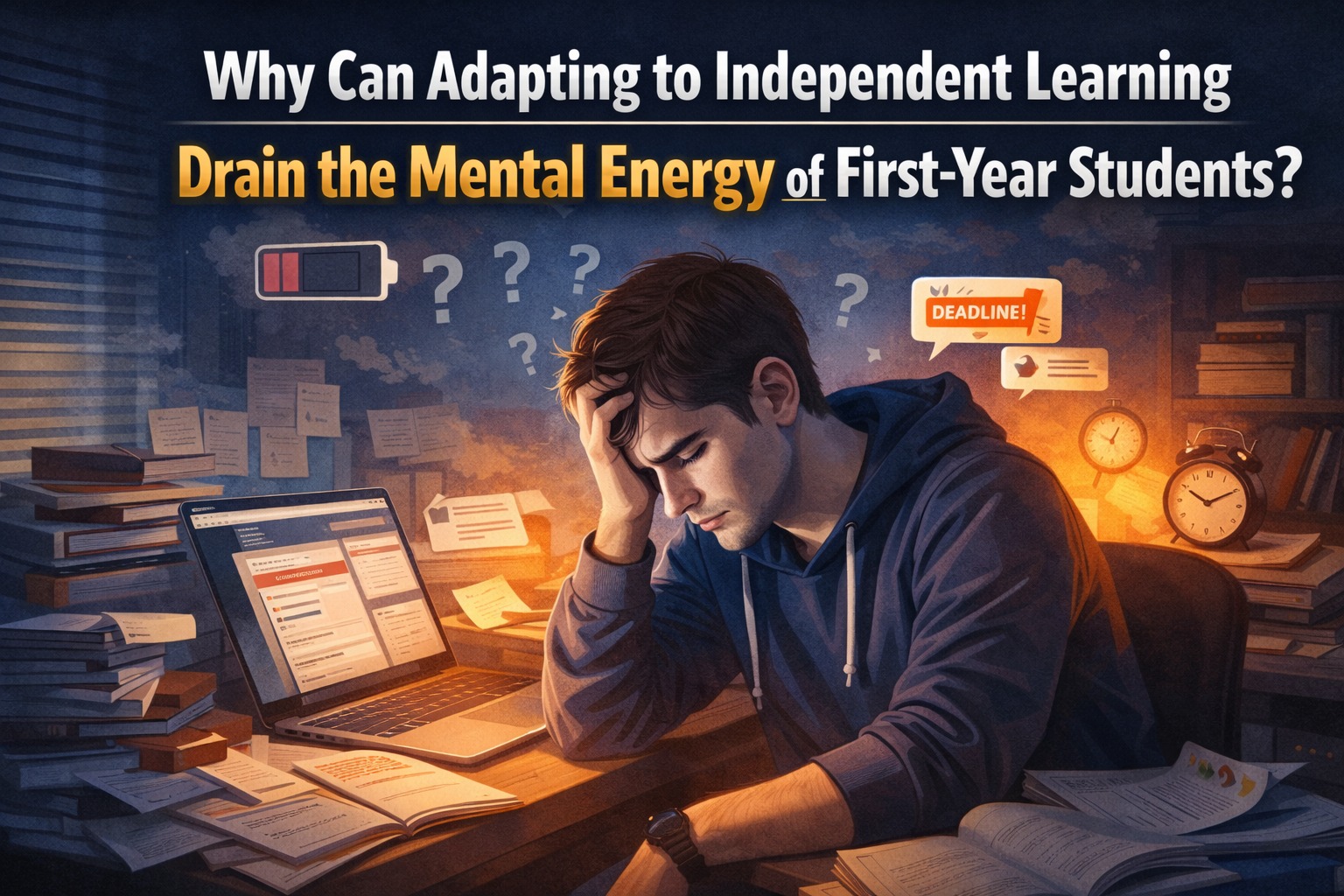
Entering university is a transitional phase filled with changes. New students face not only a different social environment but also a learning system that demands high independence. This adaptation to independent learning often feels mentally exhausting.
Many first-year students quickly feel tired, anxious, or begin to doubt their own abilities. This condition is not a sign of weakness, but a natural response to major changes in learning methods and responsibility management.
Drastic Changes in Learning Patterns
In school, students are accustomed to detailed guidance from teachers. In university, this structure changes significantly.
Lecturers usually provide only general overviews, reference lists, and learning goals. Students are expected to:
- Search for additional learning resources
- Understand materials independently
- Manage time without direct supervision
This sudden shift requires self-regulated learning skills, which are still developing in most first-year students, making the process mentally draining.
Pressure to Adapt Quickly
First-year students often feel pressured to “keep up” so they appear capable. This pressure arises from:
- Seeing peers understand material faster
- Assignments piling up early in the semester
- Excessively high personal expectations
As a result, students may push themselves to study continuously without adequate breaks, leading to early academic burnout.
Confusion in Setting Priorities
Independent learning requires students to decide what to study first. Without prior experience, this can be confusing.
Common questions include:
- Which material is most important?
- How deeply should each topic be understood?
- Is my study time effective enough?
This uncertainty keeps the mind in a constant state of alertness, draining psychological energy.
Increased Lack of Self-Confidence
Facing difficult material without detailed guidance can lead students to conclude that they are not smart enough. Thoughts such as:
- “Everyone understands except me”
- “I don’t belong in this major”
can trigger academic anxiety and increase mental strain.
Lack of Balance Between Study and Rest
In trying to adapt, many students sacrifice rest. Irregular sleep patterns, reduced leisure time, and minimal physical activity worsen mental fatigue.
The brain needs breaks to process new information. Without enough rest, concentration decreases and stress increases.
How to Reduce Mental Burden During Adaptation
To prevent excessive mental exhaustion, students can apply the following strategies:
1. Accept that adaptation takes time
2. Set realistic learning goals
3. Use note-taking systems
4. Maintain healthy rest routines
5. Build social support networks
Conclusion
Adapting to independent learning can be mentally draining for first-year students due to major changes in learning patterns, responsibilities, and thinking styles. Confusion, fatigue, and self-doubt are part of the adjustment process, not signs of failure.
With structured learning strategies, healthy time management, and social support, students can overcome this phase and grow into resilient independent learners.
About the Author
Gusti Ayu Tita P
Author — STEKOM University
An active author focused on academic issues, educational technology, and human resource development in the campus environment.