Why Can Oversharing Increase the Risk of Online Scams?
Gusti Ayu Tita P
18 September 2026
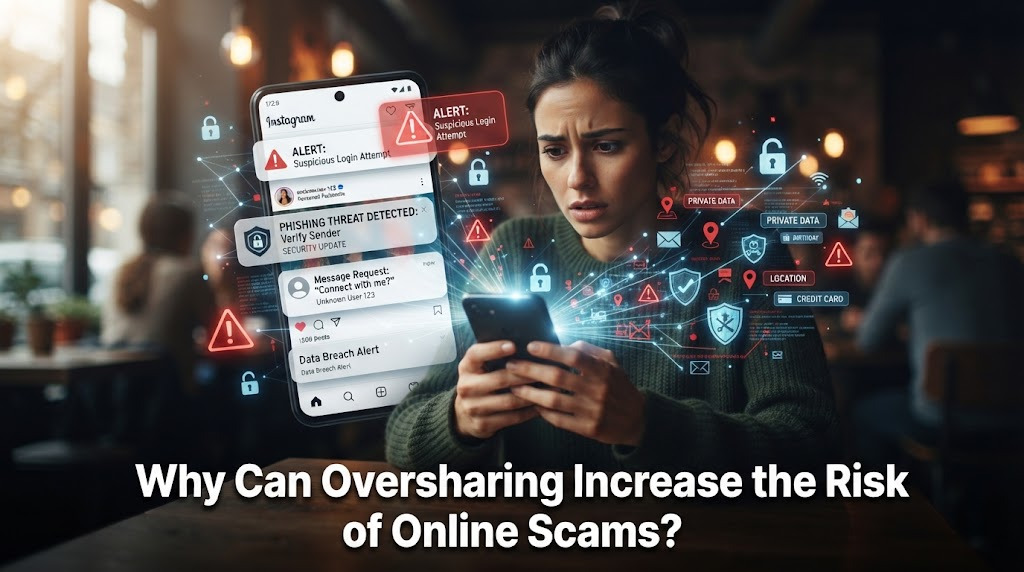
Oversharing means revealing more personal information than is necessary, especially on public or online platforms. Although a single detail may seem harmless, several pieces of information can be combined to create a useful profile of a person. Scammers may use this information to make their messages appear more believable or targeted. Understanding the connection between oversharing and online scams can help people protect their personal information.
HOW CAN OVERSHARING HELP SCAMMERS?
Oversharing can give scammers access to details that help them understand a person's identity, interests, relationships, and activities. Information such as full names, workplaces, schools, locations, family members, and hobbies may appear in social media posts. When these details are publicly available, scammers may use them to create more convincing messages. The more information they have, the easier it may be to make a scam appear relevant.
Scammers do not always need highly sensitive information at the beginning. Small details can become valuable when combined with information from other sources. For example, a public post about a birthday and a workplace may provide clues that make a fraudulent message seem more personal. Limiting unnecessary information can therefore reduce online scam risks.
CAN PERSONAL DETAILS MAKE PHISHING ATTEMPTS MORE CONVINCING?
Yes, personal information can sometimes make phishing messages appear more believable. A scammer may use details about a person's workplace, school, friends, or recent activities to create a message that seems familiar. This can make the recipient more likely to trust the message or click a suspicious link. However, legitimate-looking personal details do not prove that a message is genuine.
People should therefore verify unexpected messages carefully, even when the sender appears to know something about them. Check the sender's address, avoid clicking suspicious links, and contact the organization through an official channel when necessary. Never provide passwords, verification codes, or financial information simply because a message contains personal details. Personalized messages can still be fraudulent.
HOW CAN OVERSHARING SUPPORT SOCIAL ENGINEERING?
Social engineering involves manipulating people into revealing information or taking actions that benefit an attacker. Oversharing can provide the background information needed to make such manipulation more convincing. A scammer may learn about someone's family, job, interests, or current situation and use those details to create a believable story.
For example, a scammer may pretend to be connected to a workplace, friend, service provider, or organization. The information found online can make the impersonation seem more realistic. This is why people should be cautious about publicly sharing information that can be used to establish trust. Privacy awareness is an important defense against social engineering.
WHY CAN LOCATION AND DAILY ROUTINES BE RISKY?
Sharing locations and daily routines can reveal information about when and where a person is usually active. Posts about home locations, schools, workplaces, travel plans, or regular activities may provide useful clues to strangers. While these details may not directly cause an online scam, they can contribute to a larger collection of personal information.
Real-time posting can be particularly unnecessary when it reveals that someone is currently away from home or at a specific location. A safer approach is to avoid sharing precise location details publicly and consider posting some experiences after they happen. This reduces the amount of real-time information available to unknown people. Location privacy is part of responsible online sharing.
HOW CAN SOCIAL MEDIA USERS REDUCE SCAM RISKS?
Social media users can reduce risks by limiting the amount of personal information displayed on public profiles. Review privacy settings, profile information, follower lists, and old posts regularly. Remove details that are not necessary for others to know, particularly information that could help strangers identify or contact you. Users should also be careful about accepting requests from unfamiliar accounts.
It is important to remember that privacy settings cannot completely prevent information from being copied or shared. Users should still think carefully before posting sensitive content. Avoid publishing passwords, verification codes, financial information, private documents, or highly specific personal details. Combining privacy settings with careful sharing habits provides stronger protection.
WHAT SHOULD YOU DO IF YOU RECEIVE A SUSPICIOUS MESSAGE?
If a message seems unusual, urgent, or too personal, avoid responding immediately. Do not click unfamiliar links or provide passwords, one-time verification codes, banking details, or other sensitive information. Instead, verify the message using an official website, application, or contact method that you already trust. Be especially cautious when a message pressures you to act quickly.
If you believe your information has been exposed, review your account security and consider changing affected passwords. Enable multi-factor authentication where available and monitor accounts for unusual activity. You can also report suspicious messages through the relevant platform or service. Quick verification and cautious behavior can reduce the chance of becoming a victim of an online scam.
CONCLUSION
Oversharing can increase the risk of online scams because personal information may help scammers create more convincing phishing messages, impersonation attempts, and social engineering tactics. Details about names, relationships, workplaces, locations, and interests can become more valuable when combined. People can reduce these risks by limiting public information, reviewing privacy settings, verifying unexpected messages, and protecting sensitive account details. Practicing careful online sharing and digital security awareness can make social media and other online services safer.
About the Author
Gusti Ayu Tita P
Author — STEKOM University
An active author focused on academic issues, educational technology, and human resource development in the campus environment.