
How Can Genetic Disorders Affect Child Growth and Development?
Gusti Ayu Tita P
22 September 2026
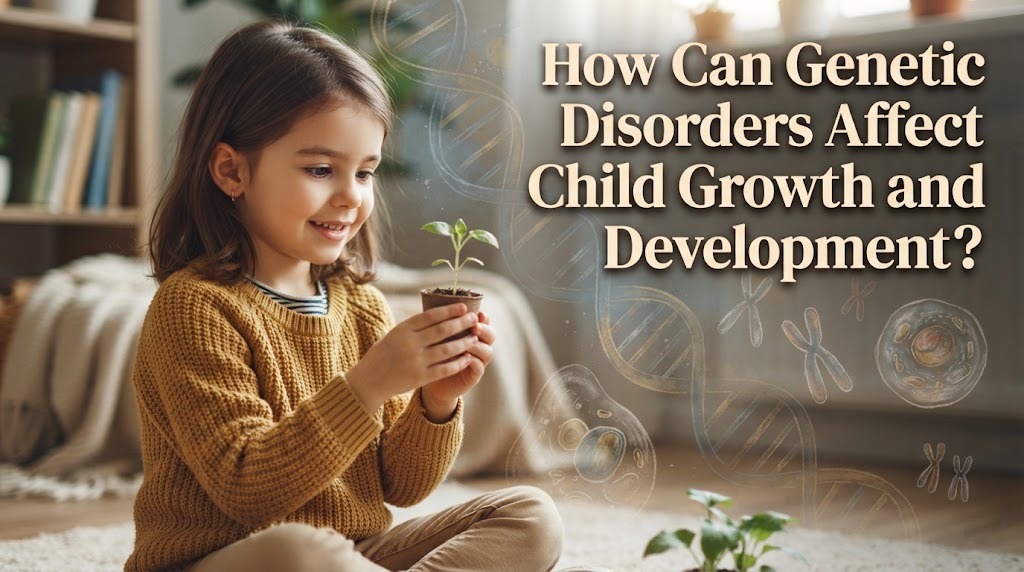
Genetic disorders can affect children in different ways because genes play an important role in growth, development, and body functions. Some genetic conditions may influence physical growth, while others can affect learning, communication, movement, or social development. The severity of these effects can vary significantly from one child to another. Early recognition and appropriate medical evaluation can help families understand a child's specific needs.
HOW CAN GENETIC DISORDERS AFFECT PHYSICAL GROWTH?
Some genetic disorders can influence a child's height, weight, bone development, or overall physical growth. Certain conditions may cause children to grow more slowly than expected, while others can affect body proportions or the development of specific organs. Growth patterns can also change as a child gets older.
However, differences in growth do not automatically indicate a genetic disorder. Children naturally grow at different rates, and nutrition, hormones, chronic illnesses, and other factors can also influence growth. Healthcare professionals may monitor growth over time to determine whether a child's development follows an expected pattern.
CAN GENETIC DISORDERS AFFECT BRAIN DEVELOPMENT?
Genetic conditions can sometimes affect brain development and nervous system function. Depending on the condition, a child may experience differences in learning, memory, attention, movement, or communication. Some children may reach developmental milestones later than expected.
Developmental differences can vary widely between children. A delay in one area does not necessarily mean that every aspect of development will be affected. Professional developmental assessments can help identify a child's strengths and areas where additional support may be useful.
HOW CAN GENETIC DISORDERS AFFECT SPEECH AND LEARNING?
Some genetic disorders may influence a child's ability to develop speech, language, learning, or communication skills. A child may take longer to use words, understand language, follow instructions, or develop certain academic skills. The specific pattern depends on the genetic condition and how it affects the nervous system.
Early support can be helpful when developmental difficulties are identified. Depending on the child's needs, support may involve speech and language therapy, educational assistance, physical therapy, or other professional services. These interventions are generally tailored to the child's individual development rather than based only on the genetic diagnosis.
CAN GENETIC DISORDERS AFFECT MOTOR DEVELOPMENT?
Some genetic conditions can affect muscle strength, coordination, balance, or movement. As a result, a child may take longer to sit, crawl, stand, walk, or perform other motor skills. Certain conditions may also affect fine motor abilities, such as holding objects or performing precise movements.
Motor development should be considered as part of the child's overall developmental pattern. A child who experiences movement difficulties may benefit from assessment by healthcare professionals who can determine the possible cause. Appropriate therapy and supportive activities may help the child develop skills and participate more comfortably in daily activities.
WHY IS EARLY EVALUATION IMPORTANT?
Early evaluation can help identify developmental differences and determine whether further medical assessment is needed. Healthcare professionals may review a child's growth pattern, developmental milestones, family history, physical characteristics, and symptoms. When a genetic condition is suspected, genetic testing may sometimes be considered.
Early evaluation does not necessarily mean that a child has a genetic disorder. Many developmental or growth differences can have other explanations. However, identifying the underlying cause can help families access appropriate monitoring, treatment, educational support, and developmental services when needed.
HOW CAN FAMILIES SUPPORT CHILDREN WITH GENETIC DISORDERS?
Children with genetic disorders may benefit from a supportive environment that recognizes both their challenges and abilities. Families can work with healthcare professionals, therapists, and educators to create appropriate developmental and educational support. Regular medical follow-up may also help monitor changes in growth and health.
It is important to remember that a genetic diagnosis does not define every aspect of a child's abilities or future development. Children with the same genetic condition can have different experiences and needs. Providing patience, encouragement, appropriate healthcare, and opportunities to learn can support a child's overall well-being.
CONCLUSION
Genetic disorders can affect child growth and development in areas such as physical growth, brain development, speech, learning, movement, and communication. The effects vary depending on the specific condition and the individual child. Developmental differences should not automatically be interpreted as evidence of a genetic disorder because many other factors can influence childhood development. When concerns arise, professional evaluation can help identify possible causes and determine appropriate support. Early understanding and individualized care can help children receive the assistance they need as they grow.
Tentang Penulis
Gusti Ayu Tita P
Penulis — Universitas STEKOM
Penulis aktif yang berfokus pada isu-isu akademik, teknologi pendidikan, dan pengembangan sumber daya manusia di lingkungan kampus.















