How Can People Protect Themselves From Volcanic Ash?
Gusti Ayu Tita P
19 September 2026
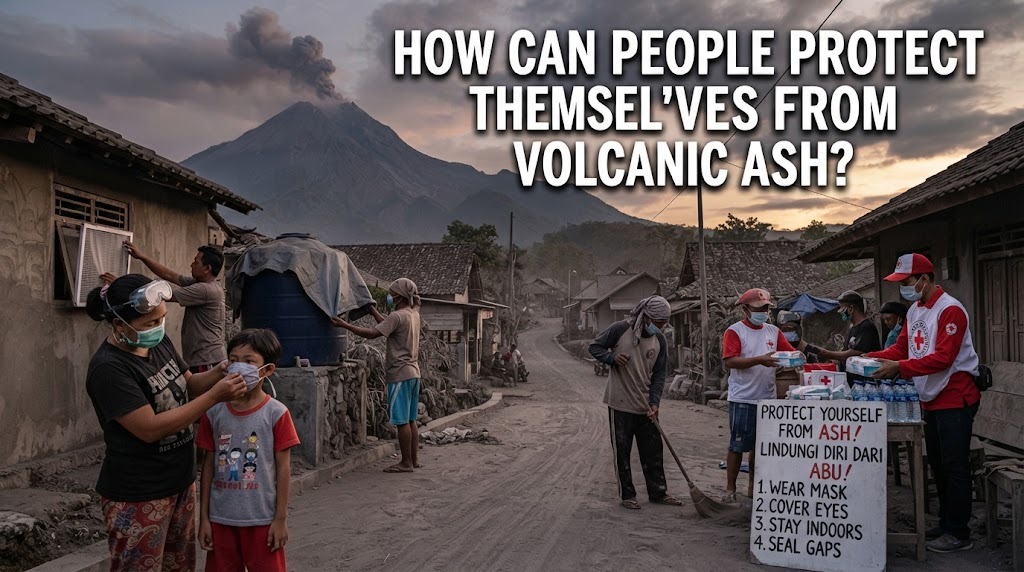
Volcanic eruptions can release large amounts of volcanic ash into the air and surrounding areas. The fine particles can affect breathing, eyes, skin, water, food, and daily activities. People living near active volcanoes should understand how to protect themselves before, during, and after ashfall. Proper protection can reduce health risks and make it easier to stay safe during an eruption.
USE PROPER MASKS
One of the most important ways to protect yourself from volcanic ash is to use a proper protective mask. Fine ash particles can enter the respiratory system when people breathe contaminated air. A well-fitting particulate respirator, such as an N95 or equivalent, can provide better protection than a simple cloth mask when used correctly. People should avoid unnecessary outdoor activity when ash is falling.
If a suitable respirator is not available, people should follow local health guidance about available alternatives. Masks should fit properly around the face to reduce gaps where ash can enter. People with breathing problems should take extra precautions and follow advice from health professionals. Reducing exposure to ash-filled air is an important part of respiratory protection.
PROTECT YOUR EYES AND SKIN
Volcanic ash can irritate the eyes and skin because the particles are small and abrasive. People should wear protective glasses or goggles when ash is present, especially when cleaning outdoor areas. Contact lenses may increase discomfort if ash enters the eyes, so people should follow health guidance about eye protection. Avoid rubbing the eyes because this can increase irritation.
Long sleeves, long trousers, and suitable footwear can also help reduce direct contact with ash. After being exposed, people should gently wash their skin with clean water. If ash enters the eyes, rinse them carefully with clean water rather than rubbing them. Eye and skin protection is especially important during heavy ashfall and cleanup activities.
STAY INDOORS DURING HEAVY ASHFALL
Staying indoors can significantly reduce exposure to volcanic ash. Close windows and doors to prevent ash from entering the building. If possible, limit activities that bring outdoor ash inside, such as unnecessary opening of doors or windows. People should remain indoors until authorities provide information that outdoor conditions are safer.
It is also important to keep children and pets indoors during heavy ashfall. People should monitor official emergency information for updates about air quality and evacuation instructions. Staying indoors does not mean ignoring an evacuation order because people must leave immediately when authorities instruct them to evacuate. Safety decisions should always follow local volcanic hazard information.
KEEP FOOD AND WATER CLEAN
Volcanic ash can contaminate food and water sources when particles settle on exposed surfaces. People should cover drinking water containers and keep food in closed containers. Outdoor food, vegetables, and other items exposed to heavy ash should be handled according to local health advice. Water sources should also be checked before use if they may have been affected by ash.
Cleaning containers and surfaces can help reduce the amount of ash entering food or drinking water. People should avoid using water that authorities have declared unsafe. If safe water is unavailable, follow official instructions about alternative water supplies. Clean food and water are essential for reducing additional health risks after ashfall.
CLEAN VOLCANIC ASH SAFELY
Cleaning volcanic ash requires care because dry ash can easily become airborne again. People should avoid sweeping large amounts of dry ash aggressively because this can increase particles in the air. Lightly dampening ash before cleaning can help reduce dust, although people should avoid creating excessive water that could overload roofs or drainage systems. Protective masks, eye protection, and suitable clothing should be used during cleanup.
Heavy ash on roofs can add significant weight and may create a structural risk. Roof cleaning should only be done when it is safe, and dangerous work should be handled by trained people when necessary. Ash should also be kept away from drains and waterways where possible. Proper cleanup can reduce exposure and help prevent additional damage to homes and infrastructure.
FOLLOW OFFICIAL SAFETY INFORMATION
People should always monitor official information during a volcanic eruption. Authorities can provide updates about ashfall, evacuation zones, air quality, road conditions, and other hazards. Information from reliable government agencies and emergency services is more useful than unverified messages on social media. People should also know their local evacuation routes before an eruption occurs.
If authorities issue an evacuation order, people should leave the affected area according to the recommended route. They should bring essential supplies when possible and avoid returning until authorities confirm that it is safe. Following official instructions can greatly reduce exposure to volcanic hazards. Preparation and reliable information are important parts of volcanic ash safety.
CONCLUSION
People can protect themselves from volcanic ash by wearing suitable masks, protecting their eyes and skin, staying indoors, keeping food and water clean, and cleaning ash carefully. They should also monitor official information and follow evacuation instructions when required. Good preparation can reduce exposure to ash and help communities respond more safely. Knowing the right protective actions is essential during and after a volcanic eruption.
Tentang Penulis
Gusti Ayu Tita P
Penulis — Universitas STEKOM
Penulis aktif yang berfokus pada isu-isu akademik, teknologi pendidikan, dan pengembangan sumber daya manusia di lingkungan kampus.