
How Do Hormonal Disorders Affect the Body?
Gusti Ayu Tita P
22 September 2026
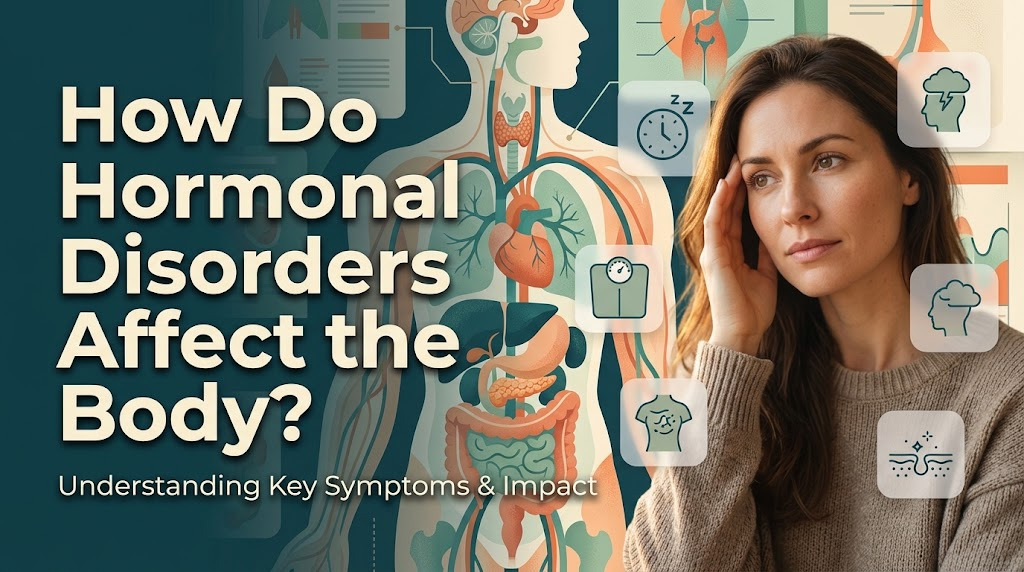
Hormonal disorders can affect the body in different ways because hormones help regulate many essential processes. They influence metabolism, growth, energy, sleep, mood, blood sugar, and reproductive functions. When hormone production or activity changes, these processes may also be affected.
The effects of a hormonal disorder depend on which hormone is involved and how its function has changed. Some changes may be subtle at first, while others can become more noticeable over time. Understanding the role of hormones can help explain why one hormonal problem may affect several parts of the body.
AFFECTING METABOLISM AND ENERGY
Hormones play an important role in regulating metabolism and energy use. Thyroid hormones, for example, help regulate how the body uses energy. Changes in thyroid hormone function can therefore be associated with changes in energy levels and other metabolic processes.
Hormonal changes can also influence appetite and the way the body processes nutrients. However, changes in energy or appetite can have many possible causes. These symptoms should therefore be considered together with other signs and the person's overall health condition.
AFFECTING GROWTH AND DEVELOPMENT
Certain hormones are essential for growth and development. Growth-related hormones work together with other hormones to support changes in the body during childhood and adolescence. Hormonal problems affecting these processes may influence normal patterns of physical development.
Hormonal changes can also occur naturally during puberty. These changes are an important part of normal development and do not automatically indicate a hormonal disorder. If growth or development appears unusual or causes concern, a healthcare professional can assess the situation.
AFFECTING REPRODUCTIVE FUNCTIONS
Reproductive hormones play important roles in puberty, the menstrual cycle, and other reproductive processes. Changes in these hormones may affect menstrual patterns or other reproductive functions. The effects can vary depending on the specific hormones involved.
Hormonal changes during puberty and the menstrual cycle can be normal. However, persistent or unusual reproductive changes may require further evaluation. Medical assessment can help determine whether the changes are part of normal hormonal variation or related to another condition.
AFFECTING MOOD AND OTHER BODY FUNCTIONS
Hormones can interact with the brain and nervous system, so hormonal changes may sometimes be associated with changes in mood, sleep, or energy. Different hormones can influence different body processes, meaning that the effects of a hormonal disorder are not always limited to one area.
Hormonal disorders may also affect blood sugar regulation, fluid balance, blood pressure, or other functions depending on the hormone involved. Since many symptoms can have several causes, it is important to evaluate the overall pattern rather than assuming that one symptom is caused by hormones.
CONCLUSION
Hormonal disorders can affect metabolism, energy, growth, development, reproductive functions, mood, and other body processes. The specific effects depend on which hormone is affected and whether hormone production or activity is too high, too low, or otherwise altered.
Not every change in the body indicates a hormonal disorder. Persistent or unusual symptoms should be evaluated in context, and a healthcare professional can recommend appropriate examinations or tests when necessary.
Tentang Penulis
Gusti Ayu Tita P
Penulis — Universitas STEKOM
Penulis aktif yang berfokus pada isu-isu akademik, teknologi pendidikan, dan pengembangan sumber daya manusia di lingkungan kampus.















