
How Does Mental Burden Affect Decision Making?
Gusti Ayu Tita P
21 September 2026
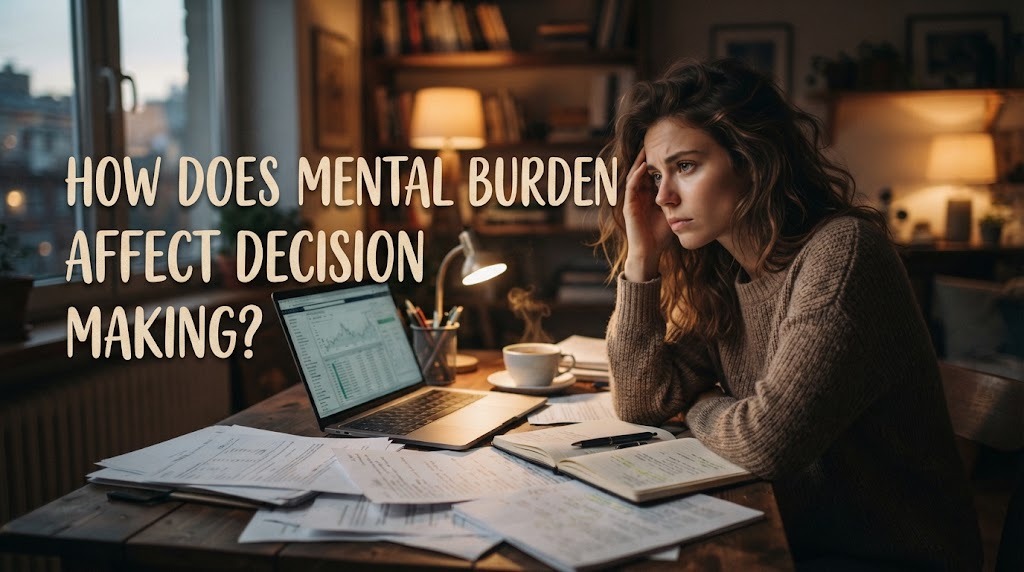
Mental burden can influence the way a person evaluates choices, especially when the mind is already occupied by worries, responsibilities, or unresolved problems. Making a decision requires attention, information processing, and the ability to consider possible consequences. When too many concerns compete for attention, decision making can become more difficult and tiring. A person may hesitate, change their mind repeatedly, or choose an option simply to end the pressure of deciding. Understanding this connection can help people make decisions more calmly and systematically.
WHY CAN MENTAL BURDEN MAKE DECISIONS FEEL HARDER?
Every decision requires some amount of mental effort. When someone is already thinking about several problems, less attention may be available for evaluating a new choice. Mental overload can make even simple decisions feel complicated. A person may spend too much time comparing minor details because their mind is already crowded. This can make the decision process feel more exhausting than the situation itself requires.
Mental burden can also make it difficult to identify the most important information. Several thoughts may compete with the facts needed to make a reasonable choice. Reduced mental clarity can lead to hesitation or repeated reconsideration. Writing down the main options and their practical consequences can help organize the information. This creates a clearer structure for making a decision.
HOW DOES OVERTHINKING AFFECT DECISION MAKING?
Overthinking can cause a person to analyze the same decision repeatedly without reaching a conclusion. They may imagine many possible outcomes and worry about choosing incorrectly. Repeated analysis can increase mental pressure rather than provide additional clarity. At some point, reviewing the same information again may no longer add anything useful. This can lead to decision paralysis or unnecessary delays.
A practical approach is to identify what information is actually needed before making the decision. Set a reasonable point at which enough information has been gathered to choose an option. Clear decision limits can prevent endless comparison. Not every decision requires perfect certainty or a completely risk-free outcome. Focusing on what is reasonably known can make the process more manageable.
CAN STRESS CHANGE HOW SOMEONE MAKES CHOICES?
Stress can affect attention and emotional responses, which may influence decision making. When someone feels pressured, they may focus more strongly on immediate problems than on longer-term consequences. Emotional pressure can make a decision feel more urgent than it actually is. A person may also avoid a choice simply because they want to reduce uncomfortable feelings. This can make the decision process less deliberate.
Taking a short pause before making a nonurgent decision can provide time to regain perspective. Emotional distance does not mean ignoring feelings, but allowing enough space to consider both feelings and practical information. Simple actions such as breathing slowly, taking a walk, or postponing a decision until a calmer moment may help. However, urgent decisions sometimes cannot be delayed, so the available time and circumstances should always be considered.
WHY CAN MENTAL FATIGUE LEAD TO DECISION FATIGUE?
Making many decisions throughout the day can become mentally tiring. When a person has already made numerous choices, another decision may feel more difficult than it would earlier in the day. Decision fatigue can reduce the willingness to compare options carefully. Someone may choose the easiest available option simply because they no longer want to spend additional mental energy. This can happen with both major and everyday decisions.
Reducing unnecessary choices can help preserve mental energy for more important matters. Creating routines for repetitive activities can limit the number of decisions that need to be made. Simple routines can include preparing items in advance, organizing recurring tasks, or using a consistent schedule. This allows attention to be reserved for decisions that genuinely require careful consideration. The goal is not to eliminate choices but to manage mental resources more effectively.
HOW CAN MENTAL BURDEN INFLUENCE RISK PERCEPTION?
Mental pressure can affect how a person thinks about possible risks and consequences. When someone is already worried, negative outcomes may receive more attention than neutral or positive possibilities. Heightened worry can make certain risks feel more immediate or significant. On the other hand, mental exhaustion may sometimes make a person less willing to examine details carefully. Individual responses can vary depending on the situation and personal circumstances.
A structured comparison can make risk evaluation more balanced. List the known facts, possible benefits, possible disadvantages, and factors that can be controlled. Evidence-based thinking can help separate realistic concerns from assumptions. It is also useful to recognize what remains uncertain rather than pretending every outcome can be predicted. This approach can support more deliberate decisions without requiring complete certainty.
HOW CAN YOU MAKE BETTER DECISIONS WHEN YOUR MIND FEELS OVERLOADED?
Start by reducing the number of issues competing for attention. Write down the decision, identify the available options, and determine which information is genuinely necessary. Clear priorities can make a complicated choice easier to understand. If possible, divide the decision into smaller questions rather than trying to solve everything at once. This can reduce mental pressure and create a more organized process.
It is also important to recognize when a decision can safely wait. Taking a break, getting enough rest, or discussing the situation with a trusted person may provide another perspective. Adequate recovery can support clearer thinking, especially when mental fatigue is affecting attention. If persistent mental burden is interfering with work, study, relationships, sleep, or everyday functioning, professional support may be appropriate. A qualified mental health professional can help address ongoing difficulties that make decision making consistently challenging.
CONCLUSION
Mental burden can affect decision making by reducing concentration, increasing overthinking, contributing to decision fatigue, and influencing how risks are perceived. When the mind is crowded with concerns, even ordinary choices can feel more complicated and exhausting. Writing down options, focusing on relevant information, setting reasonable decision limits, and taking breaks can help create a clearer process. Calm reflection and adequate mental recovery can make it easier to consider choices without unnecessary pressure. When persistent mental difficulties significantly interfere with everyday decisions and functioning, seeking appropriate professional support can be helpful.
Tentang Penulis
Gusti Ayu Tita P
Penulis — Universitas STEKOM
Penulis aktif yang berfokus pada isu-isu akademik, teknologi pendidikan, dan pengembangan sumber daya manusia di lingkungan kampus.















