How Is the Treatment of Genetic Disorders Developing Today?
Gusti Ayu Tita P
22 September 2026
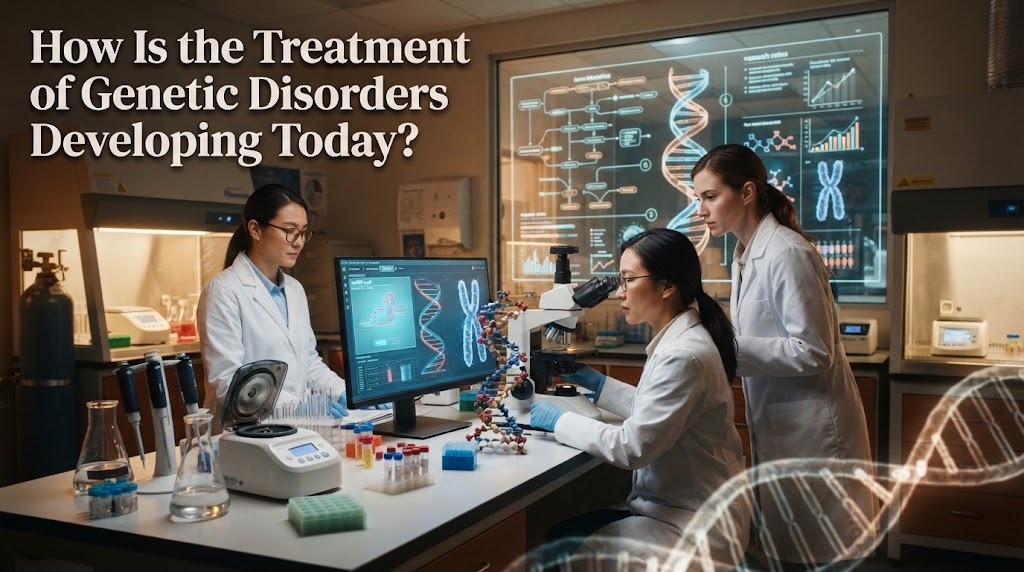
Treatment for genetic disorders is developing as researchers learn more about genes, cells, and the biological processes behind different conditions. In the past, many genetic disorders could mainly be managed through supportive care and symptom control. Today, some conditions can be treated with more targeted approaches designed to address specific genetic or biological problems. These advances are creating new possibilities for genetic disorder treatment and long-term disease management.
HOW ARE GENETIC DISORDERS TRADITIONALLY TREATED?
Traditional treatment for genetic disorders often focuses on managing symptoms and preventing complications. Depending on the condition, care may include medication, physical therapy, nutritional support, surgery, or regular medical monitoring. These approaches do not necessarily change the underlying genetic cause.
Supportive treatment can still be highly important even when newer therapies are available. Many genetic conditions affect several parts of the body and require long-term care from different healthcare specialists. The appropriate treatment depends on the specific disorder, its severity, and the individual's health needs.
HOW IS GENE THERAPY CHANGING GENETIC DISORDER TREATMENT?
Gene therapy aims to address certain genetic problems by introducing, replacing, modifying, or regulating genetic material in cells. Instead of focusing only on symptoms, some gene therapies are designed to target an underlying genetic mechanism. This approach has become an important area of research and clinical development.
Gene therapy is not suitable for every genetic disorder. Different conditions require different strategies, and researchers continue to study how to deliver genetic material safely and effectively. Gene therapy has already become a treatment option for some specific conditions, while many other applications remain under investigation.
WHAT ROLE DOES PRECISION MEDICINE PLAY?
Precision medicine uses information about a person's genes, environment, and other biological characteristics to help guide healthcare decisions. In genetic disorders, this approach can help researchers understand why patients with similar diagnoses may respond differently to certain treatments. It may also support the development of therapies aimed at specific genetic changes.
Genetic testing can provide information that helps identify relevant variants in some conditions. However, finding a genetic variant does not automatically mean that a particular treatment will work. Personalized treatment must be evaluated carefully using clinical evidence and the individual's medical circumstances.
HOW ARE RNA BASED THERAPIES DEVELOPING?
RNA-based therapies are another area of progress in genetic medicine. Some approaches are designed to influence how genetic instructions are processed or used by cells. This can potentially change the production of specific proteins involved in a genetic disorder.
Researchers are studying different RNA technologies for a range of conditions. Some RNA-based treatments have already been developed for specific diseases, while others remain in clinical research. Their effectiveness and safety depend on the specific therapy and condition.
CAN NEW TECHNOLOGIES IMPROVE GENETIC MEDICINE?
Advances in biotechnology, genome sequencing, and computational science are helping researchers identify potential treatment targets more efficiently. Scientists can study genetic changes and their effects on cells in greater detail than before. Genomic research can therefore contribute to the discovery and development of new therapies.
Artificial intelligence and advanced data analysis may also help researchers examine large amounts of biological information. However, promising laboratory findings do not automatically become effective treatments. New therapies must go through scientific research and clinical evaluation to determine their safety and effectiveness.
WHAT CHALLENGES REMAIN IN GENETIC DISORDER TREATMENT?
Despite significant progress, treating genetic disorders remains challenging. Some conditions involve many genes or complex biological processes, making them difficult to target with a single therapy. Delivering treatments to the correct cells or organs can also be technically difficult.
Cost, availability, long-term safety, and access to specialized healthcare can also affect the use of advanced treatments. Clinical trials are important because they help researchers evaluate whether new therapies provide meaningful benefits and what risks they may carry. Continued research is needed before many experimental approaches can become widely available.
CONCLUSION
The treatment of genetic disorders is developing through advances in gene therapy, precision medicine, RNA-based treatments, and genomic research. These approaches aim to move beyond symptom management and address specific biological or genetic mechanisms in some conditions. However, not every genetic disorder currently has a targeted treatment, and many new therapies are still being studied. Traditional medical care and supportive treatment therefore remain important for many patients. As research continues, improved understanding of genetics may lead to more effective and personalized treatment options.
Tentang Penulis
Gusti Ayu Tita P
Penulis — Universitas STEKOM
Penulis aktif yang berfokus pada isu-isu akademik, teknologi pendidikan, dan pengembangan sumber daya manusia di lingkungan kampus.