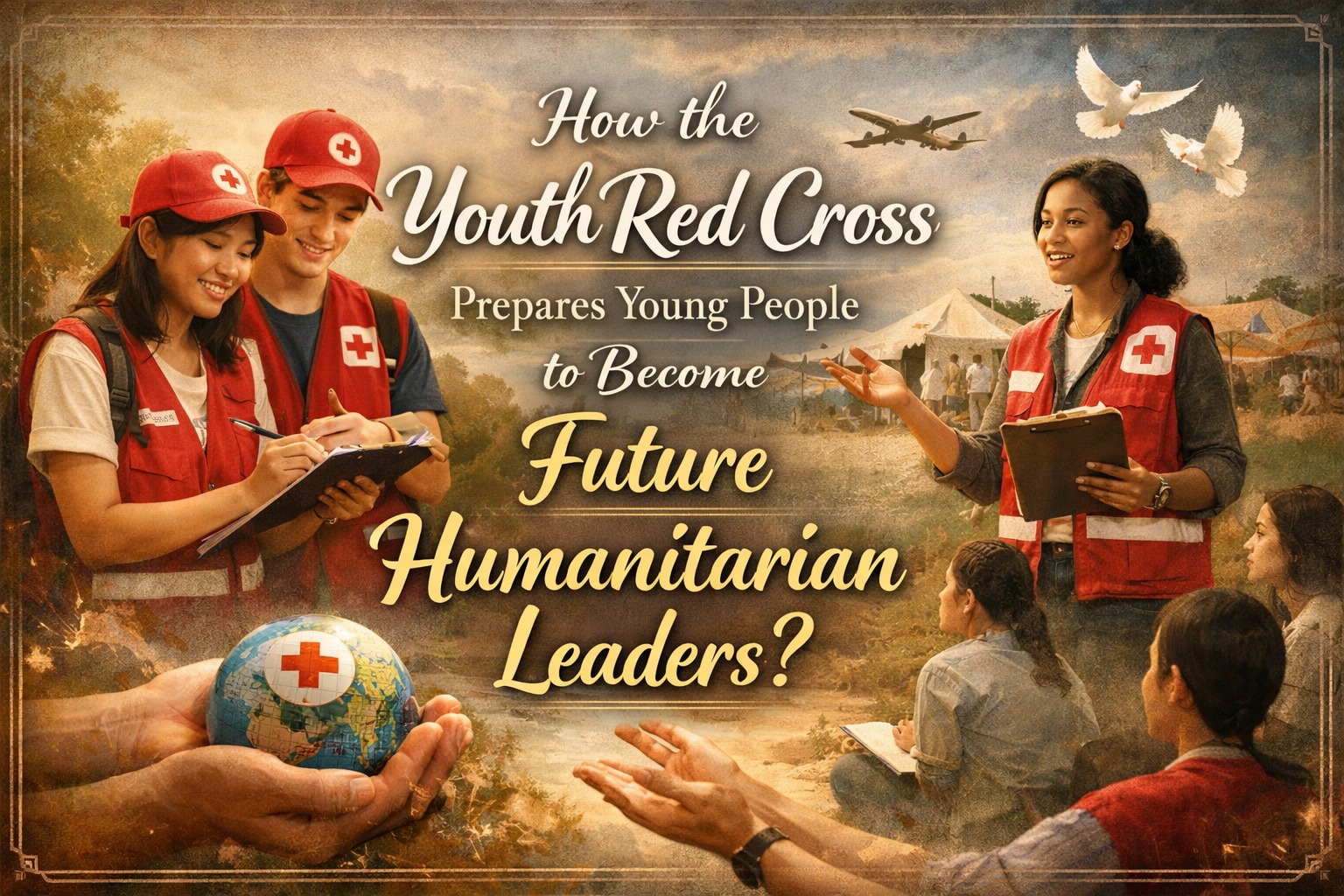
How the Youth Red Cross Prepares Young People to Become Future Humanitarian Leaders?
Gusti Ayu Tita P
21 Oktober 2026
The Youth Red Cross plays an important role in preparing young generations to become future humanitarian leaders who are ready to help communities and respond to various social challenges. Through education, training, and volunteer activities, young people learn valuable skills that support humanitarian missions, such as teamwork, empathy, communication, and problem-solving.
In a world that continues to face challenges such as natural disasters, health issues, and social problems, the involvement of young people becomes increasingly important. The Youth Red Cross movement provides opportunities for students and young volunteers to develop strong character and understand the importance of helping others. These experiences become a foundation for creating responsible leaders who can contribute positively to society.
THE ROLE OF YOUTH RED CROSS IN BUILDING HUMANITARIAN CHARACTER
The Youth Red Cross focuses on developing young people’s awareness of humanitarian values from an early age. Members are introduced to important principles such as humanity, voluntary service, neutrality, and compassion. These values encourage young individuals to care about others and understand the importance of supporting people in need.
Through various programs, Youth Red Cross members learn how to become responsible volunteers. They participate in activities related to community service, health education, disaster awareness, and social assistance. These experiences help young people build confidence while developing a strong sense of responsibility toward their communities.
The organization also teaches the importance of respecting differences among people. Young volunteers learn that humanitarian work requires cooperation without discrimination. This mindset helps them become leaders who can create positive changes in diverse communities.
DEVELOPING LEADERSHIP SKILLS THROUGH TRAINING AND ACTIVITIES
One of the main goals of the Youth Red Cross is to improve leadership skills among young people. Members receive training that helps them manage teams, make decisions, and communicate effectively. These abilities are essential for future leaders who must face complex problems in society.
Youth Red Cross activities often involve teamwork and problem-solving situations. For example, members may participate in first aid training, emergency response simulations, or social campaigns. These activities teach them how to stay calm, analyze situations, and take appropriate actions during difficult conditions.
By experiencing real volunteer situations, young people gain practical knowledge that cannot always be learned inside classrooms. They learn how to organize events, coordinate with others, and motivate their teams. These skills prepare them to become capable leaders in humanitarian fields and beyond.
PREPARING YOUNG GENERATIONS FOR DISASTER RESPONSE
The disaster response training provided by the Youth Red Cross helps young people understand how to assist communities during emergencies. Members are taught basic skills such as first aid, evacuation procedures, and emergency preparedness. This knowledge allows them to become more prepared when facing unexpected situations.
Natural disasters can affect many aspects of human life, and communities need individuals who are ready to provide support. Through Youth Red Cross programs, young volunteers learn how humanitarian actions can reduce the impact of disasters. They also understand the importance of working together with professional organizations and local communities.
This preparation creates a generation that is more aware of safety and social responsibility. Young people who have humanitarian experience are more likely to contribute actively when their communities need help. Their involvement can strengthen disaster resilience and encourage others to participate in humanitarian efforts.
BUILDING EMPATHY AND SOCIAL RESPONSIBILITY AMONG YOUTH
Empathy is one of the most important qualities developed through the Youth Red Cross movement. Young members learn to understand the experiences and difficulties faced by other people. This ability helps them become leaders who make decisions based on care and consideration.
Through volunteer activities, Youth Red Cross members interact with different groups in society. They may help organize health campaigns, environmental programs, or community support projects. These experiences teach them that even small actions can create meaningful impacts.
Social responsibility also becomes a key part of their personal development. Young people learn that leadership is not only about achieving personal success but also about contributing to the welfare of others. This understanding helps create future leaders with strong moral values.
THE FUTURE IMPACT OF YOUTH HUMANITARIAN LEADERS
The development of young humanitarian leaders is important for building a better future. The Youth Red Cross creates opportunities for young people to practice leadership, improve skills, and gain valuable experiences. These qualities can help them become individuals who are ready to solve social challenges.
Future leaders need more than academic knowledge; they also need communication skills, teamwork abilities, and emotional awareness. Youth Red Cross programs provide a supportive environment where these abilities can grow naturally. As a result, young volunteers become more confident in making positive contributions.
The presence of young humanitarian leaders can bring new ideas and energy to communities. They can inspire other young people to participate in social activities and create a culture of helping others. Through continuous learning and dedication, Youth Red Cross members can become important figures in future humanitarian efforts.
CONCLUSION
The Youth Red Cross is not only a youth organization but also a platform for developing future humanitarian leaders. Through training, volunteering, and community involvement, young people gain important skills and values needed to serve society.
By encouraging leadership development, humanitarian awareness, and social responsibility, the Youth Red Cross helps prepare a generation that is caring, capable, and ready to face future challenges. The experiences gained through this movement can become a strong foundation for young people to create meaningful changes in the world.
SEO Keywords:
Tentang Penulis
Gusti Ayu Tita P
Penulis — Universitas STEKOM
Penulis aktif yang berfokus pada isu-isu akademik, teknologi pendidikan, dan pengembangan sumber daya manusia di lingkungan kampus.