
The Impact of Decentralization on Regional Economic Growth
Gusti Ayu Tita P
4 Oktober 2026
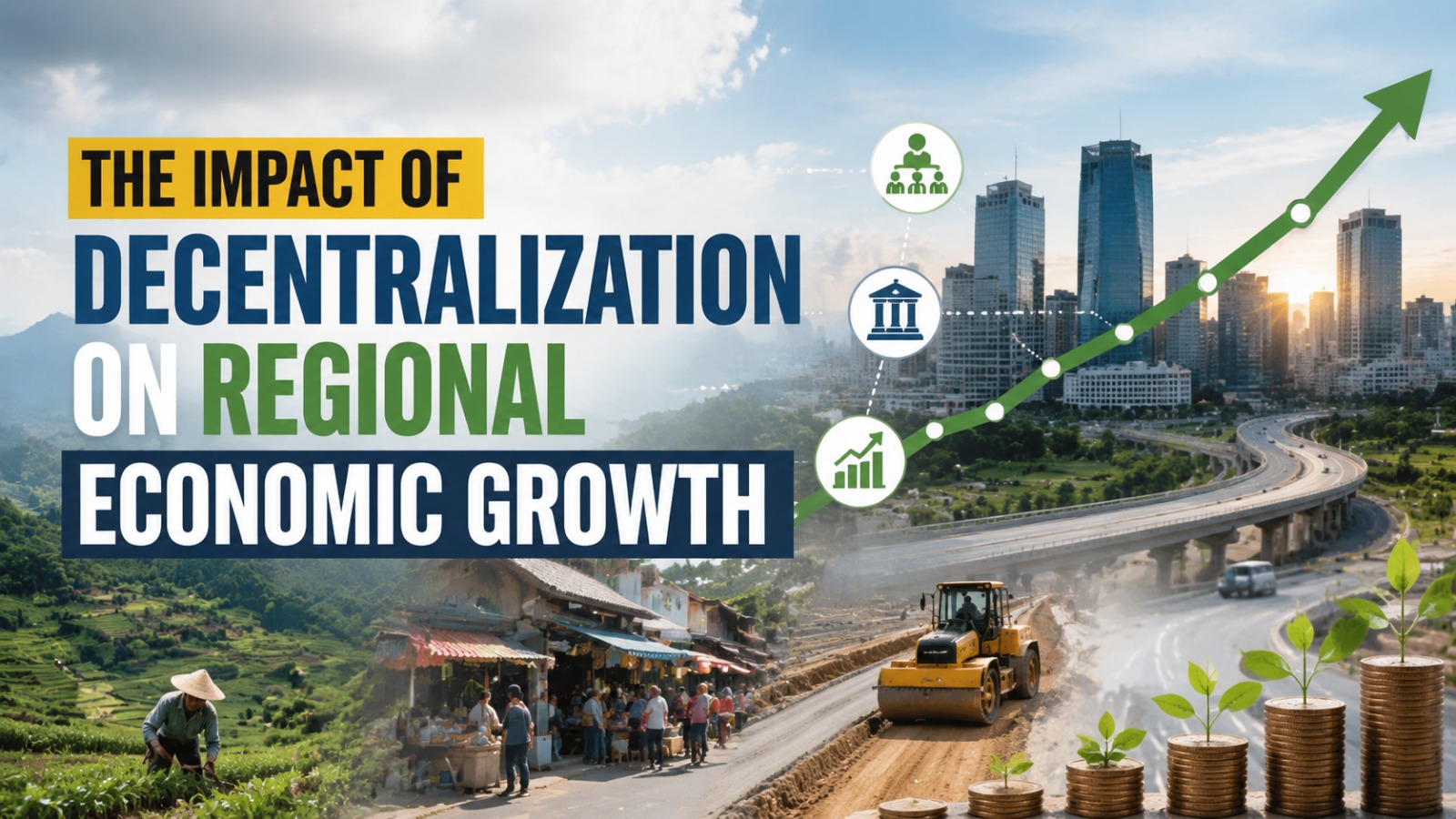
Decentralization is a governance system that gives greater authority to regional governments to manage their own resources and development programs. This system allows local governments to make decisions based on the economic conditions and potential of their regions. In many countries, decentralization has become an important strategy to encourage balanced development and increase regional competitiveness.
The implementation of decentralization provides opportunities for regions to create economic policies that match local needs. Local governments can focus on developing sectors that have strong potential, such as agriculture, tourism, trade, and small businesses. Through effective management, decentralization can support regional economic growth and improve the welfare of local communities.
THE ROLE OF LOCAL GOVERNMENTS IN ECONOMIC DEVELOPMENT
Local governments have a significant role in managing regional economic development after the implementation of decentralization. They are responsible for creating policies that encourage investment, improve infrastructure, and support local businesses. Better decision-making at the regional level allows economic programs to be implemented more quickly and effectively.
Decentralization also gives regions more flexibility in utilizing their natural and human resources. Each region can develop unique economic advantages based on its strengths and opportunities. For example, coastal areas can focus on marine industries, while agricultural regions can improve farming productivity and food production.
Furthermore, strong local leadership can increase economic innovation. Regional governments that actively support entrepreneurship and business development can create more job opportunities. This condition contributes to higher income levels and stronger local economies.
HOW DECENTRALIZATION SUPPORTS REGIONAL INVESTMENT?
One of the major impacts of decentralization is the improvement of investment opportunities in regions. Local governments can design investment policies that attract businesses and investors according to regional potential. Simplified licensing processes and improved public services can make regions more attractive for economic activities.
Regional investment plays an important role in creating employment and increasing economic productivity. When companies invest in local areas, they can bring new technologies, improve workforce skills, and expand business networks. These benefits can accelerate economic development and increase regional competitiveness.
However, successful investment growth requires effective government management. Local authorities need to maintain transparency, provide adequate infrastructure, and create a stable business environment. These efforts help ensure that investment provides long-term benefits for communities.
THE CONTRIBUTION OF SMALL BUSINESSES AND LOCAL ECONOMIES
Small and Medium Enterprises are important factors in supporting regional economic growth. Through decentralization, local governments can develop programs that help small businesses access funding, training, and wider markets. These programs strengthen local economic activities and encourage community participation.
The growth of local businesses can reduce unemployment and increase household income. Small businesses also help preserve local products and cultural values by promoting regional specialties. With proper support, local entrepreneurs can compete in larger markets and contribute to economic stability.
In addition, decentralization allows governments to create economic policies that directly address local business challenges. Supportive regulations and development programs can help businesses grow sustainably. As a result, regional economies become more independent and resilient.
THE IMPORTANCE OF INFRASTRUCTURE DEVELOPMENT IN DECENTRALIZED REGIONS
Infrastructure development is one of the key elements that influences regional economic growth. Decentralization allows local governments to prioritize infrastructure projects based on regional needs. Better roads, transportation systems, communication networks, and public facilities can improve economic activities.
Improved infrastructure makes it easier for businesses to distribute products and access wider markets. It also encourages new investments and increases productivity in various economic sectors. Regions with strong infrastructure usually have greater opportunities to develop competitive industries.
However, infrastructure development requires effective planning and financial management. Local governments must ensure that development projects provide real benefits for communities. Proper infrastructure planning can create sustainable economic growth and reduce inequality between regions.
CHALLENGES OF DECENTRALIZATION IN REGIONAL ECONOMIC GROWTH
Although decentralization provides many economic benefits, its implementation also faces several challenges. One major challenge is the unequal capacity between regions. Some areas have better resources, technology, and financial support, while others may experience difficulties in managing economic development.
Another challenge is maintaining good governance at the regional level. Weak management, lack of transparency, and ineffective policies can reduce the positive impact of decentralization. Therefore, local governments need strong institutions and skilled human resources to maximize economic opportunities.
To overcome these challenges, cooperation between central and regional governments is necessary. Continuous evaluation, training, and improvement of policies can help regions achieve better economic performance. Effective decentralization requires commitment, innovation, and responsible leadership.
THE FUTURE OF DECENTRALIZATION AND REGIONAL ECONOMIC DEVELOPMENT
The future of regional economic growth depends on how effectively decentralization is managed. Regions that can utilize their resources, encourage innovation, and create business-friendly environments will have greater opportunities to achieve economic progress. Decentralization can become a powerful tool for creating more balanced national development.
The combination of technology, investment, and community participation will strengthen regional economic development. Digital transformation can help local businesses reach wider markets and improve government services. Meanwhile, active community involvement ensures that economic programs meet real local needs.
In the future, successful decentralization will create stronger regional economies with better employment opportunities and improved living standards. By developing local potential and implementing effective policies, regions can contribute significantly to overall national economic growth.
CONCLUSION
Decentralization has a major impact on regional economic growth by providing local governments with greater authority to manage development strategies. Through effective policies, investment support, infrastructure improvement, and business development, decentralization can increase regional economic potential.
Although challenges remain, proper management and strong governance can maximize the benefits of decentralization. With continuous innovation and cooperation, decentralization can help create sustainable economic growth and improve the prosperity of communities.
Tentang Penulis
Gusti Ayu Tita P
Penulis — Universitas STEKOM
Penulis aktif yang berfokus pada isu-isu akademik, teknologi pendidikan, dan pengembangan sumber daya manusia di lingkungan kampus.