The Real Impact of Community Service Program on Students and the Local Community
Gusti Ayu Tita P
27 Februari 2026
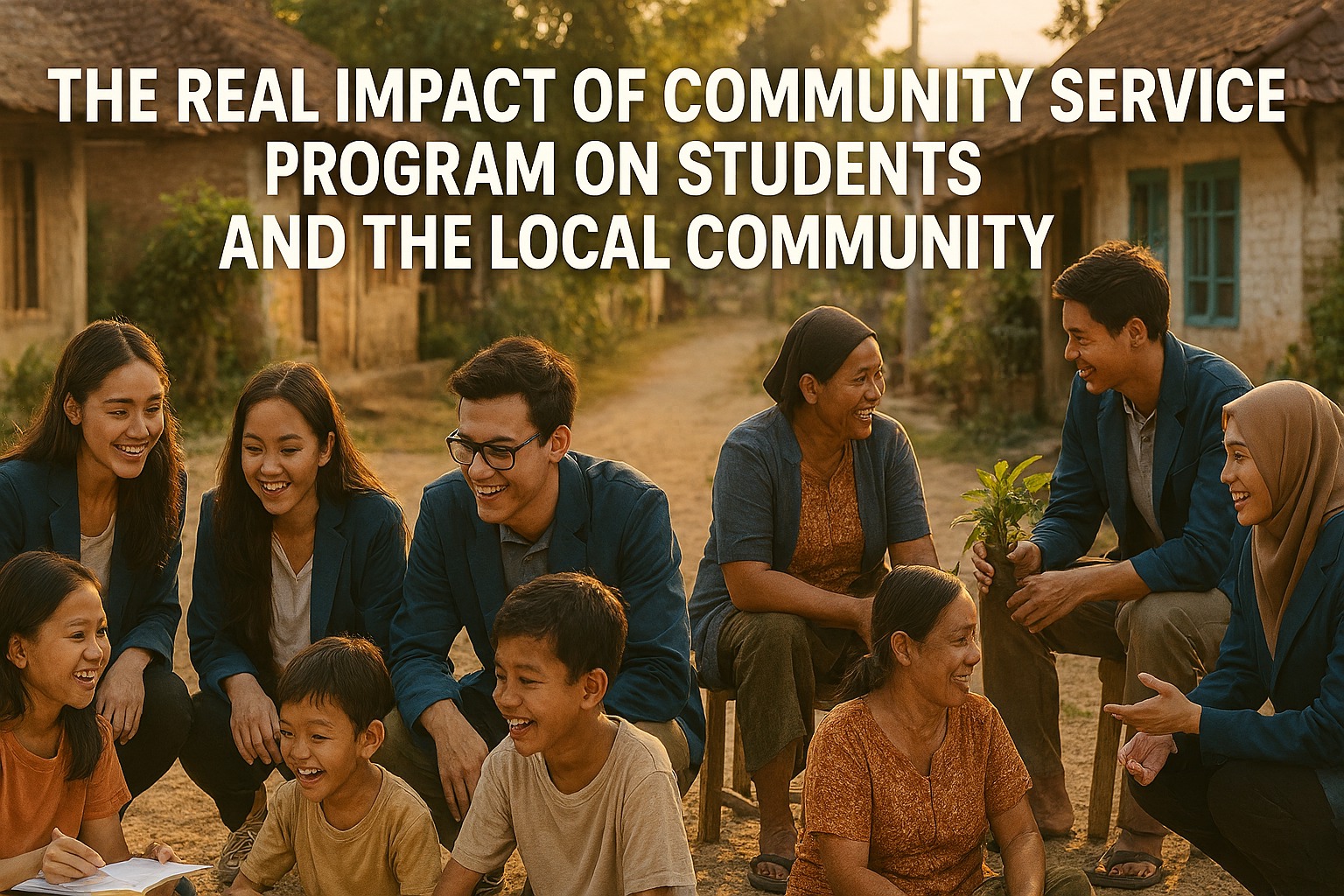
Community Service Program has become a central component of higher education in many countries. Designed to bridge academic knowledge and real-world challenges, this program places students directly within communities to carry out social, educational, or developmental initiatives. While often seen as a graduation requirement, its broader influence goes far beyond academic credits.
The real impact of a Community Service Program can be observed not only in student development but also in the transformation of local communities. When implemented effectively, it fosters collaboration, encourages sustainable solutions, and builds mutual understanding between universities and society. This article explores how such programs shape student growth and contribute meaningfully to local development.
UNDERSTANDING THE PURPOSE OF COMMUNITY SERVICE PROGRAM
At its core, a Community Service Program aims to connect theoretical learning with practical application. Universities design these initiatives to encourage students to step outside the classroom and engage directly with societal issues. This approach transforms abstract concepts into lived experiences.
The purpose is not limited to volunteerism. Instead, it focuses on structured engagement where students identify community needs, design relevant projects, and evaluate their outcomes. This process enhances analytical thinking while strengthening a sense of civic responsibility.
By immersing students in real-life contexts, the program promotes experiential learning. Students gain insights that cannot be replicated through textbooks or lectures alone. They learn to interpret social dynamics, cultural norms, and economic realities in a deeper way.
Ultimately, the program serves as a bridge between higher education and public service. It reinforces the idea that knowledge carries responsibility and that academic institutions play a vital role in community empowerment.
IMPACT ON STUDENT PERSONAL GROWTH
One of the most significant outcomes of a Community Service Program is personal development. Living and working within a community challenges students to adapt quickly to new environments. This experience fosters independence and resilience.
Students often encounter unexpected obstacles, from logistical constraints to communication barriers. Facing these challenges builds problem-solving skills and emotional maturity. Over time, students develop greater confidence in handling uncertainty.
The program also nurtures empathy. Direct interaction with diverse groups allows students to understand different perspectives and life conditions. This awareness shapes a more compassionate and socially conscious mindset.
In many cases, students report a shift in priorities after completing the program. They begin to value collaboration, community engagement, and ethical responsibility more deeply than before. Such changes reflect lasting personal transformation.
DEVELOPMENT OF PROFESSIONAL AND SOFT SKILLS
Beyond personal growth, Community Service Programs play a crucial role in strengthening professional competencies. Students practice leadership by coordinating activities and guiding community members toward shared goals. These responsibilities mirror real workplace dynamics.
Communication skills are sharpened through daily interaction with residents, local leaders, and fellow team members. Students must explain ideas clearly and listen actively to community feedback. This exchange improves clarity and adaptability in communication.
Teamwork is another essential skill cultivated during the program. Participants from various academic backgrounds collaborate to design and implement projects. Managing differences in opinion encourages negotiation and mutual respect.
Time management and accountability also improve. Meeting deadlines, organizing events, and reporting progress require discipline. These practical experiences equip students with skills highly valued in their future careers.
SOCIAL AND ECONOMIC BENEFITS FOR THE LOCAL COMMUNITY
The impact of a Community Service Program is not limited to students. Local communities often gain access to fresh ideas, updated knowledge, and innovative solutions. Students may introduce educational workshops, health campaigns, or small business strategies that benefit residents.
In some cases, the program supports local economic development. Initiatives such as entrepreneurship training or digital marketing assistance can help small enterprises grow. This creates opportunities for sustainable income generation.
Social cohesion may also strengthen through collaborative activities. Community members become more engaged when they feel heard and involved in project planning. This participatory approach increases trust between residents and academic institutions.
However, meaningful impact requires alignment with genuine community needs. When projects are carefully designed and culturally sensitive, the benefits extend beyond the program’s duration. Sustainable collaboration becomes possible.
CHALLENGES IN IMPLEMENTATION AND SUSTAINABILITY
Despite its potential, implementing a Community Service Program effectively is not without challenges. Limited timeframes often restrict the depth of intervention. Short-term projects may struggle to achieve long-lasting change.
Another challenge lies in understanding local contexts accurately. Without thorough research and community consultation, initiatives may fail to address real priorities. This can reduce both effectiveness and community trust.
Resource constraints also play a role. Financial limitations or logistical barriers may hinder project execution. Students must learn to innovate within available means, which can be both a difficulty and a learning opportunity.
Sustainability remains a key concern. Programs that end without follow-up risk leaving unfinished initiatives. Long-term partnerships between universities and communities are essential to maintain continuity and maximize positive outcomes.
LONG TERM INFLUENCE ON CIVIC ENGAGEMENT
The long-term influence of a Community Service Program can be seen in students’ continued involvement in social causes. Many graduates remain active in volunteer work or pursue careers in public service. Early exposure to community challenges often shapes their professional direction.
The experience also cultivates a sense of belonging to a broader society. Students recognize that their actions can contribute to collective well-being. This realization strengthens civic awareness and responsibility.
For communities, sustained collaboration with universities can open doors to ongoing development initiatives. Trust built during the program may lead to future partnerships, research projects, or policy support.
In the broader perspective, Community Service Programs create a cycle of shared growth. Students gain transformative experiences, while communities receive valuable support. When designed with care and commitment, the impact extends far beyond academic requirements.
Tentang Penulis
Gusti Ayu Tita P
Penulis — Universitas STEKOM
Penulis aktif yang berfokus pada isu-isu akademik, teknologi pendidikan, dan pengembangan sumber daya manusia di lingkungan kampus.