
What Are the Common Types of Genetic Disorders You Should Know?
Gusti Ayu Tita P
22 September 2026
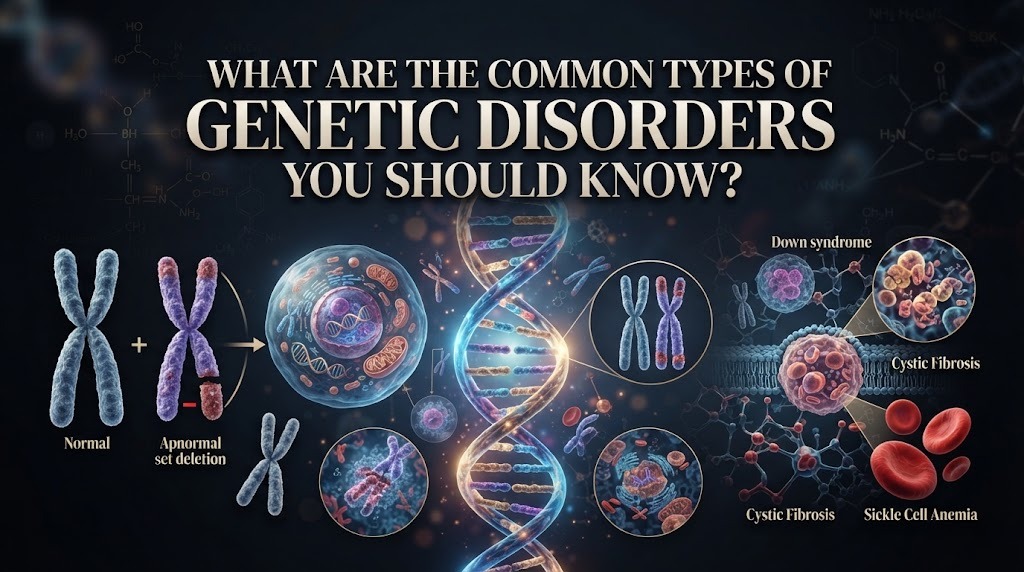
Genetic disorders are health conditions associated with changes in genes, chromosomes, or multiple genetic factors. These changes can affect how cells produce proteins and perform essential functions in the body. Some genetic conditions are inherited from parents, while others can result from new genetic changes or chromosome abnormalities. The symptoms and severity can vary greatly depending on the specific condition. Learning about the common types of genetic disorders can help people understand their causes, characteristics, and potential effects on health.
WHAT ARE THE MAIN TYPES OF GENETIC DISORDERS?
Genetic disorders can generally be grouped into single gene disorders, chromosomal disorders, and complex or multifactorial disorders. Single gene disorders occur when a disease-causing variant affects one particular gene. Chromosomal disorders result from changes in the number or structure of chromosomes. Complex disorders involve multiple genes together with environmental or lifestyle factors.
These categories help doctors and researchers understand how different conditions develop. However, some disorders may have complicated causes that do not fit neatly into only one category. A genetic condition can also differ in its inheritance pattern, symptoms, and age of onset. Therefore, identifying the exact type usually requires medical evaluation and, in some cases, genetic testing.
SINGLE GENE DISORDERS
Single gene disorders are caused by disease-causing changes in one particular gene. Genes provide instructions that help cells produce proteins needed for normal growth and body functions. When an important gene is altered, the resulting protein may not work correctly or may not be produced properly. This can lead to specific health problems depending on the function of the affected gene.
Examples include cystic fibrosis, sickle cell disease, and Huntington disease. Single gene disorders can follow different inheritance patterns, including autosomal dominant, autosomal recessive, and X-linked inheritance. Some may also result from a new genetic variant rather than one inherited from a parent. The symptoms and severity can differ even among people with the same condition.
CHROMOSOMAL DISORDERS
Chromosomal disorders occur when there is an abnormality involving the number or structure of chromosomes. Chromosomes contain many genes, so a missing, extra, duplicated, deleted, or rearranged chromosome segment can affect several biological processes. These changes can influence physical development, growth, learning, reproduction, or the function of different organs.
One well-known example is Down syndrome, which is usually caused by an extra copy of chromosome 21. Other examples include Turner syndrome and Klinefelter syndrome. Unlike many single gene disorders, most chromosome-number abnormalities are not inherited from a parent and instead arise from errors during the formation of reproductive cells or early development. Some structural chromosome changes, however, can be inherited.
MULTIFACTORIAL GENETIC DISORDERS
Multifactorial disorders involve contributions from multiple genes as well as environmental or lifestyle factors. Unlike many single gene conditions, they usually do not follow a simple inheritance pattern. A person may inherit genetic variants that increase susceptibility without necessarily developing the condition. Factors such as diet, physical activity, environmental exposures, and other influences can also affect disease risk.
Examples of conditions with complex genetic and environmental contributions include heart disease, type 2 diabetes, obesity, and certain cancers. These conditions can sometimes appear repeatedly within families, but this does not necessarily mean that one specific gene is being passed directly from parent to child. Instead, family members may share multiple genetic factors and similar environments. This makes the causes and individual risk more complicated to determine.
MITOCHONDRIAL GENETIC DISORDERS
Mitochondrial disorders are associated with changes in mitochondrial DNA or, in some cases, genes in nuclear DNA that affect mitochondrial function. Mitochondria are structures inside cells that help produce energy needed by the body. Because tissues such as the brain, muscles, and heart require substantial amounts of energy, mitochondrial disorders can affect several body systems. Symptoms can vary considerably between different conditions and individuals.
Mitochondrial DNA is generally transmitted through the egg cell, meaning mitochondrial genetic variants are typically passed from mothers to their children. Fathers generally do not pass mitochondrial DNA to their children. Some mitochondrial disorders can affect vision, hearing, movement, metabolism, or other body functions. Their presentation can vary because the proportion and distribution of affected mitochondria can differ between tissues.
HOW ARE GENETIC DISORDERS DIAGNOSED?
Doctors may suspect a genetic condition based on symptoms, physical examination, personal medical history, and family health history. Genetic tests can examine specific genes, multiple genes, or chromosomes depending on the suspected condition. Molecular tests may identify variants in individual genes or gene panels, while chromosomal tests can detect larger changes involving chromosome number or structure. More extensive tests, such as whole exome or whole genome sequencing, may be considered when the genetic cause is unclear.
Genetic counseling can also be useful for individuals and families who have a suspected or confirmed genetic condition. A genetics professional can explain the possible inheritance pattern, discuss the meaning and limitations of test results, and help families understand potential risks. Importantly, not every genetic variant causes disease, so test results need to be interpreted in their medical context. A proper diagnosis should therefore be made with qualified healthcare professionals rather than through genetic information alone.
CONCLUSION
There are several major types of genetic disorders, including single gene disorders, chromosomal disorders, multifactorial disorders, and mitochondrial genetic disorders. Each type has different causes, inheritance patterns, symptoms, and effects on the body. Some conditions are strongly linked to a specific gene, while others involve multiple genetic and environmental factors. Genetic testing and genetic counseling can help identify or clarify certain conditions and explain potential risks. Understanding these categories provides a useful foundation for learning how genetic disorders can affect individuals and families.
Tentang Penulis
Gusti Ayu Tita P
Penulis — Universitas STEKOM
Penulis aktif yang berfokus pada isu-isu akademik, teknologi pendidikan, dan pengembangan sumber daya manusia di lingkungan kampus.















