
What Causes Genetic Disorders Besides Hereditary Factors?
Gusti Ayu Tita P
22 September 2026
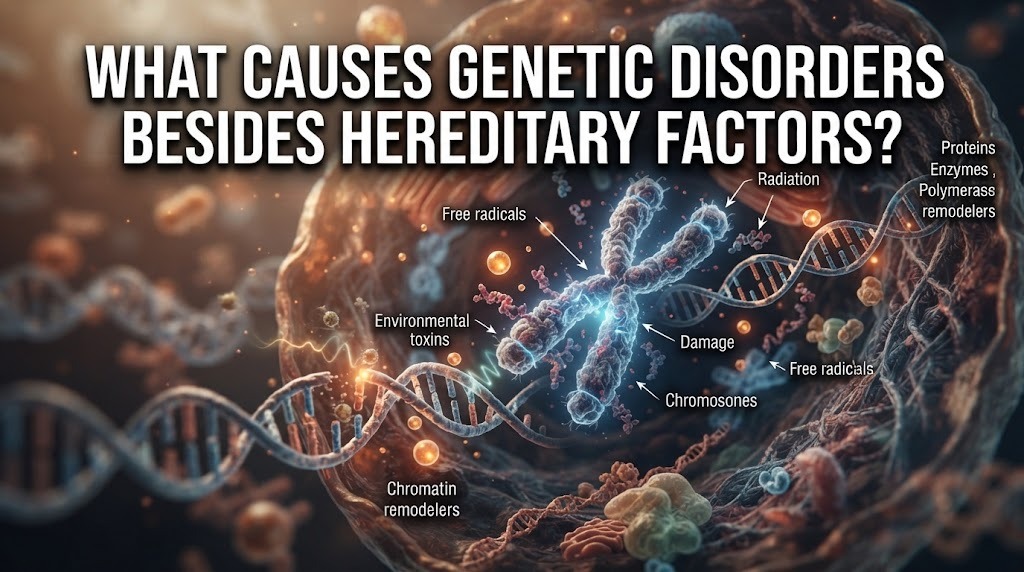
Genetic disorders are often associated with hereditary factors because some conditions can be passed from parents to children. However, not all genetic disorders are inherited. Some genetic changes can develop for the first time in a person because of new mutations, chromosome problems, or other biological processes. Understanding these causes is important because a person can have a genetic disorder even when there is no known family history.
WHAT ARE GENETIC DISORDERS?
Genetic disorders are health conditions caused by changes or abnormalities in genes, chromosomes, or genetic material. Genes contain instructions that help the body grow, develop, and function properly. When these instructions are altered, certain biological processes may not work as expected. The effects can range from mild symptoms to significant health problems.
Some genetic disorders are inherited from parents, while others happen because of genetic changes that occur during a person's development. Therefore, having no family history does not always mean someone has no possibility of developing a genetic condition. Genetic disorders can affect different parts of the body depending on the genes or chromosomes involved.
CAN NEW MUTATIONS CAUSE GENETIC DISORDERS?
One important cause of genetic disorders besides heredity is a new genetic mutation. A mutation is a change in DNA that can occur naturally when cells copy genetic material. Sometimes the change has no noticeable effect, but in other situations it can interfere with the normal function of a gene.
A new mutation may occur in an egg cell, sperm cell, or during early development after fertilization. When the change affects a gene that is important for normal development or body function, it may contribute to a genetic disorder. This means a condition can sometimes appear in a child even though neither parent has the same disorder.
HOW CAN CHROMOSOME CHANGES LEAD TO DISORDERS?
Genetic disorders can also result from chromosomal abnormalities rather than changes in a single gene. Chromosomes contain many genes, so having an extra chromosome, a missing chromosome, or a structural change can affect multiple biological functions. These abnormalities may develop because of errors during cell division.
For example, chromosome changes can affect physical development, learning, growth, or other aspects of health. Some chromosomal conditions occur randomly and are not inherited in a simple pattern from parents. The specific effects depend on which chromosome is affected and the type of genetic change involved.
CAN GENETIC CHANGES HAPPEN DURING DEVELOPMENT?
Genetic changes can sometimes occur after fertilization, while the embryo or fetus is developing. If a mutation occurs during cell division, only some cells may carry the change while other cells do not. This situation is known as mosaicism and can produce different effects depending on which tissues contain the altered cells.
The timing and location of a genetic change can influence how strongly it affects the body. Some changes may have little or no noticeable effect, while others can contribute to developmental or medical problems. This is one reason why genetic conditions can vary considerably between individuals, even when they involve similar genetic changes.
DO ENVIRONMENTAL FACTORS CAUSE GENETIC CHANGES?
Certain environmental exposures can damage DNA and contribute to genetic changes, although the relationship between an exposure and a specific genetic disorder can be complex. Factors such as radiation, certain chemicals, and some infections can affect cells and genetic material. However, exposure to a particular factor does not automatically mean that a person will develop a genetic disorder.
It is also important to distinguish between genetic disorders caused by inherited or new genetic changes and health conditions caused by environmental damage. Some environmental factors can increase the risk of DNA changes without directly causing an inherited genetic condition. Medical professionals may consider genetic, environmental, and developmental factors when evaluating a person's health.
WHY CAN GENETIC DISORDERS APPEAR WITHOUT FAMILY HISTORY?
A genetic disorder can appear without a known family history because the genetic change may be new rather than inherited. In some cases, previous generations may have carried a genetic variant without obvious symptoms. A family history may also be incomplete or unknown, making it difficult to identify patterns of inheritance.
Genetic disorders can also result from chromosome abnormalities or genetic changes that occur during early development. Therefore, the absence of affected relatives does not completely rule out a genetic condition. If a healthcare professional suspects a genetic disorder, genetic testing and genetic counseling may help clarify the possible cause.
CONCLUSION
Hereditary factors are only one possible explanation for genetic disorders. New mutations, chromosome abnormalities, changes during development, and certain environmental exposures can also contribute to genetic changes. Some of these changes happen randomly and may occur even when there is no known family history. Understanding the possible causes can help people recognize why genetic disorders do not always follow a simple inheritance pattern. When a genetic condition is suspected, professional medical evaluation can help determine whether genetic testing or further assessment is appropriate.
Tentang Penulis
Gusti Ayu Tita P
Penulis — Universitas STEKOM
Penulis aktif yang berfokus pada isu-isu akademik, teknologi pendidikan, dan pengembangan sumber daya manusia di lingkungan kampus.















