
What Genetic Disorders Are Commonly Found in Children?
Gusti Ayu Tita P
22 September 2026
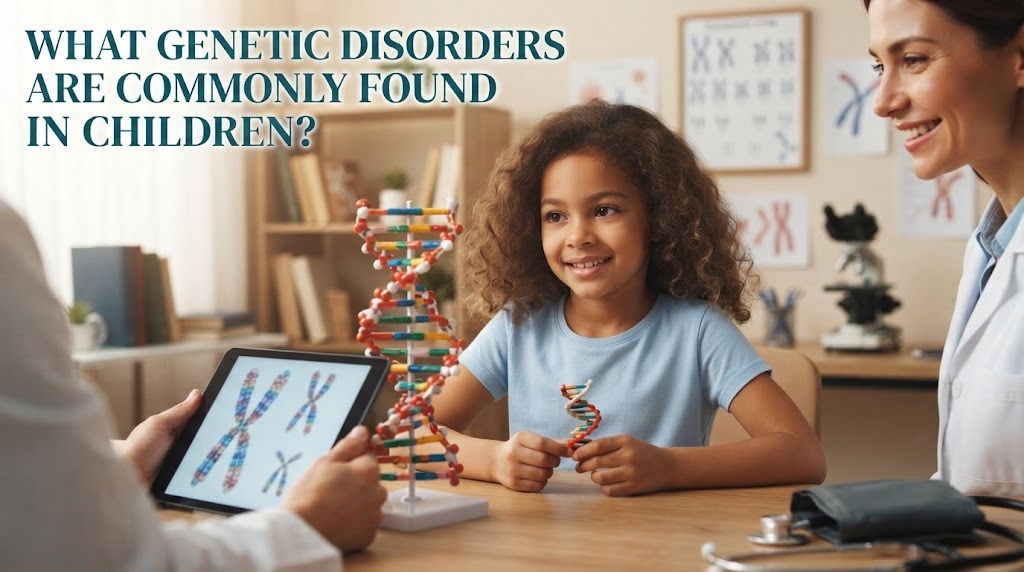
Genetic disorders in children can affect growth, development, metabolism, blood cells, or different organs of the body. Some conditions are inherited from parents, while others can result from new genetic or chromosomal changes. The symptoms and severity can vary widely between children. Understanding common genetic disorders in children can help parents recognize the importance of appropriate medical evaluation and support.
WHAT ARE GENETIC DISORDERS IN CHILDREN?
Genetic disorders are health conditions caused by changes in genes or chromosomes. These changes can affect how cells produce proteins or perform important biological functions. Some genetic conditions are present from birth, while others may become noticeable as a child grows.
Genetic disorders can be caused by changes in a single gene, several genes, or chromosomes. Some are inherited through families, while others occur because of new genetic changes. Therefore, a child can sometimes have a genetic disorder even when there is no known family history of the condition.
WHAT IS DOWN SYNDROME?
Down syndrome is a chromosomal condition caused by having an extra copy of chromosome 21. Children with Down syndrome may have characteristic physical features and may experience differences in learning and development. Some children may also have health conditions involving the heart, hearing, vision, or other parts of the body.
The effects of Down syndrome vary from one child to another. Early developmental support, regular healthcare, and appropriate educational assistance can help children develop their abilities. Medical monitoring may also be recommended because certain health conditions occur more frequently in people with Down syndrome.
WHAT ARE CYSTIC FIBROSIS AND SICKLE CELL DISEASE?
Cystic fibrosis is a genetic disorder that affects certain cells and can cause thick, sticky mucus to build up in the lungs and other organs. It can lead to breathing problems and digestive difficulties. The condition is generally inherited through an autosomal recessive pattern, meaning a child usually receives disease-causing variants from both parents.
Sickle cell disease affects red blood cells and can cause anemia, pain episodes, and other health complications. It is also generally inherited through an autosomal recessive pattern. Both conditions require ongoing medical care, although their symptoms and treatment approaches differ.
WHAT IS DUCHENNE MUSCULAR DYSTROPHY?
Duchenne muscular dystrophy is a genetic disorder that primarily affects muscles and is characterized by progressive muscle weakness. It is usually caused by changes in the DMD gene and most often affects boys because of its X-linked inheritance pattern. Signs may become noticeable during early childhood.
Children with Duchenne muscular dystrophy may experience difficulties with running, climbing stairs, or getting up from the floor. The condition can progressively affect movement and other body functions. Medical specialists may use genetic testing alongside clinical evaluation to help confirm the diagnosis.
CAN OTHER GENETIC DISORDERS AFFECT CHILDREN?
Yes, many other genetic disorders can affect children. Examples include phenylketonuria, fragile X syndrome, hemophilia, and spinal muscular atrophy. Each condition has different genetic causes, symptoms, inheritance patterns, and effects on development or overall health.
Some genetic disorders are identified through newborn screening, while others may be suspected after symptoms or developmental differences appear. Genetic testing can sometimes help identify the specific genetic change responsible for a condition. The appropriate evaluation depends on the child's symptoms and medical history.
HOW ARE GENETIC DISORDERS IDENTIFIED IN CHILDREN?
Healthcare professionals may consider a child's physical development, symptoms, family history, and medical history when evaluating a possible genetic disorder. Some conditions can be suspected during pregnancy or shortly after birth, while others may become apparent during childhood. Developmental delays or unusual patterns of symptoms can sometimes lead to further evaluation.
Genetic testing can examine specific genes, multiple genes, chromosomes, or broader genetic information. Genetic counseling may help families understand why testing is being considered and what different results could mean. A diagnosis should be made by qualified healthcare professionals based on appropriate clinical and laboratory information.
CONCLUSION
Several genetic disorders can affect children, including Down syndrome, cystic fibrosis, sickle cell disease, and Duchenne muscular dystrophy. Other conditions such as phenylketonuria, fragile X syndrome, hemophilia, and spinal muscular atrophy can also occur. Each disorder has its own causes, symptoms, and inheritance pattern, so children can be affected in very different ways. Early evaluation and appropriate medical support can help families understand a child's needs. Genetic testing and counseling may provide additional information when a genetic condition is suspected.
Tentang Penulis
Gusti Ayu Tita P
Penulis — Universitas STEKOM
Penulis aktif yang berfokus pada isu-isu akademik, teknologi pendidikan, dan pengembangan sumber daya manusia di lingkungan kampus.















