
What Is the Difference Between a Disorder and a Normal Condition?
Gusti Ayu Tita P
22 September 2026
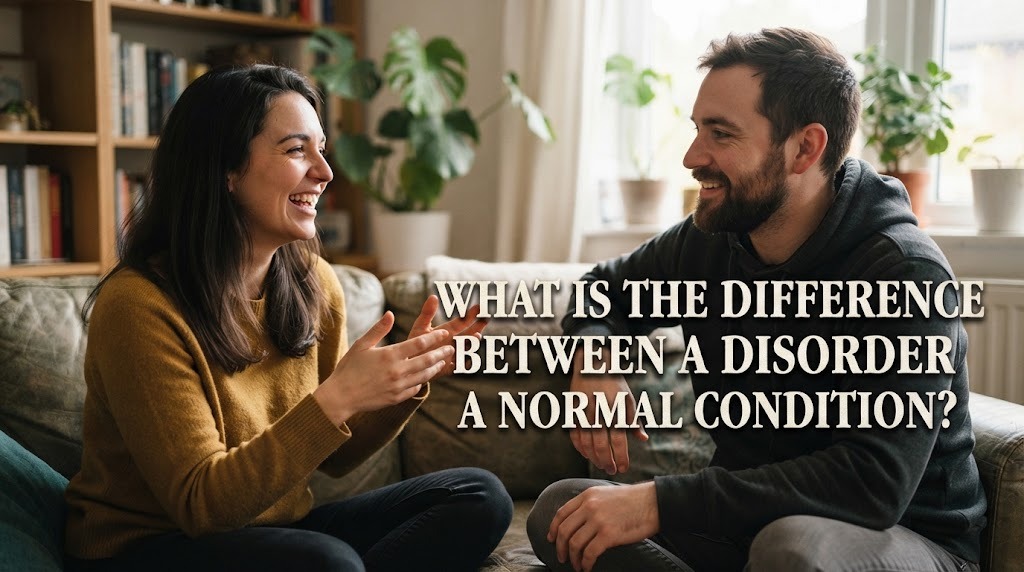
People experience many changes in their emotions, thoughts, behaviors, and physical health throughout life. Some experiences are normal reactions to stress, changes, or everyday situations, while others may be signs of a health disorder. The difference is not always obvious because similar symptoms can occur in both normal experiences and certain disorders. Understanding the context, severity, duration, and effect of symptoms can help people recognize when further support may be needed.
WHAT IS A NORMAL CONDITION?
A normal condition can describe an experience or response that commonly occurs without causing major or lasting problems in everyday functioning. Feeling nervous before an examination, feeling tired after a demanding day, or feeling sad after a disappointment can be normal human experiences. These feelings often change as the situation improves or after a person gets enough rest and support. Experiencing them does not automatically mean that someone has a disorder.
Normal experiences can also differ between individuals. Age, personality, environment, culture, physical health, and personal circumstances can influence how someone responds to a particular situation. Therefore, a reaction that seems unusual to one person may still fall within normal human variation. Differences in behavior or personality should not automatically be treated as medical problems.
WHAT IS A DISORDER?
A disorder is a health condition that involves significant difficulties or disturbances in physical, psychological, emotional, behavioral, or other areas of functioning. Depending on the condition, symptoms may affect concentration, mood, movement, communication, sleep, relationships, or daily activities. Some disorders can be temporary, while others may require longer-term management and support. The presence of one symptom alone is generally not enough to establish a diagnosis.
A diagnosis should be made through an appropriate professional assessment. Qualified professionals consider the person's symptoms, history, severity, duration, patterns, and effect on daily functioning. They may also consider physical health and other possible explanations for the symptoms. This broader assessment helps distinguish a disorder from temporary difficulties or normal variations.
DIFFERENCES IN SEVERITY AND IMPACT
One important difference is how strongly an experience affects a person's ability to function. Temporary worry or sadness may be uncomfortable but may not prevent someone from studying, working, socializing, or taking care of daily responsibilities. A disorder may cause more significant difficulties in these areas. However, the level of impact can vary considerably between individuals.
For example, occasional difficulty concentrating can happen when a person is tired or under pressure. If concentration problems continue and seriously interfere with school, work, or other important responsibilities, further evaluation may be appropriate. The same symptom can therefore have different meanings depending on its intensity and context. Symptoms should be understood as part of a broader pattern rather than viewed separately.
DIFFERENCES IN DURATION AND PATTERN
Duration is another factor that professionals may consider. Many normal reactions are temporary and improve when the situation changes or when a person has time to recover. Some disorders involve symptoms that persist, repeatedly return, or follow a specific pattern. However, there is no single duration that automatically determines whether an experience is a disorder.
Professionals consider how symptoms began, how frequently they occur, what situations influence them, and how they affect the person's life. Different disorders have different diagnostic criteria. A symptom that lasts for a short time may still require attention in certain circumstances, while a longer-lasting symptom does not automatically confirm a diagnosis. Context and professional assessment remain important.
NORMAL VARIATIONS ARE NOT AUTOMATICALLY DISORDERS
People naturally differ in personality, communication style, energy levels, interests, emotions, and behavior. These differences are not automatically signs of a disorder. For example, being quiet, preferring to spend time alone, or having a different way of organizing daily activities does not necessarily indicate a health problem. Human behavior exists across a broad range of normal variation.
It is important to avoid labeling someone simply because they behave differently from others. Unnecessary labels can create stigma and may cause people to misunderstand themselves or others. At the same time, concerns should not be dismissed simply because a behavior occurs in other people. What matters is whether the experience causes significant distress, impairment, or other concerns that require attention.
WHY CONTEXT MATTERS
The same symptom can have different meanings depending on the situation. Feeling afraid during a genuinely dangerous event, for example, can be an appropriate response to the circumstances. Feeling intense fear in situations that are not dangerous may require a different type of assessment if it repeatedly interferes with daily life. Context helps professionals understand whether a response is appropriate for the situation.
Personal circumstances should also be considered. Physical health, medications, sleep, stressful events, substance use, and other factors can influence symptoms. This is one reason why internet searches alone cannot reliably determine whether someone has a particular disorder. A complete evaluation considers multiple factors before reaching a conclusion.
WHY PROFESSIONAL ASSESSMENT IS IMPORTANT
It can be difficult to determine the difference between a normal experience and a disorder without professional knowledge. Many health conditions share similar symptoms, and people can experience the same disorder in different ways. Doctors, psychologists, psychiatrists, and other qualified professionals can assess symptoms within the appropriate context. Their evaluation can help identify whether treatment, monitoring, or additional support may be useful.
Self diagnosis can sometimes create unnecessary fear or cause a genuine problem to be overlooked. Professional assessment may involve discussing symptoms, medical and personal history, daily functioning, and other relevant factors. If a disorder is identified, the professional can explain appropriate treatment or management options. Seeking an assessment does not automatically mean that a person has a disorder.
HOW SHOULD WE RESPOND TO SOMEONE EXPERIENCING DIFFICULTIES?
People should respond to health concerns with understanding rather than judgment. Family members and friends can listen, offer practical support, and encourage professional help when difficulties are persistent or disruptive. They should avoid making a diagnosis based on personal observations or information found online. Respecting privacy and personal boundaries is also important.
It is equally important not to dismiss someone's concerns simply because their experience may fall within normal variation. A person can still benefit from support even without receiving a formal diagnosis. The focus should be on their wellbeing, safety, functioning, and individual needs. A respectful and supportive environment can make it easier for someone to seek appropriate assistance.
CONCLUSION
The difference between a disorder and a normal condition cannot be determined by one symptom alone. Severity, duration, pattern, context, distress, and effects on daily functioning are important factors to consider. Normal human variations should not be unnecessarily labeled as disorders, while persistent or disruptive difficulties should not be ignored. When there is uncertainty or significant concern, professional assessment can provide a clearer understanding and help determine appropriate support.
Tentang Penulis
Gusti Ayu Tita P
Penulis — Universitas STEKOM
Penulis aktif yang berfokus pada isu-isu akademik, teknologi pendidikan, dan pengembangan sumber daya manusia di lingkungan kampus.















