What Is the Difference Between Genetic Disorders and Hereditary Diseases?
Gusti Ayu Tita P
22 September 2026
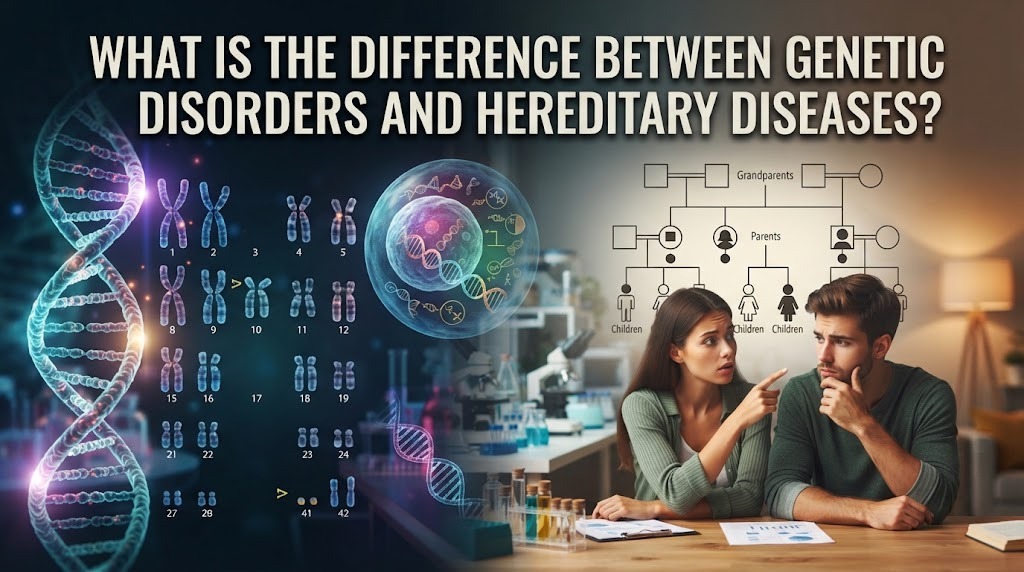
Genetic disorders and hereditary diseases are often considered the same because both can involve changes in genetic material. However, the two terms are not completely interchangeable. A genetic disorder is caused by a change in genes or chromosomes, while a hereditary disease is specifically passed from parents to children through genetic material. Understanding this difference can help people better understand how genetic conditions develop and how they may affect families.
WHAT ARE GENETIC DISORDERS?
Genetic disorders are health conditions caused by changes in genes, chromosomes, or other genetic material. These changes can affect how cells produce proteins or perform important biological functions. Genetic disorders may involve a single gene, multiple genes, or changes in chromosome structure or number.
Not every genetic disorder is inherited from a parent. Some genetic changes occur for the first time in an individual because of a new mutation or a change that happens during early development. Therefore, a person can have a genetic disorder even when there is no known family history of the condition.
WHAT ARE HEREDITARY DISEASES?
Hereditary diseases are conditions that can be passed from parents to their children through genetic material. The genetic variant responsible for the condition may be transmitted through an established inheritance pattern. Depending on the condition, inheritance can be dominant, recessive, X linked, or follow other patterns.
A hereditary disease may appear in multiple members of a family, although the pattern is not always obvious. Some people can carry a genetic variant without showing symptoms, particularly with certain recessive conditions. This means that a family may have a hereditary condition even when there is no long history of visible illness.
WHAT IS THE MAIN DIFFERENCE BETWEEN THEM?
The main difference is related to how the genetic change develops and whether it is inherited. Genetic disorders include conditions caused by genetic changes regardless of whether those changes came from a parent or developed for the first time. Hereditary diseases specifically refer to genetic conditions that can be transmitted between generations.
For example, a new mutation can cause a genetic disorder in a child even though neither parent has the same condition. In contrast, a hereditary disease involves a genetic variant that is passed through the family. Therefore, hereditary diseases are a type of genetic condition, but not every genetic disorder is necessarily hereditary.
CAN A GENETIC DISORDER OCCUR WITHOUT FAMILY HISTORY?
Yes, a genetic disorder can occur even when there is no known family history. New mutations can arise in an egg or sperm cell or during early development. Chromosomal abnormalities can also occur because of changes during cell division.
The absence of affected relatives therefore does not automatically exclude a genetic condition. Family history is useful, but it is only one part of understanding genetic risk. Healthcare professionals may consider symptoms, physical findings, developmental history, and genetic testing when evaluating a suspected genetic disorder.
HOW CAN GENETIC TESTING HELP?
Genetic testing can help identify specific changes in DNA or chromosomes that may be associated with a genetic condition. Depending on the suspected disorder, testing may examine one gene, several genes, chromosomes, or larger portions of genetic material. The results can provide information that supports diagnosis and helps clarify possible inheritance patterns.
Genetic testing can also be useful for families who want to understand whether a genetic variant may be shared among relatives. However, testing does not identify every possible genetic condition, and some results may be difficult to interpret. Genetic counseling can help individuals and families understand the meaning and limitations of genetic test results.
WHY IS THIS DIFFERENCE IMPORTANT?
Understanding the difference between genetic and hereditary conditions can make discussions about family health and genetic risk clearer. It can also prevent the assumption that every genetic disorder must have been inherited from a parent. Some conditions result from new genetic changes and may appear unexpectedly within a family.
This distinction can also help people understand why medical evaluation may be recommended even without a family history. When a genetic condition is suspected, healthcare professionals can assess the individual's symptoms and determine whether genetic testing or other evaluations are appropriate. The specific approach depends on the suspected condition and the person's medical circumstances.
CONCLUSION
Genetic disorders are caused by changes in genetic material, while hereditary diseases are genetic conditions that can be passed from parents to children. Some genetic disorders are hereditary, but others result from new mutations or chromosome changes that are not inherited from a parent. This is why a person can develop a genetic disorder without having a family history of the condition. Understanding the distinction can make genetic risk and family health information easier to understand. Professional medical evaluation and genetic counseling can provide more specific information when a genetic condition is suspected.
Tentang Penulis
Gusti Ayu Tita P
Penulis — Universitas STEKOM
Penulis aktif yang berfokus pada isu-isu akademik, teknologi pendidikan, dan pengembangan sumber daya manusia di lingkungan kampus.