
What Is the Link Between Nerve Disorders and Tingling?
Gusti Ayu Tita P
22 September 2026
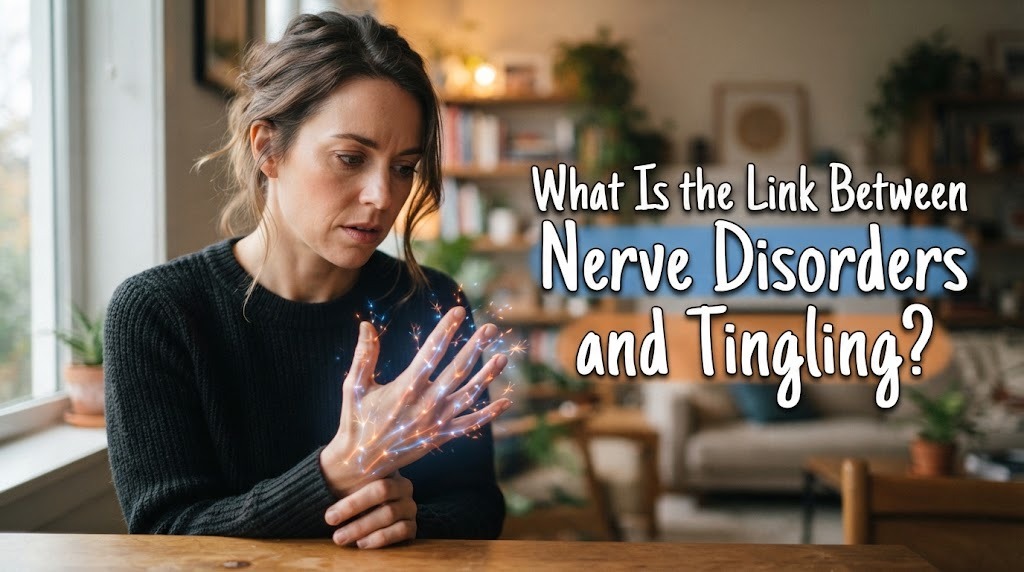
Tingling is an unusual sensation that may feel like pins and needles, burning, prickling, or small electric shocks. It can happen when nerves send abnormal signals or when pressure temporarily affects a nerve. While occasional tingling can have simple causes, repeated or persistent tingling may sometimes be linked to a nerve disorder.
The nervous system carries information between the brain, spinal cord, and the rest of the body. When nerves are compressed, irritated, or damaged, their signals may become disrupted. As a result, a person may notice unusual sensations in the hands, feet, arms, legs, or other areas.
HOW DO NERVES CAUSE TINGLING?
Healthy sensory nerves send signals that allow the brain to recognize touch, temperature, pressure, and pain. When these signals are disrupted, the brain may interpret them as tingling or abnormal sensations. The exact feeling can vary depending on the affected nerve.
Temporary pressure can also cause tingling. For example, sitting in one position for too long may compress a nerve and cause a short period of pins and needles. The sensation often improves after the pressure is removed. Persistent symptoms may have a different underlying cause and should be assessed when necessary.
WHAT NERVE PROBLEMS CAN CAUSE TINGLING?
Several conditions can affect nerves and lead to tingling. Peripheral neuropathy, nerve compression, nerve injuries, and certain neurological disorders can produce abnormal sensations. The symptoms may affect one specific area or occur on both sides of the body.
Diabetes is one common condition associated with peripheral nerve damage. Other possible causes include nutritional deficiencies, certain medications, infections, alcohol-related nerve damage, and autoimmune conditions. Because there are many possible causes, tingling alone cannot identify a specific disorder.
WHERE DOES NERVE-RELATED TINGLING USUALLY OCCUR?
Tingling can occur in almost any area where nerves are affected. The hands, feet, arms, and legs are common locations, particularly when peripheral nerves are involved. Some people may experience symptoms on one side, while others may notice them on both sides.
The location and pattern can provide useful information during a medical assessment. Tingling that follows a specific nerve pathway may suggest nerve irritation or compression. Tingling that occurs with weakness, pain, or loss of sensation may require further evaluation.
WHEN SHOULD TINGLING GET MEDICAL ATTENTION?
Occasional tingling that quickly disappears may not always require medical care. However, persistent, recurring, spreading, or unexplained tingling should be discussed with a healthcare professional. Medical attention is especially important when symptoms interfere with walking, working, sleeping, or other daily activities.
Sudden tingling can be more urgent when it affects one side of the body and occurs with weakness, facial drooping, speech difficulties, or vision changes. These can be warning signs of a stroke. Emergency medical care should be sought immediately when such symptoms appear.
HOW IS THE CAUSE OF TINGLING IDENTIFIED?
A healthcare professional may begin by asking about the location, duration, frequency, and pattern of the tingling. A physical and neurological examination can help assess sensation, strength, reflexes, and coordination. Medical history can also provide important clues about possible causes.
Additional tests may be recommended depending on the findings. These can include blood tests, nerve conduction studies, electromyography, or imaging when appropriate. Treatment depends on the underlying cause rather than the tingling symptom alone. This is why persistent symptoms should not be self-diagnosed.
CONCLUSION
The link between nerve disorders and tingling occurs because damaged, compressed, or irritated nerves can send abnormal signals to the brain. This may create sensations such as pins and needles, burning, prickling, or electric-like feelings.
Tingling does not always mean a person has a nerve disorder, but persistent or unexplained symptoms deserve attention. Sudden tingling accompanied by weakness, speech problems, facial drooping, or vision changes requires urgent medical care. Proper evaluation can help identify the cause and guide appropriate treatment.
Tentang Penulis
Gusti Ayu Tita P
Penulis — Universitas STEKOM
Penulis aktif yang berfokus pada isu-isu akademik, teknologi pendidikan, dan pengembangan sumber daya manusia di lingkungan kampus.















