
What Skills Are Needed to Work in the Beach Tourism Industry?
Gusti Ayu Tita P
22 September 2026
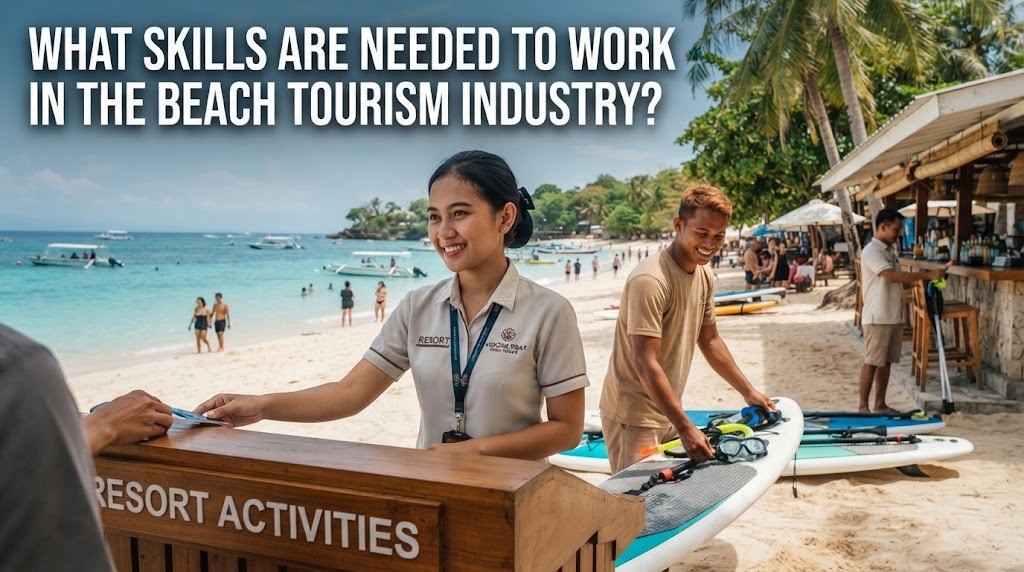
The beach tourism industry offers many career opportunities for people who enjoy coastal environments and working with visitors. However, interest in beaches alone is not enough to succeed in this field. Workers need a combination of communication, service, technical, digital, and problem-solving abilities. Developing the right skills can help people perform their responsibilities more effectively.
Beach tourism includes many different roles, such as tour guides, hotel employees, activity instructors, travel staff, content creators, and business owners. Each position may require different qualifications and technical abilities. Nevertheless, several basic skills are useful across many roles. Understanding these skills can help future workers prepare for career opportunities in beach tourism.
COMMUNICATION SKILLS
Communication is one of the most important skills in tourism. Workers regularly interact with visitors, coworkers, local communities, and business partners. They need to explain information clearly and listen carefully to questions or concerns. Good communication skills can make daily interactions more effective.
Foreign language abilities can also be useful, especially in destinations that receive international visitors. Workers do not necessarily need to speak many languages fluently, but learning commonly used tourism expressions can help. Written communication is also important for messages, schedules, websites, and promotional materials. Clear communication can support better customer experiences.
CUSTOMER SERVICE SKILLS
Tourism workers need to understand how to provide respectful and helpful service. Visitors may have different expectations, preferences, and levels of experience. Workers should respond politely while following the rules and standards of their workplace. Good customer service can contribute to positive visitor experiences.
Service skills also include patience and the ability to handle questions or complaints professionally. Workers should listen before responding and avoid making situations more difficult through emotional reactions. When problems occur, they can explain available solutions clearly. These abilities are useful in many tourism careers.
PROBLEM SOLVING SKILLS
Tourism environments can change quickly. Weather conditions, transportation delays, booking problems, or unexpected visitor needs may require workers to make decisions. Strong problem-solving skills can help employees respond to these situations systematically. They should identify the problem, consider available options, and follow appropriate procedures.
Problem solving does not always mean handling difficult situations alone. Workers should know when to ask supervisors or other team members for assistance. Cooperation can lead to faster and safer solutions. Developing this ability can make workers more adaptable and prepared.
DIGITAL SKILLS
Technology is an important part of modern tourism. Businesses use websites, booking platforms, social media, digital payment systems, and online communication tools. Workers who understand basic digital skills can adapt more easily to these systems. Depending on the role, more advanced skills such as digital marketing, photography, or video editing may also be useful.
Digital skills can also help tourism businesses reach potential visitors. Workers may create social media posts, update destination information, manage online inquiries, or analyze simple digital data. Understanding responsible online communication is equally important. Digital knowledge can therefore support both daily operations and promotion.
SAFETY AND ENVIRONMENTAL AWARENESS
Beach tourism involves environments that can change because of weather, waves, tides, and other natural conditions. Workers should understand basic safety procedures relevant to their roles. Water activity professionals may require specialized training or certification depending on their responsibilities. Other tourism workers should know basic emergency procedures and local safety rules.
Environmental awareness is also important because tourism depends on healthy coastal ecosystems. Workers should understand the importance of reducing waste, respecting wildlife, and following conservation regulations. They can also help educate visitors about responsible behavior. Combining safety knowledge with environmental awareness supports more responsible tourism.
TEAMWORK AND ADAPTABILITY
Beach tourism often requires employees to work together. Hotel staff, guides, drivers, activity instructors, restaurant workers, and managers may need to coordinate their responsibilities. Good teamwork skills can help ensure that tasks are completed smoothly. Employees should communicate clearly and respect the responsibilities of other team members.
Adaptability is equally valuable because tourism conditions can change quickly. Visitor numbers, weather, schedules, and business needs may vary from one day to another. Workers who can adjust while maintaining professional standards can respond more effectively to these changes. Developing flexibility and teamwork can support long-term career growth.
CONCLUSION
Working in the beach tourism industry requires a combination of communication, customer service, problem-solving, digital, safety, environmental, teamwork, and adaptability skills. The exact requirements depend on the position and level of responsibility. Future workers can develop these abilities through education, training, practical experience, and continuous practice. Building a strong skill set can help beach lovers prepare for diverse opportunities in the tourism industry.
Tentang Penulis
Gusti Ayu Tita P
Penulis — Universitas STEKOM
Penulis aktif yang berfokus pada isu-isu akademik, teknologi pendidikan, dan pengembangan sumber daya manusia di lingkungan kampus.















