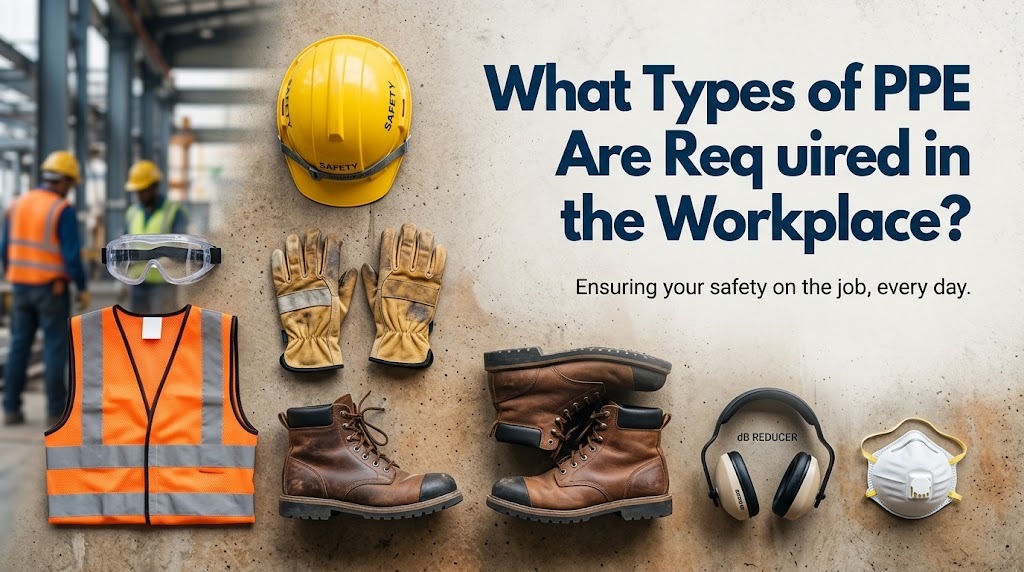
What Types of PPE Are Required in the Workplace?
Gusti Ayu Tita P
29 September 2026
Personal Protective Equipment or PPE is an important part of workplace safety because it helps protect workers from different hazards. The type of PPE required depends on the work environment, the tasks performed, and the risks that workers may face. Using appropriate PPE can reduce exposure to injuries, harmful substances, loud noise, falling objects, and other workplace dangers. Therefore, workers need to understand which protective equipment is suitable for their jobs.
HEAD PROTECTION FOR WORKPLACE SAFETY
Safety helmets and hard hats are commonly used in workplaces where workers may be exposed to falling objects, impacts, or overhead hazards. They are often required on construction sites, manufacturing areas, warehouses, and other locations where head injuries may occur. A suitable helmet can provide a protective barrier between the worker's head and certain physical hazards. Workers should make sure the helmet fits properly and is in good condition before starting work.
Some helmets can also include additional features such as face shields, hearing protection, or other attachments depending on workplace requirements. Workers should inspect their helmets regularly for cracks, damage, or other signs of wear. Damaged head protection should not be used because its protective ability may be reduced. Employers should also provide appropriate training on how to wear and maintain head protection correctly.
EYE AND FACE PROTECTION
Safety glasses, goggles, and face shields are used to protect workers from hazards that can affect the eyes or face. These hazards may include dust, flying particles, chemical splashes, sparks, and other materials produced during work activities. Safety glasses are often suitable for tasks involving flying particles, while goggles can provide more protection around the eyes. Face shields may be used when workers need additional protection for the face.
The correct equipment depends on the specific workplace hazards. For example, workers handling chemicals may require goggles designed to reduce the risk of chemical exposure. Workers performing tasks that produce sparks or intense light may need specialized eye protection. PPE should always be selected according to the level and type of risk rather than simply choosing the most common option.
HEARING AND RESPIRATORY PROTECTION
Workers in areas with high noise levels may need hearing protection, such as earplugs or earmuffs. Continuous exposure to excessive workplace noise can affect hearing, so suitable protection is important in noisy environments. The type of hearing protection should match the workplace conditions and the level of noise. Workers should also use the equipment correctly to receive the intended protection.
Respiratory protection may be necessary when workers could be exposed to harmful dust, fumes, vapors, gases, or other airborne contaminants. Depending on the hazard, workers may use appropriate respirators designed for specific conditions. Respiratory PPE requires careful selection because different filters and respirators provide different types of protection. Workers should follow workplace procedures and receive proper instruction before using respiratory protection.
HAND AND FOOT PROTECTION
Safety gloves are used to protect workers' hands from hazards such as cuts, abrasions, heat, chemicals, and certain mechanical risks. Different tasks require different types of gloves, so workers should not assume that one pair of gloves is suitable for every job. Gloves should fit properly while still allowing workers to perform their tasks safely. Workers should also check gloves for holes, tears, or other damage before use.
Safety footwear helps protect the feet from hazards such as falling objects, sharp materials, slippery surfaces, and certain workplace impacts. Some work environments may require footwear with protective toe caps, slip-resistant soles, or other specific features. The correct footwear should be selected based on the risks present in the workplace. Using unsuitable shoes can increase the possibility of workplace injuries, especially in areas with heavy equipment or hazardous materials.
BODY PROTECTION AND PROPER PPE SELECTION
Protective clothing can help protect workers from specific workplace hazards such as chemical exposure, heat, sparks, or other dangerous materials. Examples include coveralls, aprons, high-visibility clothing, and specialized protective suits. The appropriate clothing depends on the nature of the work and the risks identified by the employer. Workers should ensure that protective clothing does not interfere with movement or create additional safety problems.
Choosing PPE should begin with a workplace risk assessment. Employers need to identify potential hazards and determine what protective equipment can reduce workers' exposure to those hazards. PPE should be properly fitted, suitable for the task, and maintained according to workplace procedures. Workers should also receive clear instructions and training so they understand how to use PPE correctly and safely.
CONCLUSION
PPE includes various types of protective equipment designed for different workplace hazards. Safety helmets, eye protection, hearing protection, respirators, gloves, safety footwear, and protective clothing may be required depending on the nature of the work. The correct PPE should always be selected based on a workplace risk assessment rather than used without considering the actual hazards. Proper selection, fitting, use, inspection, and maintenance can help improve worker protection. By using suitable PPE consistently, workers and employers can contribute to a safer workplace.
Tentang Penulis
Gusti Ayu Tita P
Penulis — Universitas STEKOM
Penulis aktif yang berfokus pada isu-isu akademik, teknologi pendidikan, dan pengembangan sumber daya manusia di lingkungan kampus.