Why Are Communication Skills Important for Beach Lovers Working in Tourism?
Gusti Ayu Tita P
22 September 2026
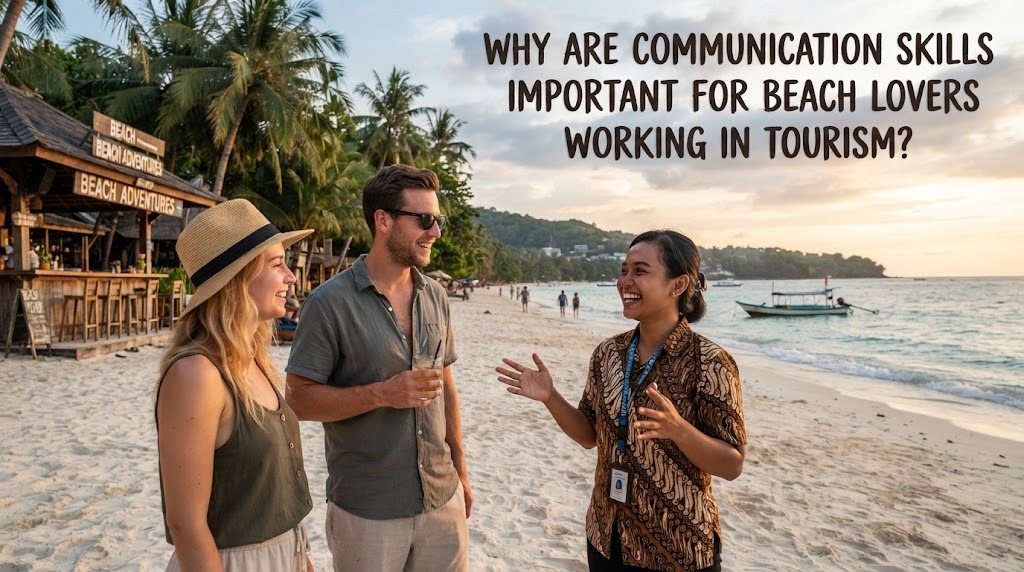
The tourism industry involves constant interaction between workers, visitors, local communities, and business partners. For beach lovers who choose tourism as a career, strong communication skills can help them provide information and services effectively. Tourists may come from different cultures, speak different languages, and have different expectations. Clear communication can make interactions more organized and comfortable.
Communication is not only about speaking. It also includes listening, understanding questions, explaining information, using appropriate body language, and responding professionally. Beach tourism workers may need to explain local attractions, safety rules, schedules, prices, or available services. Developing these abilities can support better tourism services and professional relationships.
BUILDING TRUST WITH TOURISTS
Clear communication can help tourism workers build trust with visitors. Tourists often depend on staff for information about destinations, activities, transportation, and local rules. Providing information accurately and politely can make visitors feel more confident. Trust is especially important when visitors are unfamiliar with the area.
Tourism workers should avoid giving information they are not certain about. When they do not know an answer, they can explain that they will verify the information or direct the visitor to an appropriate source. Honest communication is more useful than providing inaccurate information. This approach supports professional trust between workers and tourists.
PROVIDING CLEAR INFORMATION
Beach tourism involves many details that visitors need to understand. Workers may need to explain opening hours, activity schedules, prices, meeting points, weather conditions, or safety instructions. Information should be delivered in a simple and organized way. Clear explanations can reduce confusion and prevent avoidable misunderstandings.
Written communication is also important in tourism. Information may appear on websites, brochures, signs, booking platforms, or social media. Tourism workers should ensure that important details are accurate and easy to understand. Strong information skills can improve the overall visitor experience.
HANDLING TOURIST QUESTIONS
Tourists may ask many different questions during their visit. Some questions may be simple, while others may require detailed explanations or additional research. Tourism workers need to listen carefully before responding. Active listening can help them understand what the visitor actually needs.
Workers should remain patient even when questions are repeated or difficult to understand. They can use simple language, examples, maps, or visual information when appropriate. If a language barrier exists, basic foreign language skills or translation tools may be helpful. Good customer communication can make interactions more effective.
MANAGING COMPLAINTS PROFESSIONALLY
Complaints can occur in any tourism business. Visitors may be dissatisfied because of delays, service problems, unclear information, or differences between expectations and actual conditions. Tourism workers need to respond calmly instead of reacting emotionally. Listening carefully and acknowledging the concern can be an important first step.
After understanding the problem, workers can explain available solutions according to company policies. They should avoid making promises they cannot fulfill. Professional communication can help prevent a difficult situation from becoming worse. Good complaint handling is an important skill for tourism professionals.
WORKING WITH DIFFERENT PEOPLE
Beach tourism workers interact with people from different backgrounds. Visitors may have different cultures, ages, languages, habits, and expectations. Communication skills help workers adapt their approach while maintaining professionalism. Respect for cultural differences is an important part of inclusive tourism.
Communication is also important within the workplace. Tourism employees often need to coordinate with reception staff, guides, restaurant teams, managers, drivers, and other workers. Clear communication can help teams coordinate tasks and respond to changing situations. Strong team communication supports smoother daily operations.
IMPROVING CAREER DEVELOPMENT
Communication skills can support long-term professional development in tourism. Workers who communicate effectively may be better prepared for responsibilities involving customers, teams, presentations, and coordination. These abilities can be useful when applying for positions with greater responsibilities. Communication is therefore a valuable career skill across many tourism roles.
Beach lovers can improve communication through regular practice. They can practice speaking, active listening, writing, public speaking, and foreign languages. Working directly with visitors can also provide valuable real-world experience. Continuous improvement can help tourism workers become more confident and professionally prepared.
CONCLUSION
Communication skills are important for beach lovers working in tourism because they support clear information, customer service, teamwork, problem solving, and professional relationships. Tourism workers interact with people from many different backgrounds, making effective communication an essential workplace ability. Developing these skills can improve visitor experiences and support professional growth. With consistent practice, beach lovers can use strong communication abilities to build a career in the tourism industry.
Tentang Penulis
Gusti Ayu Tita P
Penulis — Universitas STEKOM
Penulis aktif yang berfokus pada isu-isu akademik, teknologi pendidikan, dan pengembangan sumber daya manusia di lingkungan kampus.