
Why Do Genetic Factors Play a Role in Genetic Disorders?
Gusti Ayu Tita P
22 September 2026
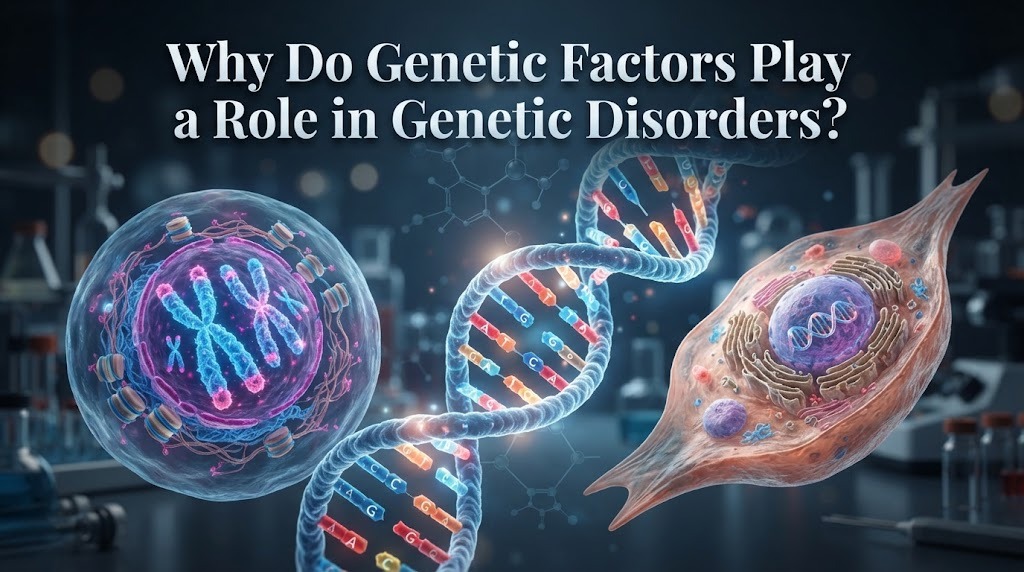
Genetic factors play an important role in many genetic disorders because genes contain instructions that control how cells and the body function. A change in a gene can sometimes alter the production or function of an important protein. When this happens, normal biological processes may be disrupted and a health condition can develop. Some genetic changes are inherited from parents, while others occur for the first time in an individual. Understanding the connection between genes and health helps explain why certain genetic disorders occur and why their effects can vary from one person to another.
WHAT ARE GENETIC FACTORS?
Genetic factors refer to differences in a person's DNA and genetic makeup that can influence biological characteristics and health. Genes are sections of DNA that provide instructions for making proteins and supporting important processes in cells. A genetic variant can change these instructions, although not every variant causes a health problem. In fact, most genetic variations have little or no harmful effect.
Some variants can affect an important protein or biological process and contribute to a genetic disorder. The effect depends on the gene involved, the type of genetic change, and how that change affects the body's cells. This is why genetic factors can have different effects among individuals. A genetic variant should therefore not automatically be considered a disease-causing change.
HOW CAN GENETIC CHANGES CAUSE DISORDERS?
Genes provide instructions that cells use to produce proteins needed for normal development and body functions. When a disease-causing variant changes these instructions, a protein may not be produced correctly, may be produced in insufficient amounts, or may not function properly. If the affected protein has an important role in the body, the disruption can lead to a genetic health condition.
The consequences depend on the specific gene and type of variant involved. Some genetic changes have a major effect, while others have a smaller influence on disease risk. A change in a single gene can cause certain inherited disorders, while changes in multiple genes can contribute to more complex conditions. This explains why genetic disorders can have different symptoms, severity, and patterns of inheritance.
CAN GENETIC DISORDERS BE INHERITED?
Yes, some genetic disorders are inherited from biological parents. A genetic variant present in an egg or sperm can be passed to a child and may be present throughout the child's body. The likelihood of developing a condition depends on the specific inheritance pattern. Common patterns include autosomal dominant, autosomal recessive, and X-linked inheritance.
For example, in an autosomal dominant condition, one disease-causing copy of a gene can be sufficient to cause the disorder. In an autosomal recessive condition, disease-causing variants generally need to be present in both copies of a particular gene. Parents can sometimes carry a recessive variant without having noticeable symptoms. As a result, a genetic condition may appear in a child even when the parents do not have the disorder themselves.
DO GENETIC FACTORS ALWAYS CAUSE DISEASE?
Having a particular genetic variant does not always mean that a person will develop a disease. Some variants have no meaningful effect on health, while others may only increase susceptibility to a condition. A genetic predisposition means that a person's genetic makeup increases the likelihood of developing a disease, rather than guaranteeing that the disease will occur.
This is especially important for conditions influenced by multiple genes. Several genetic variants may each contribute a small amount to overall risk. Other genetic factors can also modify the effects of a disease-causing variant. Therefore, genetic information often needs to be interpreted together with medical history and other relevant factors.
HOW DO GENES AND THE ENVIRONMENT WORK TOGETHER?
Genetic factors are not always the only influence on health. Some disorders develop through interactions between genetic susceptibility and environmental factors. Diet, physical activity, exposure to certain substances, and other environmental conditions can influence the risk or severity of some diseases. This is particularly important for multifactorial conditions that involve many genes rather than one specific genetic change.
Two people can therefore have similar genetic risk but experience different health outcomes. Their other genetic characteristics and environmental circumstances may differ. This does not mean that environmental factors cause every genetic disorder. Instead, the contribution of genes and the environment varies depending on the specific condition.
CAN NEW GENETIC CHANGES OCCUR?
Not all genetic changes are inherited from parents. A new genetic variant, known as a de novo variant, can occur during the formation of an egg or sperm cell or during early embryonic development. In such cases, a child may have a genetic condition even though neither parent has the same variant or a known family history of the disorder.
Genetic changes can also occur in cells during a person's lifetime. These acquired changes are generally not passed to future children because they are not present in the reproductive cells. Some acquired genetic changes can contribute to diseases such as cancer. The effect depends on which cells are affected and what biological function the altered gene controls.
WHY IS GENETIC INFORMATION IMPORTANT?
Understanding genetic factors can help healthcare professionals identify the possible causes of certain disorders. Doctors may consider symptoms, personal medical history, family history, and genetic testing when investigating a suspected genetic condition. Genetic testing can sometimes identify a disease-causing variant or provide information about a person's genetic risk.
Genetic counseling can also help individuals and families understand what genetic results mean. A genetics professional can explain inheritance patterns, potential risks, and the limitations of genetic testing. This information can be particularly useful when a genetic condition occurs in several family members. However, genetic results should be interpreted in their medical context rather than viewed as a definite prediction of a person's future health.
CONCLUSION
Genetic factors play a major role in genetic disorders because changes in DNA can affect genes, proteins, and important biological processes. Some disease-causing variants are inherited, while others develop as new genetic changes. However, not every genetic variant causes disease, and some conditions result from interactions between multiple genes and environmental factors. Genetic testing and genetic counseling can help clarify the role of genetic factors in particular health conditions. Understanding these relationships provides a clearer picture of why genetic disorders develop and why their effects can differ between individuals.
Tentang Penulis
Gusti Ayu Tita P
Penulis — Universitas STEKOM
Penulis aktif yang berfokus pada isu-isu akademik, teknologi pendidikan, dan pengembangan sumber daya manusia di lingkungan kampus.















