
Why Is Early Diagnosis of Genetic Disorders Important?
Gusti Ayu Tita P
22 September 2026
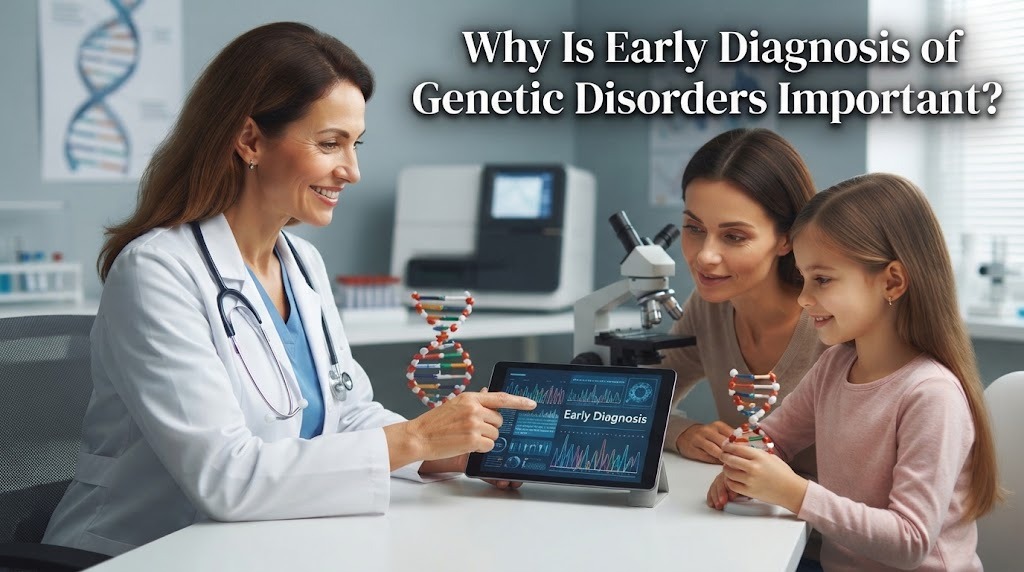
Early diagnosis of genetic disorders can help healthcare professionals understand a person's condition and provide appropriate care. Some genetic conditions may affect growth, development, metabolism, or the function of specific organs. Identifying a condition earlier can provide families with more information about what to expect and how to manage potential health needs. Early genetic diagnosis can therefore play an important role in long-term healthcare planning.
WHAT DOES EARLY DIAGNOSIS OF A GENETIC DISORDER MEAN?
Early diagnosis means identifying a genetic condition as soon as there is enough medical evidence to recognize it. A diagnosis may be made through clinical evaluation, family history, newborn screening, genetic testing, or a combination of these approaches. The timing depends on the specific disorder and when its signs become noticeable.
Some genetic disorders can be identified shortly after birth, while others may not become apparent until childhood or adulthood. Early diagnosis does not necessarily mean that symptoms can be prevented. However, it can provide important information for appropriate monitoring and medical management.
HOW CAN EARLY DIAGNOSIS IMPROVE MEDICAL CARE?
Knowing the cause of certain symptoms can help healthcare professionals choose appropriate treatment or monitoring strategies. Some genetic conditions require regular checks of specific organs or body systems. Early identification can help establish suitable healthcare plans before complications become more difficult to manage.
The benefits depend on the specific genetic disorder. Some conditions have treatments that can reduce symptoms or prevent certain complications, while others are mainly managed through monitoring and supportive care. Therefore, early diagnosis is valuable even when there is no specific cure because it can improve understanding of the condition.
WHY IS EARLY DIAGNOSIS IMPORTANT FOR CHILDREN?
Early diagnosis can be especially important for children because some genetic disorders affect growth and development. Identifying a condition may allow children to receive appropriate developmental, educational, physical, or occupational support. These services can be adapted to the child's individual needs.
Early identification can also help parents understand why certain developmental or health differences may be occurring. Family guidance can make it easier to coordinate medical appointments and support services. However, every child develops differently, so professional evaluation is important when concerns arise.
CAN EARLY DIAGNOSIS HELP PREVENT COMPLICATIONS?
For some genetic conditions, early diagnosis allows healthcare professionals to monitor health problems that may occur more frequently with the disorder. Regular monitoring can help identify certain complications at an earlier stage. In conditions with available preventive treatments, early recognition may also allow appropriate intervention.
The effect varies considerably between genetic disorders. Not every condition has a treatment that can prevent complications, and diagnosis does not guarantee a particular health outcome. Nevertheless, having accurate information can help healthcare teams make more informed decisions about ongoing care.
HOW CAN EARLY DIAGNOSIS HELP FAMILIES?
A genetic diagnosis can provide families with information about the condition, its possible inheritance pattern, and potential health considerations. This information may be useful when discussing whether other relatives should consider medical evaluation or genetic testing. Genetic counseling can help families understand complicated genetic information.
A confirmed diagnosis can also reduce uncertainty caused by unexplained symptoms. Families may gain a clearer understanding of what medical specialists or support services may be appropriate. Genetic counseling can also explain the limitations of genetic testing and what a diagnosis may mean for different family members.
HOW IS EARLY GENETIC DIAGNOSIS MADE?
Healthcare professionals may begin with a detailed medical and family history. Depending on the symptoms and suspected condition, they may recommend laboratory tests, imaging, chromosome analysis, or genetic testing. Modern genetic tests can examine individual genes, groups of genes, chromosomes, or larger portions of genetic material.
Genetic testing does not always provide a definitive answer. Some genetic changes are difficult to interpret, and some conditions may not be detected by a particular test. Results should therefore be evaluated alongside clinical findings and other relevant medical information.
CONCLUSION
Early diagnosis of genetic disorders is important because it can help healthcare professionals provide appropriate monitoring, treatment, and support. It may be particularly valuable for children whose conditions affect growth and development. A diagnosis can also help families understand genetic risks, inheritance patterns, and long-term healthcare needs. However, the benefits of early diagnosis differ according to the specific condition and available treatment options. Professional medical evaluation and genetic counseling can help ensure that genetic information is interpreted accurately.
Tentang Penulis
Gusti Ayu Tita P
Penulis — Universitas STEKOM
Penulis aktif yang berfokus pada isu-isu akademik, teknologi pendidikan, dan pengembangan sumber daya manusia di lingkungan kampus.















