
Why Is Genetic Counseling Important for Families with a Disease History?
Gusti Ayu Tita P
22 September 2026
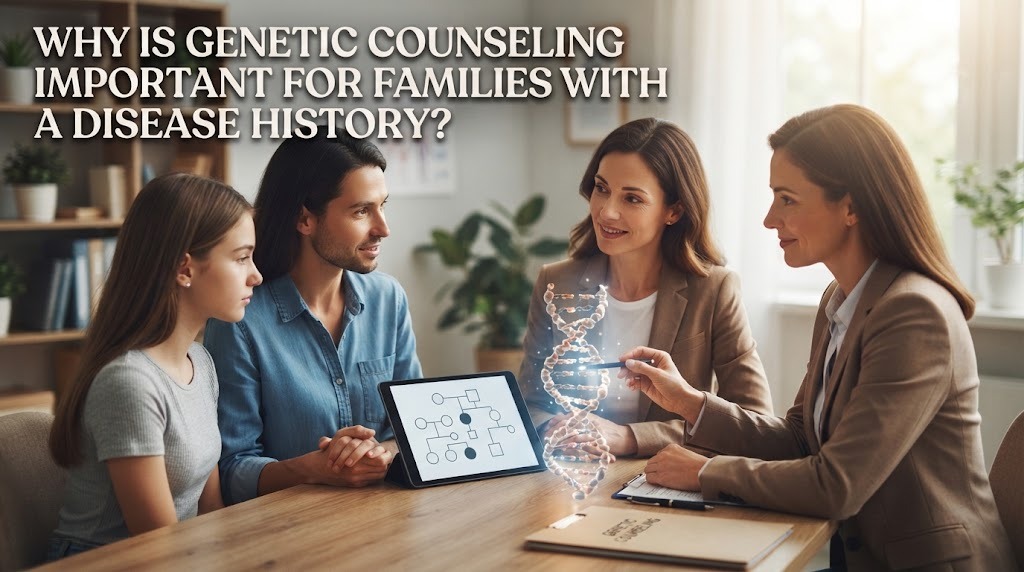
Families with a history of certain diseases may have questions about whether a condition can be passed from one generation to another. Genetic counseling can help families understand how genetic conditions may occur and what their family history could mean. It provides information about inheritance patterns, genetic testing, and possible risks. This process can help families make informed healthcare decisions based on reliable medical information.
WHAT IS GENETIC COUNSELING?
Genetic counseling is a healthcare service that helps people understand genetic conditions and inherited health risks. A genetic counselor may review a person's medical history, family history, and available genetic test results. The information is then used to explain how a particular condition may be inherited or occur.
Genetic counseling does not automatically mean that a person has a genetic disorder. Instead, it helps individuals and families understand whether genetic factors could be relevant to their health. The counselor can also explain the possible benefits and limitations of genetic testing.
WHY DOES FAMILY HISTORY MATTER?
Family history can provide important clues about the possibility of an inherited condition. If several relatives have the same or related medical condition, especially across generations, healthcare professionals may consider whether a genetic factor could be involved. The age when a disease appeared and the relationship between affected family members can also provide useful information.
However, having a family history does not necessarily mean that someone will develop the same condition. Some diseases involve both genetic and environmental factors, while others may occur because of genetic changes that are not inherited. Genetic counseling can help put family history into the correct medical context.
HOW CAN GENETIC COUNSELING HELP ASSESS FAMILY RISK?
Genetic counseling can help families understand whether a known condition may follow a particular inheritance pattern. Some conditions can be inherited through dominant or recessive patterns, while others may involve X-linked, mitochondrial, or more complex genetic factors. Understanding the pattern can provide a clearer picture of how a condition may affect relatives.
A genetic counselor can also discuss who in the family may benefit from further evaluation or testing. This does not mean that every family member needs genetic testing. Testing decisions are generally based on the specific condition, family history, available medical information, and individual circumstances.
WHEN IS GENETIC TESTING CONSIDERED?
Genetic testing may be considered when a family has a known genetic disorder, an unusual pattern of disease, or other findings that suggest a possible inherited condition. Testing can examine specific genes, multiple genes, chromosomes, or broader areas of the genome. The appropriate test depends on the condition being investigated.
Genetic counseling can explain what a test may reveal before testing takes place. It can also help people understand that genetic tests may sometimes produce uncertain results. Therefore, testing is most useful when its purpose, potential outcomes, and limitations are clearly understood.
HOW CAN COUNSELING HELP WITH FAMILY PLANNING?
For families with a known genetic condition, genetic counseling can provide information about reproductive and family planning options. Counselors can explain how a condition may potentially be passed to future children based on the available genetic information. This allows individuals and couples to discuss their options with a better understanding of the relevant risks.
Genetic counseling can also be useful during pregnancy when there is a known family history of a genetic condition. Depending on the situation, healthcare professionals may discuss available screening or diagnostic options. These discussions should be individualized because genetic risks and available testing options differ between conditions.
WHAT ARE THE BENEFITS OF UNDERSTANDING GENETIC RISK?
Understanding genetic risk can help families make more informed decisions about healthcare and medical follow-up. It may also help relatives recognize when discussing their family history with a healthcare professional could be useful. In some situations, identifying a genetic condition can support appropriate monitoring or management.
Genetic information can also reduce uncertainty for families by providing a clearer explanation of how a condition may occur. At the same time, genetic counseling does not guarantee a specific health outcome. Its main purpose is to provide accurate information and support informed decisions.
CONCLUSION
Genetic counseling is important for families with a disease history because it can explain genetic risk, inheritance patterns, and testing options. Family history can provide valuable clues, but it does not always mean that a disease will be inherited or develop in every relative. Genetic counselors can help families understand complex genetic information in a clear and balanced way. Testing may provide additional information when appropriate, although it also has limitations. With professional guidance, families can better understand their genetic history and make informed healthcare decisions.
Tentang Penulis
Gusti Ayu Tita P
Penulis — Universitas STEKOM
Penulis aktif yang berfokus pada isu-isu akademik, teknologi pendidikan, dan pengembangan sumber daya manusia di lingkungan kampus.















