
Why Is Genetic Testing Important for Detecting Genetic Disorders?
Gusti Ayu Tita P
22 September 2026
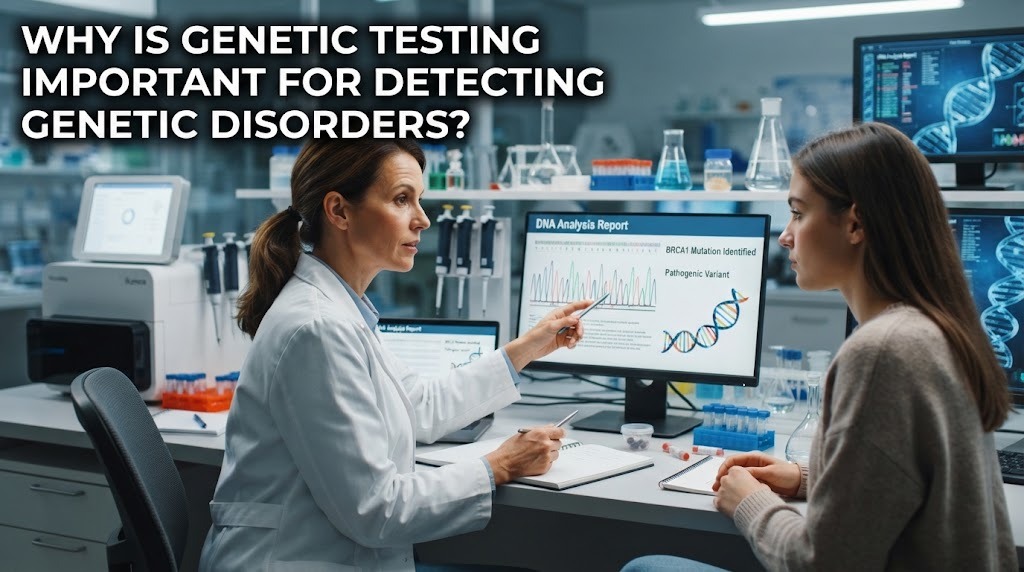
Genetic disorders can sometimes be difficult to identify because their symptoms may resemble other health conditions. Genetic testing provides a way to examine DNA and look for specific changes that may be associated with a genetic condition. It can help healthcare professionals understand the possible cause of certain symptoms or medical problems. Genetic testing can also provide useful information about a person's potential genetic risks and family history.
WHAT IS GENETIC TESTING?
Genetic testing is a medical test used to examine a person's DNA, genes, or chromosomes. It can identify specific genetic changes that may cause or increase the risk of certain conditions. Depending on the purpose of the test, healthcare professionals may analyze a particular gene, multiple genes, or larger parts of the genome.
A genetic test usually requires a biological sample such as blood, saliva, or another type of tissue. The sample is analyzed in a laboratory to identify genetic variants that may be relevant to the person's health. The results should be interpreted carefully because finding a genetic variant does not always mean that a person will develop a particular disorder.
HOW CAN GENETIC TESTING DETECT GENETIC DISORDERS?
Genetic testing can help identify changes in genes or chromosomes that are associated with genetic disorders. Some tests focus on a specific genetic condition when a healthcare professional already has a particular diagnosis in mind. Other tests can examine many genes at once when the cause of symptoms is less clear.
The information obtained from testing can support a medical diagnosis when combined with symptoms, physical examinations, and medical history. In some cases, testing can also help distinguish between conditions that have similar symptoms. However, genetic testing is not appropriate or conclusive for every genetic disorder.
WHY IS EARLY DETECTION IMPORTANT?
Early identification of a genetic disorder can help healthcare professionals understand a person's health needs more clearly. It may allow appropriate monitoring or treatment to begin sooner when effective options are available. Early genetic diagnosis can also help families understand what to expect and discuss available medical support.
Genetic information may also be useful for planning future healthcare. For some conditions, regular monitoring can help healthcare professionals watch for possible complications. The benefits depend on the specific disorder, the accuracy of the test, and the available medical interventions.
CAN GENETIC TESTING HELP FAMILIES?
Genetic testing can provide important information about whether a genetic change may have a hereditary pattern. When a genetic condition is identified, healthcare professionals may recommend testing or counseling for other family members in appropriate situations. This can help relatives better understand their potential genetic risks.
The results can also contribute to family planning discussions. However, genetic results can be complex and may involve emotional, medical, and privacy considerations. Genetic counseling can help individuals and families understand what the results mean and what they do not mean.
WHAT ARE THE LIMITATIONS OF GENETIC TESTING?
Although genetic testing can be valuable, it does not detect every possible genetic disorder. Some tests may identify a genetic variant whose health significance is uncertain. A negative result also does not necessarily mean that a person has no genetic condition because the test may not examine every possible genetic change.
Test results therefore need to be interpreted within the person's overall medical context. Healthcare professionals may consider symptoms, family history, physical findings, and other laboratory results alongside genetic information. A genetic test should not be viewed as a complete prediction of a person's future health.
CONCLUSION
Genetic testing is important because it can help identify genetic changes associated with certain disorders and support more accurate medical evaluation. It can provide useful information about diagnosis, health monitoring, family risks, and genetic counseling. However, genetic testing has limitations and its results require careful interpretation. When a genetic disorder is suspected, discussing testing with a qualified healthcare professional can help determine whether it is appropriate.
Tentang Penulis
Gusti Ayu Tita P
Penulis — Universitas STEKOM
Penulis aktif yang berfokus pada isu-isu akademik, teknologi pendidikan, dan pengembangan sumber daya manusia di lingkungan kampus.















