
Why Should Beach Lovers Understand the Importance of Protecting Marine Ecosystems?
Gusti Ayu Tita P
22 September 2026
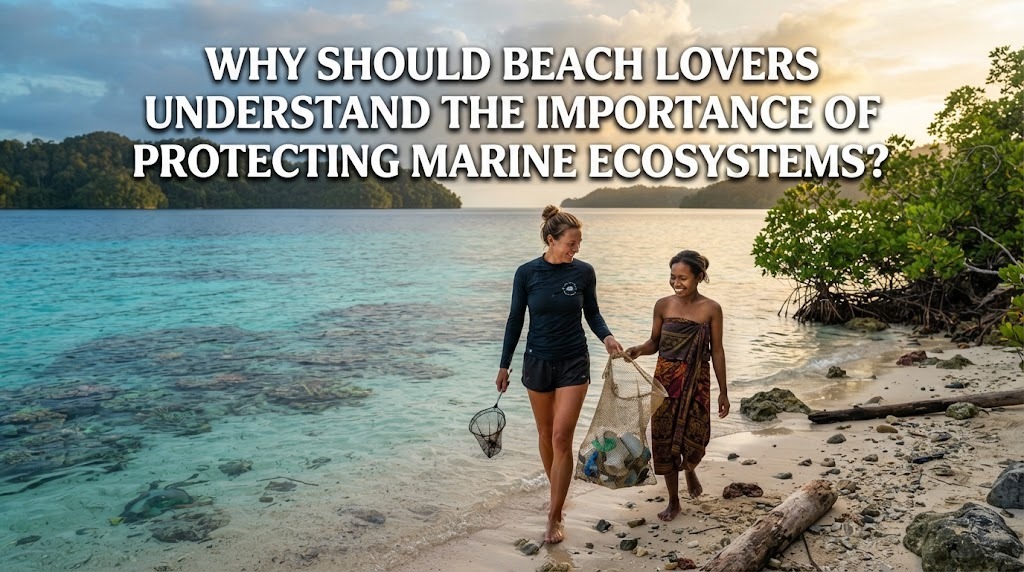
Marine ecosystems are an important part of the natural environment and support many forms of life. Oceans, coral reefs, seagrass areas, mangroves, and coastal waters provide habitats for numerous plants and animals. People who enjoy visiting beaches interact with these environments, directly or indirectly, during their activities. Understanding marine ecosystems can help beach lovers make more responsible choices.
Human activities can affect marine environments in many ways. Plastic waste, pollution, irresponsible tourism activities, and habitat damage can create pressure on coastal ecosystems. Protecting these environments requires cooperation between communities, businesses, governments, and visitors. Beach lovers can contribute by learning about marine life and adopting responsible beach habits.
UNDERSTANDING THE ROLE OF MARINE ECOSYSTEMS
Marine ecosystems provide important functions for both nature and human communities. They support biodiversity and provide habitats for fish, marine plants, coral organisms, and many other species. Coastal ecosystems can also contribute to food resources and local economic activities. Healthy marine ecosystems are therefore important for both environmental and community well-being.
Different marine habitats have different roles. Coral reefs can provide shelter for marine organisms, while mangroves can support coastal habitats and help reduce the impact of waves. Seagrass areas also provide important habitats for various marine species. Understanding these roles can help visitors recognize why coastal environments need to be protected.
PROTECTING MARINE ANIMALS
Marine animals can be affected by pollution and changes in their habitats. Plastic waste can be dangerous when animals accidentally consume it or become trapped in discarded materials. Excessive human activity can also disturb animals in certain coastal areas. Respecting marine wildlife is an important responsibility for beach visitors.
Visitors should avoid touching, feeding, chasing, or disturbing marine animals. When snorkeling or participating in water activities, they should maintain a safe distance from wildlife. Following local guidelines can help reduce unnecessary disturbance. Simple responsible behavior can help visitors enjoy marine environments without causing avoidable harm.
REDUCING PLASTIC AND WATER POLLUTION
Plastic pollution is a major concern for marine environments. Lightweight plastic waste can be carried by wind, rivers, and ocean currents into coastal and marine areas. Once it enters the ocean, some plastic materials can remain for long periods and break down into smaller pieces. Reducing plastic waste is therefore an important step toward protecting marine ecosystems.
Beach visitors can reduce their impact by bringing reusable bottles, containers, and bags. They can also dispose of waste properly and avoid leaving rubbish near the shoreline. Participating in beach cleanup activities can provide additional support for coastal cleanliness. These habits are simple but can contribute to reducing the amount of waste entering marine environments.
RESPECTING CORAL REEFS AND COASTAL HABITATS
Coral reefs and other coastal habitats can be sensitive to physical damage. Visitors participating in snorkeling or diving should avoid standing on, touching, or breaking coral. Even seemingly small contact can cause damage to fragile organisms. Responsible marine tourism requires visitors to observe natural areas without unnecessarily disturbing them.
Tourists should follow instructions from guides and local tourism managers. They should also avoid collecting coral, shells, or other marine organisms where regulations prohibit it. Choosing responsible tourism operators can further support better environmental practices. Respecting these rules helps protect habitats for marine life and future visitors.
SUPPORTING SUSTAINABLE MARINE TOURISM
Tourism can provide economic benefits to coastal communities, but tourism activities should be managed responsibly. Sustainable marine tourism aims to balance visitor experiences with environmental protection and community interests. Beach lovers can support this approach by choosing services that demonstrate environmentally responsible practices.
Visitors can learn about local regulations before participating in marine activities. They can also support local businesses that provide environmentally responsible services and follow conservation guidelines. Sharing accurate information with other travelers can encourage better tourism behavior. Responsible choices can help make tourism more compatible with long-term environmental protection.
BUILDING ENVIRONMENTAL AWARENESS
Learning about marine ecosystems can change the way people behave during beach visits. Awareness helps visitors understand that the ocean is not simply a place for recreation but also a complex living environment. People who understand this connection may become more careful with waste, wildlife, and natural habitats. Environmental awareness can therefore support long-term conservation efforts.
Beach lovers can continue learning through educational programs, documentaries, conservation groups, and local information centers. They can also share useful knowledge with friends and family. Young people can be encouraged to participate in environmental activities from an early age. When awareness becomes part of everyday behavior, protecting marine ecosystems can become a shared responsibility.
CONCLUSION
Understanding the importance of marine ecosystems can help beach lovers become more responsible visitors. Protecting marine animals, reducing plastic pollution, respecting coral reefs, supporting sustainable tourism, and increasing environmental awareness are important steps. Healthy marine ecosystems depend partly on responsible human behavior. By making thoughtful choices, beach lovers can help preserve coastal and marine environments for future generations.
Tentang Penulis
Gusti Ayu Tita P
Penulis — Universitas STEKOM
Penulis aktif yang berfokus pada isu-isu akademik, teknologi pendidikan, dan pengembangan sumber daya manusia di lingkungan kampus.















