
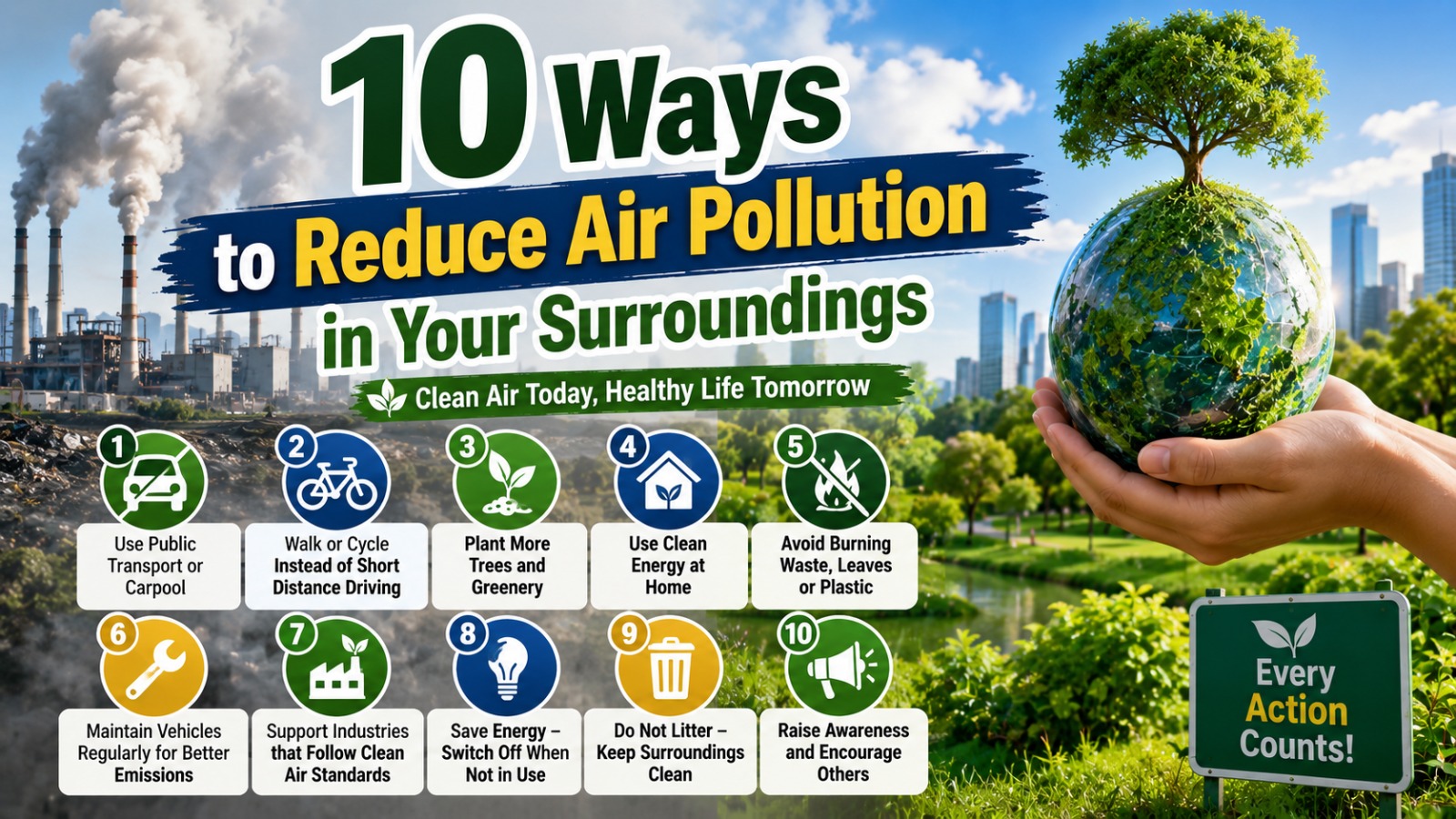
Air pollution has become one of the most serious environmental problems affecting human health and the planet. Smoke from vehicles, industrial emissions, burning waste, and household activities contribute to poor air quality every day. Exposure to polluted air can increase the risk of respiratory diseases, allergies, and other health problems.
Reducing air pollution starts with simple actions that individuals and communities can practice consistently. By adopting environmentally friendly habits, people can help create cleaner and healthier surroundings for everyone.
WHY AIR POLLUTION IS DANGEROUS
Air pollution affects both the environment and human well-being. Harmful particles and toxic gases released into the atmosphere can damage the lungs, heart, and immune system. In addition, air pollution contributes to climate change, acid rain, and environmental degradation.
Children, elderly people, and individuals with respiratory conditions are especially vulnerable to poor air quality. Therefore, taking action to reduce pollution is essential for maintaining public health and environmental sustainability.
1. USE PUBLIC TRANSPORTATION
Using buses, trains, or other forms of public transportation can reduce the number of private vehicles on the road. Fewer vehicles mean lower carbon emissions and cleaner air in urban areas.
Carpooling and ride-sharing are also effective ways to decrease fuel consumption and air pollution.
2. WALK OR RIDE A BICYCLE
For short distances, walking or cycling is a healthier and more eco-friendly alternative to driving. These activities produce no harmful emissions and also improve physical fitness.
Creating bicycle-friendly environments can encourage more people to choose sustainable transportation.
3. PLANT MORE TREES
Trees absorb carbon dioxide and release oxygen into the atmosphere. They also help filter harmful pollutants and improve air quality naturally.
Planting trees in neighborhoods, schools, and public spaces can create greener and healthier environments.
4. AVOID BURNING GARBAGE
Burning trash releases toxic chemicals and smoke into the air. Plastic waste, in particular, can produce dangerous pollutants that harm both humans and nature.
Instead of burning waste, people should recycle, compost organic materials, and dispose of garbage properly.
5. SAVE ENERGY AT HOME
Electricity production often involves burning fossil fuels that contribute to air pollution. Reducing energy consumption can lower emissions from power plants.
Simple actions such as turning off unused lights, using energy-efficient appliances, and unplugging electronic devices can make a positive impact.
6. USE ENVIRONMENTALLY FRIENDLY PRODUCTS
Some household products contain chemicals that release harmful substances into the air. Choosing eco-friendly cleaning products, paints, and sprays can help reduce indoor and outdoor pollution.
Natural alternatives are often safer for both human health and the environment.
7. MAINTAIN VEHICLES REGULARLY
Poorly maintained vehicles produce more harmful emissions. Regular engine checks, proper tire pressure, and timely oil changes can improve fuel efficiency and reduce air pollution.
Using cleaner fuels can also help minimize environmental impact.
8. REDUCE THE USE OF SINGLE-USE PLASTICS
Plastic production and disposal contribute to air pollution through manufacturing processes and waste burning. Replacing disposable plastics with reusable items helps reduce pollution levels.
Reusable bags, bottles, and containers are practical alternatives for daily use.
9. SUPPORT CLEAN ENERGY SOURCES
Renewable energy sources such as solar, wind, and hydroelectric power produce less pollution compared to fossil fuels. Supporting clean energy initiatives can help reduce harmful emissions globally.
Communities and businesses can also adopt sustainable energy solutions to create a greener future.
10. SPREAD ENVIRONMENTAL AWARENESS
Educating others about the importance of clean air can inspire collective action. Schools, social media, and community programs can help spread information about reducing pollution and protecting the environment.
When more people participate in environmental protection efforts, the impact becomes more significant.
CONCLUSION
Air pollution is a serious issue that affects human health, ecosystems, and the climate. However, simple daily actions can help reduce pollution and improve air quality in surrounding environments.
Using public transportation, planting trees, saving energy, and promoting environmental awareness are effective ways to create a cleaner and healthier world. By working together and adopting sustainable habits, communities can protect the environment for present and future generations.
About the Author
Gusti Ayu Tita P
Author — STEKOM University
An active author focused on academic issues, educational technology, and human resource development in the campus environment.