A Complete Guide to Starting a Dropshipping Business From Scratch
Gusti Ayu Tita P
31 Agustus 2026
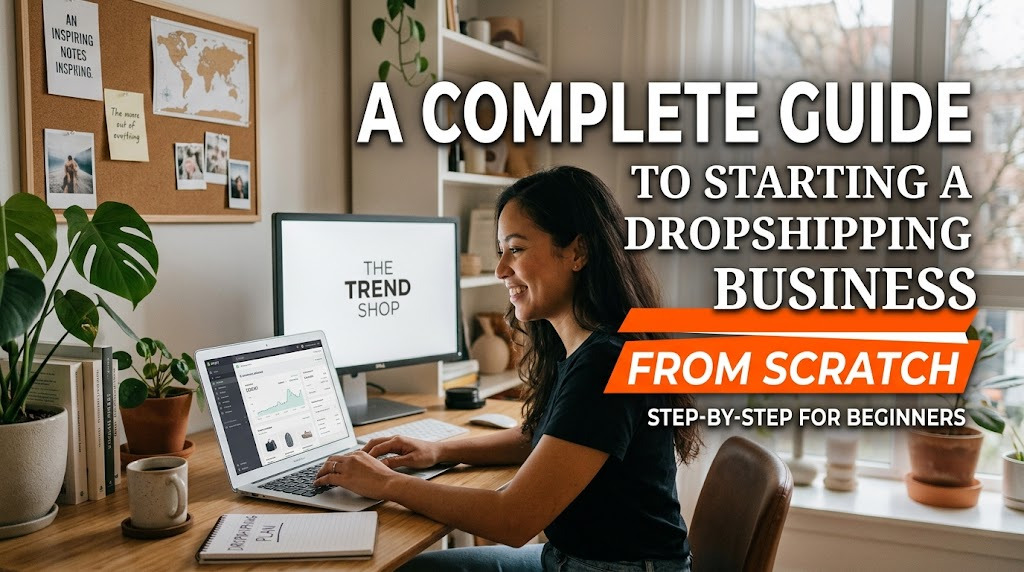
Starting a dropshipping business from scratch can be an accessible way to learn about online commerce without purchasing large amounts of inventory upfront. In this business model, the supplier generally stores the products and handles fulfillment, while the dropshipper focuses on product selection, marketing, customer service, and order management. Although the setup can be simpler than traditional retail, a successful business still requires research, planning, and consistent effort. Beginners should build the business step by step instead of expecting immediate results.
UNDERSTAND THE DROPSHIPPING MODEL
Before starting, understand how the dropshipping process works. The dropshipper lists products online and promotes them to potential customers. When a customer places an order, the seller forwards the order details to the supplier, who then prepares and ships the product according to the agreed arrangement. The dropshipper earns from the difference between the selling price and the total costs involved in fulfilling the order.
Because the seller does not normally hold inventory, communication with suppliers is extremely important. Product availability, prices, variations, processing times, and shipping information should be checked regularly. Beginners should also understand how returns, refunds, damaged products, and order changes are handled. Understanding the entire process before launching can help prevent avoidable operational problems.
RESEARCH PRODUCTS AND TARGET CUSTOMERS
The next step is finding products with realistic market potential. Research customer demand, competition, product quality, supplier prices, shipping costs, and potential profit margins. Marketplaces, social media, customer reviews, and other online sources can provide useful information for product research. Avoid choosing products only because they are temporarily viral.
It is also important to define a target customer. Determine who is most likely to need the products and what problems or needs the products address. A focused audience makes it easier to create relevant content and promotional campaigns. Product selection should be based on both customer demand and the ability to build a sustainable business around the product.
FIND A RELIABLE SUPPLIER
A supplier is one of the most important partners in a dropshipping business. Look for suppliers with consistent product quality, accurate inventory information, reasonable processing times, reliable shipping, and good communication. Compare multiple suppliers before making a decision instead of choosing the cheapest option immediately. Reviews and supplier policies can provide useful information about their reliability.
Whenever possible, order a sample product before promoting an item extensively. Check the product itself, packaging, shipping process, and delivery time. Ask the supplier about returns, damaged products, cancellations, and inventory updates. Testing and evaluating a supplier can reduce the risk of problems after customers begin placing orders.
BUILD AND PROMOTE YOUR STORE
After selecting products and suppliers, create an online store through a suitable marketplace or e-commerce platform. Use clear product images, accurate descriptions, informative titles, complete specifications, and transparent prices. Make sure the information shown to customers matches the actual products supplied. Keep product listings updated when supplier prices, variations, or inventory change.
Once the store is ready, begin promoting the products. Use suitable social media platforms, marketplace features, useful content, and carefully planned advertising. Focus on explaining product benefits and addressing customer needs rather than relying only on direct sales messages. Consistent and relevant promotion can help a new store gain visibility and attract potential customers.
MANAGE ORDERS AND IMPROVE THE BUSINESS
Good order management is essential once customers begin purchasing. Check product variations, quantities, customer information, payment status, and supplier availability before processing orders. Monitor shipping information and communicate with customers when important updates are available. Accurate management can reduce mistakes and create a better customer experience.
The business should also be evaluated regularly. Track sales, product views, customer feedback, marketing costs, supplier performance, and profit margins. If a product performs poorly, review its price, presentation, target market, and supplier before deciding whether to replace it. Continuous evaluation allows beginners to improve their strategy based on actual business results.
CONCLUSION
Starting a dropshipping business from scratch involves several connected steps, including understanding the business model, researching products and customers, finding reliable suppliers, building and promoting a store, and managing orders carefully. Beginners do not need to build a large catalog immediately. Starting with a small selection can make it easier to test products, understand customers, and control expenses. With careful research, consistent customer service, and regular performance evaluation, a dropshipping business can be developed gradually and more sustainably.
About the Author
Gusti Ayu Tita P
Author — STEKOM University
An active author focused on academic issues, educational technology, and human resource development in the campus environment.