Building Responsibility in the Younger Generation
Gusti Ayu Tita P
22 Juli 2026
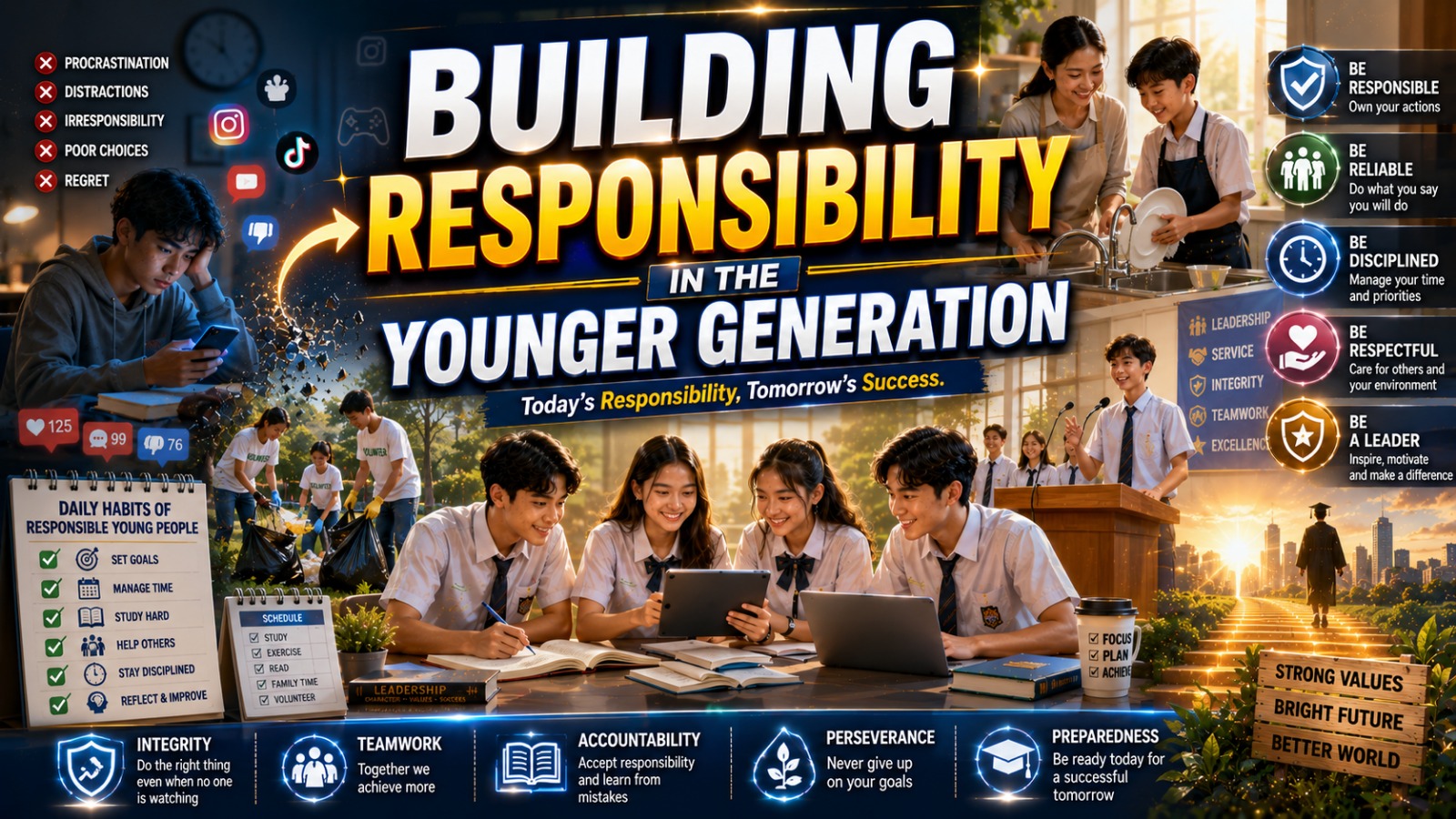
Responsibility is one of the most important values that should be developed in the younger generation. In today’s fast-changing digital era, young people face many challenges such as social media influence, academic pressure, and changing social environments. Without a strong sense of responsibility, teenagers may struggle to make wise decisions, manage their time, and fulfill their duties properly.
Building responsibility helps young people become disciplined, independent, and trustworthy individuals. Responsible behavior also supports academic achievement, emotional growth, and healthy social relationships. Therefore, parents, schools, and communities must work together to teach responsibility through character education and daily habits.
WHAT IS RESPONSIBILITY?
Responsibility is the ability to understand and fulfill duties, obligations, and commitments properly. Responsible individuals are willing to accept the consequences of their actions and make efforts to solve problems wisely.
Responsibility is not only about completing tasks but also about showing honesty, discipline, and accountability in everyday life.
WHY RESPONSIBILITY IS IMPORTANT FOR YOUNG PEOPLE?
Responsibility helps young people develop positive attitudes and essential life skills. Teenagers who understand responsibility are more likely to become confident and reliable individuals.
Some important benefits of responsibility include:
- Improving self-discipline
- Strengthening decision-making skills
- Building independence
- Increasing self-confidence
- Supporting academic success
- Developing leadership abilities
Responsible young people are also more prepared to face future challenges in education, work, and society.
CHALLENGES OF BUILDING RESPONSIBILITY IN THE DIGITAL ERA
Modern technology provides many opportunities for learning and communication, but it also creates challenges that may reduce responsibility among young people.
1.SOCIAL MEDIA DISTRACTIONS
Excessive use of social media can reduce focus, productivity, and time management skills.
2.DIGITAL ADDICTION
Too much screen time may affect discipline and reduce motivation for important responsibilities.
3.INSTANT GRATIFICATION
Many young people become used to getting instant results without understanding the value of effort and patience.
4.PEER PRESSURE
Friends and online trends can influence teenagers to ignore responsibilities or make poor decisions.
Because of these challenges, responsibility education is more important than ever.
EFFECTIVE WAYS TO BUILD RESPONSIBILITY
There are several effective strategies to teach responsibility to the younger generation.
1. TEACH THROUGH DAILY ROUTINES
Simple habits such as cleaning personal spaces, completing homework, and managing schedules help build responsibility gradually.
2. GIVE CLEAR EXPECTATIONS
Young people need clear rules and guidance to understand their duties and responsibilities.
3. ENCOURAGE INDEPENDENCE
Allowing teenagers to solve problems and make decisions helps them develop accountability and confidence.
4. BECOME A POSITIVE ROLE MODEL
Children often imitate adult behavior. Parents and teachers should demonstrate responsibility in daily life.
5. GIVE POSITIVE APPRECIATION
Recognizing responsible behavior motivates young people to continue practicing positive habits.
6. TEACH TIME MANAGEMENT
Helping teenagers organize priorities and schedules improves discipline and productivity.
7. INTRODUCE DIGITAL RESPONSIBILITY
Young people should learn how to use technology wisely and responsibly in online environments.
THE ROLE OF FAMILY IN DEVELOPING RESPONSIBILITY
Family is the first place where children learn values and behavior. Parents play a major role in teaching responsibility through communication, routines, and guidance.
Parents can build responsibility by:
- Assigning household tasks
- Teaching discipline consistently
- Encouraging honesty
- Monitoring gadget use
- Supporting emotional development
A positive family environment helps children grow into responsible and confident individuals.
THE ROLE OF SCHOOLS IN CHARACTER DEVELOPMENT
Schools also have an important role in building responsibility among students. Teachers guide students not only academically but also socially and morally.
Schools can strengthen responsibility through:
- Group projects
- Leadership programs
- Classroom discipline
- Extracurricular activities
- Community service programs
These activities help students learn accountability, teamwork, and commitment.
DIGITAL RESPONSIBILITY IN MODERN SOCIETY
In today’s digital world, responsibility must also include ethical online behavior. Young people should understand how to use technology respectfully and safely.
Important aspects of digital responsibility include:
- Respecting others online
- Avoiding cyberbullying
- Protecting personal privacy
- Managing screen time wisely
- Sharing accurate information
Teaching digital responsibility helps young people become responsible digital citizens.
THE CONNECTION BETWEEN RESPONSIBILITY AND FUTURE SUCCESS
Responsibility is closely connected to personal and professional success. Individuals who are responsible are usually more organized, trustworthy, and capable of handling challenges effectively.
Responsible young people are more likely to:
- Achieve academic goals
- Build strong relationships
- Develop leadership skills
- Maintain positive habits
- Succeed in future careers
Responsibility also helps individuals become productive members of society.
EFFECTIVE STRATEGIES FOR SCHOOLS AND COMMUNITIES
Schools and communities can support responsibility development through various programs and activities.
1.COMMUNITY SERVICE ACTIVITIES
Volunteer programs help young people understand teamwork and social responsibility.
2.LEADERSHIP TRAINING
Leadership activities teach accountability, confidence, and communication skills.
3.TEAMWORK PROJECTS
Collaborative activities help students learn commitment and cooperation.
4.CHARACTER EDUCATION PROGRAMS
Schools can integrate responsibility values into daily learning activities.
CONCLUSION
Building responsibility in the younger generation is essential for creating disciplined, independent, and trustworthy individuals. Responsibility helps young people develop important life skills such as self-discipline, decision-making, and leadership.
With support from families, schools, and communities, responsibility education can guide young people toward becoming successful, ethical, and productive individuals in the digital era.
About the Author
Gusti Ayu Tita P
Author — STEKOM University
An active author focused on academic issues, educational technology, and human resource development in the campus environment.