
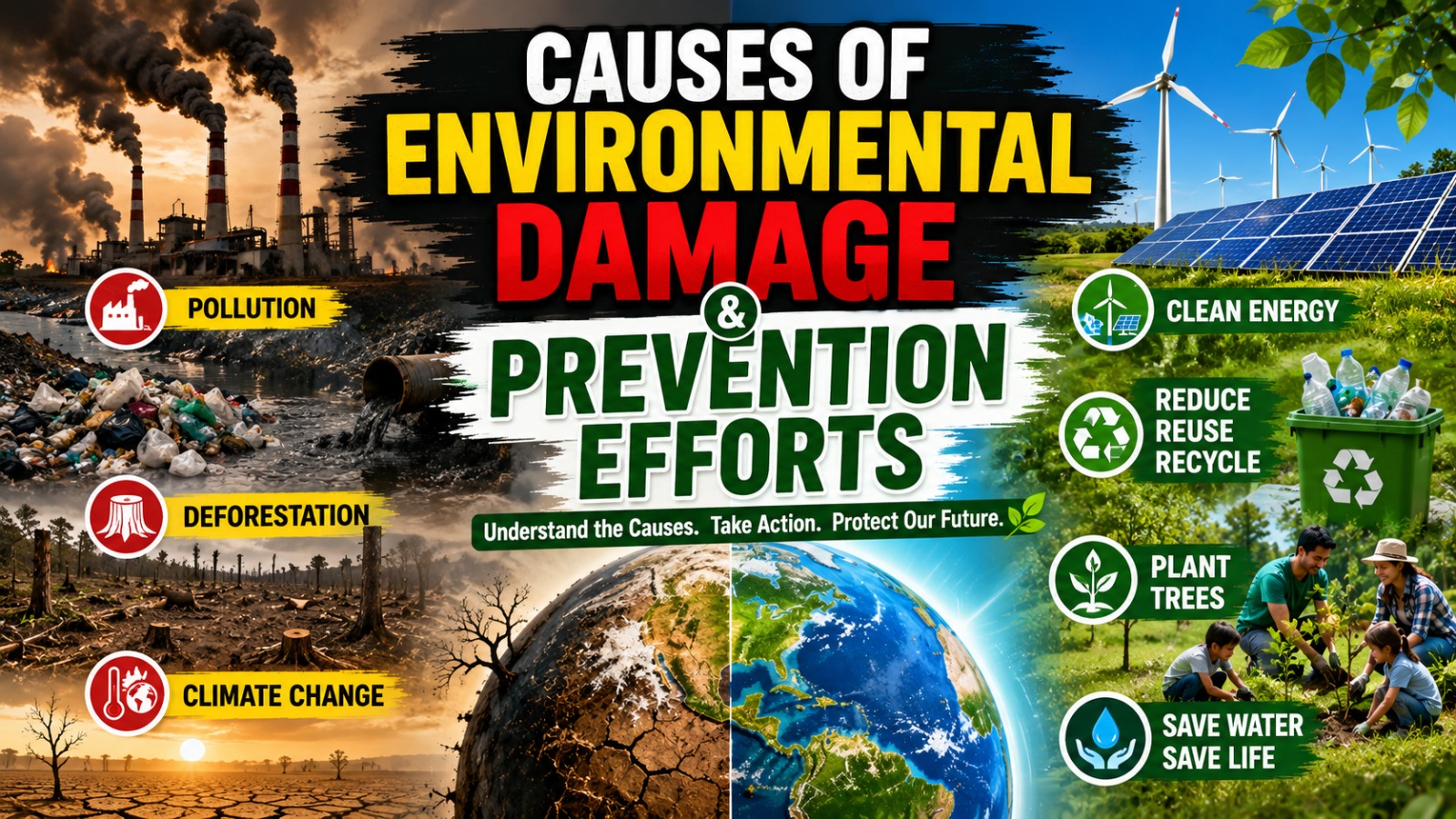
Environmental damage has become one of the most serious global challenges in modern times. Rapid industrial development, population growth, and irresponsible human activities have caused significant harm to nature and ecosystems. Problems such as air pollution, deforestation, water contamination, climate change, and excessive waste production continue to threaten environmental sustainability and human health.
Environmental damage not only affects nature but also impacts economic stability, public health, and the quality of life for future generations. Therefore, understanding the causes of environmental damage and implementing effective prevention efforts are essential for protecting the planet and maintaining ecological balance.
UNDERSTANDING ENVIRONMENTAL DAMAGE
Environmental damage refers to the destruction or decline of environmental quality caused by natural factors or human activities. This damage can affect land, water, air, forests, oceans, and biodiversity.
Human activities are considered the primary cause of most modern environmental problems. Unsustainable exploitation of natural resources and pollution have accelerated environmental degradation worldwide.
Healthy ecosystems are necessary for maintaining clean air, freshwater supplies, food production, and climate stability. When the environment is damaged, both humans and wildlife suffer serious consequences.
MAJOR CAUSES OF ENVIRONMENTAL DAMAGE
Several factors contribute significantly to environmental destruction. Understanding these causes can help society develop more effective prevention strategies.
Deforestation
Deforestation is one of the leading causes of environmental damage. Forests are often cleared for agriculture, urban development, mining, and industrial activities. Excessive tree cutting destroys wildlife habitats, reduces biodiversity, and increases carbon dioxide levels in the atmosphere.
Forests also play a crucial role in regulating climate, preventing soil erosion, and maintaining water cycles. Losing forest areas can result in floods, landslides, and climate instability.
Pollution
Pollution occurs when harmful substances contaminate the environment. Air pollution from factories, vehicles, and burning fossil fuels can damage human health and contribute to climate change.
Water pollution caused by industrial waste, plastic debris, and chemicals threatens marine ecosystems and freshwater supplies. Soil pollution from pesticides and hazardous waste also reduces land productivity and harms living organisms.
Excessive Waste Production
Growing populations and modern lifestyles have increased waste production significantly. Plastic waste, electronic waste, and household garbage often accumulate in landfills, rivers, and oceans.
Improper waste management can cause environmental contamination, flooding, and health problems. Non-biodegradable materials such as plastic can remain in the environment for hundreds of years.
Climate Change
Climate change is closely connected to greenhouse gas emissions from human activities. Burning fossil fuels releases carbon dioxide and other gases that trap heat in the atmosphere.
Global warming can lead to rising sea levels, extreme weather conditions, droughts, and ecosystem disruptions. Climate change also threatens food security and water availability.
Overexploitation of Natural Resources
Excessive mining, fishing, logging, and resource extraction can damage ecosystems and reduce biodiversity. Unsustainable exploitation places enormous pressure on natural resources and weakens environmental resilience.
THE IMPACT OF ENVIRONMENTAL DAMAGE
Environmental damage has wide-ranging consequences for both humans and nature.
Health Problems
Polluted air and water can cause respiratory diseases, infections, and other serious health conditions. Environmental contamination negatively affects millions of people worldwide.
Loss of Biodiversity
Habitat destruction and pollution can lead to species extinction and ecosystem imbalance. Biodiversity loss weakens natural ecosystems and reduces environmental stability.
Natural Disasters
Deforestation, climate change, and environmental degradation increase the risk of floods, landslides, droughts, and other natural disasters.
Economic Losses
Environmental damage can reduce agricultural productivity, harm tourism industries, and increase healthcare costs. Natural resource depletion also affects long-term economic sustainability.
PREVENTION EFFORTS TO PROTECT THE ENVIRONMENT
Preventing environmental damage requires cooperation from governments, industries, communities, and individuals. Sustainable practices and environmental awareness are essential for protecting natural resources.
Promote Reforestation and Forest Conservation
Planting trees and protecting forests help restore ecosystems, absorb carbon dioxide, and prevent soil erosion. Governments and organizations should strengthen forest protection policies and support conservation programs.
Reduce Pollution
Industries and individuals should minimize pollution by using cleaner technologies, reducing emissions, and managing waste responsibly. Recycling programs and environmentally friendly products can also help reduce pollution levels.
Apply the 3R Method
The 3R method — Reduce, Reuse, and Recycle — is highly effective for minimizing waste production and protecting the environment. Communities should encourage responsible consumption and sustainable waste management practices.
Use Renewable Energy
Renewable energy sources such as solar, wind, and hydropower can reduce dependence on fossil fuels and lower greenhouse gas emissions. Clean energy supports long-term environmental sustainability.
Increase Environmental Education
Environmental education helps people understand the importance of protecting nature and encourages responsible behavior. Schools, communities, and media platforms should continue promoting environmental awareness campaigns.
Support Sustainable Development
Sustainable development focuses on meeting present needs without harming future generations. Governments and businesses should adopt environmentally friendly policies that balance economic growth with environmental protection.
THE ROLE OF COMMUNITIES IN ENVIRONMENTAL PROTECTION
Communities play a major role in preventing environmental damage. Public participation in clean-up activities, recycling programs, tree planting, and environmental campaigns can create positive environmental changes.
When communities work together, they can improve local environmental conditions and encourage sustainable lifestyles. Community involvement also strengthens environmental responsibility and public awareness.
CONCLUSION
Environmental damage is caused mainly by human activities such as deforestation, pollution, excessive waste production, climate change, and overexploitation of natural resources. These problems threaten ecosystems, human health, and global sustainability.
Preventing environmental damage requires collective action through conservation, pollution reduction, renewable energy use, environmental education, and sustainable living practices. By working together to protect nature, society can create a cleaner, healthier, and more sustainable future for generations to come.
About the Author
Gusti Ayu Tita P
Author — STEKOM University
An active author focused on academic issues, educational technology, and human resource development in the campus environment.