Challenges Faced by Female Migrant Workers and How to Overcome Them
Gusti Ayu Tita P
10 Juli 2026
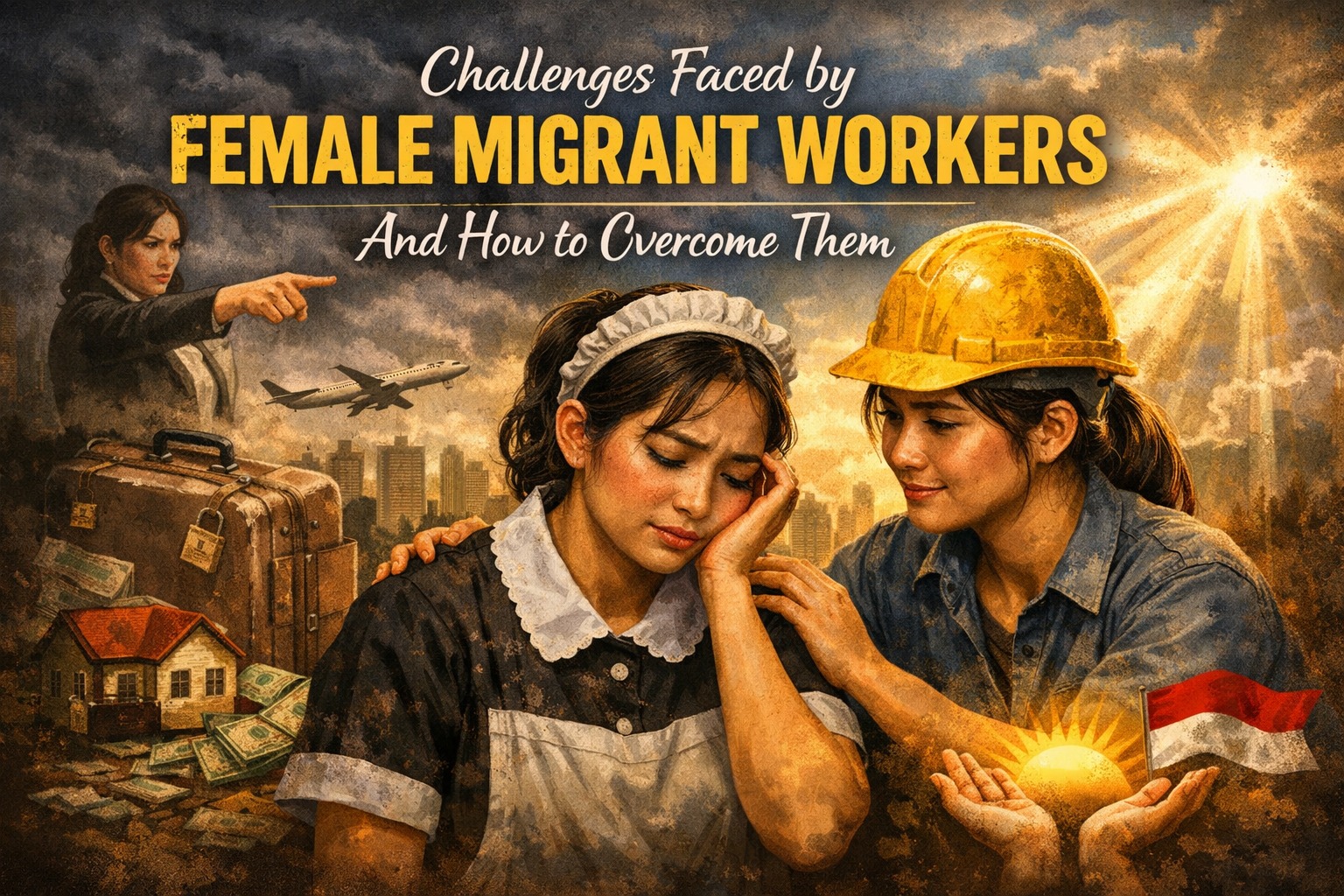
Female migrant workers play an important role in supporting families and strengthening the global workforce. Many women leave their hometowns to seek better opportunities abroad, hoping to improve their financial conditions and provide a brighter future for their loved ones. However, behind the promise of higher income, female migrant workers often face various social, emotional, and professional challenges.
Understanding these obstacles and learning effective ways to overcome them can help female migrant workers achieve success while protecting their well-being.
THE MOST COMMON CHALLENGES FACED BY FEMALE MIGRANT WORKERS
Female migrant workers frequently encounter difficult situations when adapting to life and work in another country. These challenges can affect their physical health, mental condition, and career development.
LANGUAGE AND COMMUNICATION BARRIERS
One of the biggest obstacles is language differences. Many female migrant workers struggle to communicate with employers, coworkers, or local communities. Miscommunication can lead to workplace mistakes, misunderstandings, and emotional stress.
To overcome this issue, migrant workers should take basic language courses before departure. Using language-learning applications and practicing daily conversations can also improve communication skills over time.
HOMESICKNESS AND EMOTIONAL STRESS
Living far away from family can create feelings of loneliness and sadness. Many female migrant workers experience homesickness, especially during holidays or important family events.
Maintaining regular communication with family through video calls and social media can help reduce emotional stress. Building friendships with fellow migrant workers also creates a supportive environment abroad.
WORKPLACE EXPLOITATION
Some female migrant workers face unfair treatment such as excessive working hours, low wages, or lack of legal protection. In severe cases, workers may experience verbal or physical abuse.
To avoid exploitation, workers should understand employment contracts before leaving their home country. Seeking help from legal organizations, embassies, or labor protection agencies is essential if problems occur.
CULTURAL DIFFERENCES
Adapting to a new culture can be difficult. Different traditions, food, lifestyles, and social expectations may create confusion and discomfort.
Female migrant workers can overcome cultural challenges by learning about local customs before moving abroad. Respecting cultural differences while maintaining personal values helps create smoother relationships with employers and communities.
HEALTH AND SAFETY RISKS
Long working hours and stressful environments may affect physical and mental health. Some workers also lack access to healthcare services or proper rest.
Maintaining a healthy lifestyle is important. Female migrant workers should prioritize balanced nutrition, enough sleep, and regular medical checkups whenever possible.
EFFECTIVE WAYS TO OVERCOME MIGRANT WORKER CHALLENGES
Although the challenges are significant, many female migrant workers successfully build stable and rewarding lives abroad by developing strong coping strategies.
IMPROVING EDUCATION AND SKILLS
Education and training provide better job opportunities and increase confidence. Learning professional skills such as caregiving, hospitality, or communication can improve career prospects and income levels.
BUILDING A SUPPORT NETWORK
Joining migrant worker communities or support groups can help workers share experiences and advice. Emotional support from trusted friends often reduces stress and increases motivation.
UNDERSTANDING LEGAL RIGHTS
Knowledge about labor laws and worker rights is extremely important. Female migrant workers should keep copies of important documents and emergency contacts at all times.
MANAGING FINANCES WISELY
Financial planning helps migrant workers achieve long-term goals. Saving money, avoiding unnecessary debt, and investing in education or small businesses can create a more secure future.
THE IMPORTANCE OF FAMILY SUPPORT
Family encouragement plays a major role in the success of female migrant workers. Emotional support from loved ones gives workers strength during difficult situations. Families should maintain positive communication and appreciate the sacrifices made by migrant workers abroad.
CONCLUSION
Female migrant workers contribute greatly to their families and society, but their journey is often filled with challenges. Language barriers, emotional stress, workplace exploitation, cultural adaptation, and health risks are common issues they face. However, through education, legal awareness, emotional support, and financial planning, these obstacles can be overcome successfully.
By empowering female migrant workers with knowledge and support, they can build safer, more successful, and more meaningful lives abroad.
About the Author
Gusti Ayu Tita P
Author — STEKOM University
An active author focused on academic issues, educational technology, and human resource development in the campus environment.