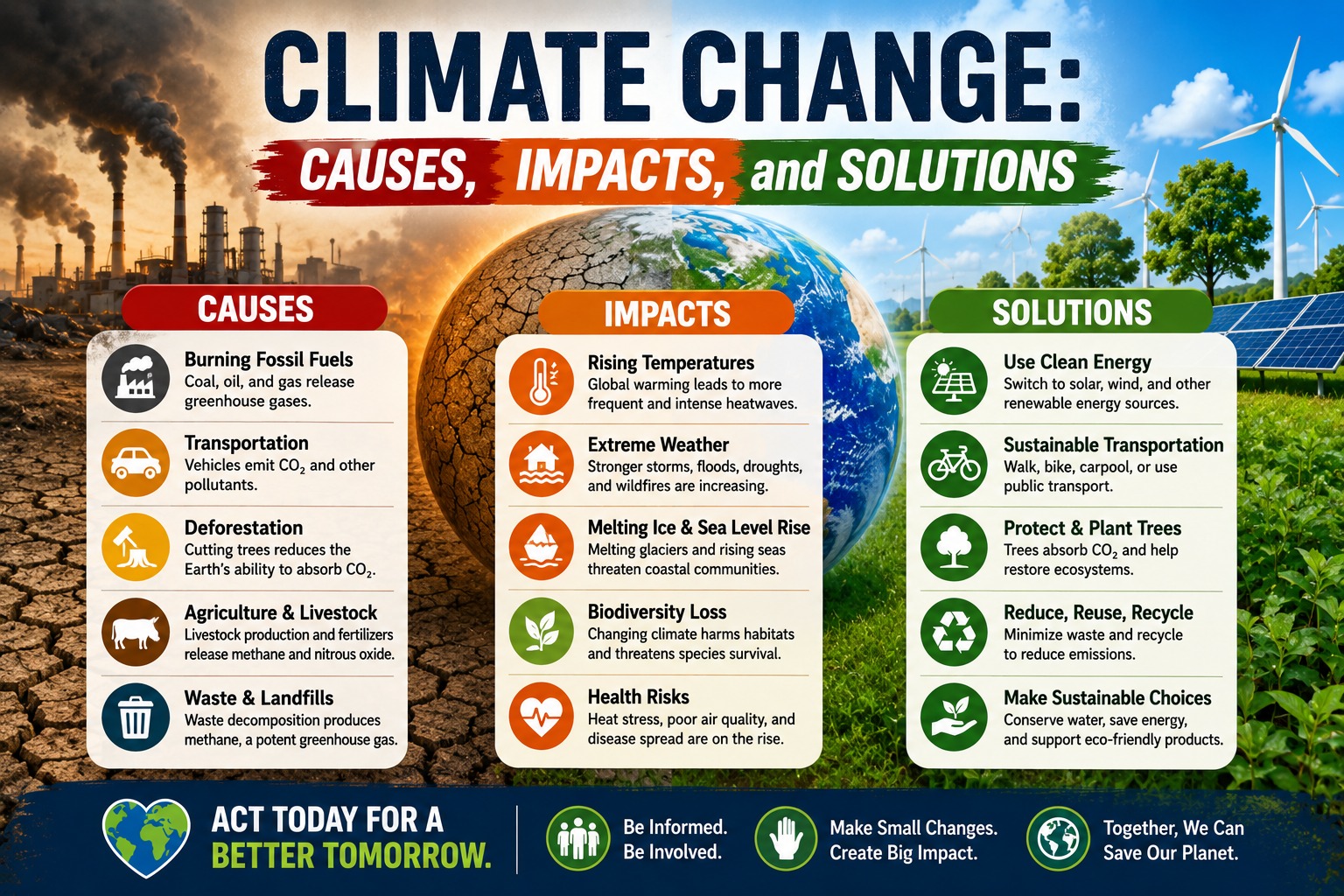
Climate change has become one of the most serious global challenges of the modern era. Rising temperatures, extreme weather events, melting glaciers, and changing ecosystems are clear signs that the Earth’s climate is changing rapidly. Human activities, especially those related to industrialization and fossil fuel consumption, play a major role in accelerating climate change.
Understanding the causes, impacts, and solutions of climate change is essential for protecting the environment and ensuring a sustainable future for the next generations.
WHAT IS CLIMATE CHANGE?
Climate change refers to long-term changes in temperature, weather patterns, and environmental conditions on Earth. Although natural climate variations have occurred throughout history, current climate change is happening much faster due to human activities.
The increase in greenhouse gases such as carbon dioxide and methane traps heat in the atmosphere, causing global temperatures to rise. This phenomenon is commonly known as global warming.
MAIN CAUSES OF CLIMATE CHANGE
Several human activities contribute significantly to climate change and environmental degradation.
BURNING FOSSIL FUELS
The use of coal, oil, and natural gas for electricity, transportation, and industrial activities releases large amounts of carbon dioxide into the atmosphere. Fossil fuel combustion is one of the leading causes of greenhouse gas emissions worldwide.
DEFORESTATION
Forests absorb carbon dioxide and help regulate the climate. However, massive deforestation for agriculture, urban development, and logging reduces the Earth’s ability to absorb greenhouse gases.
INDUSTRIAL POLLUTION
Factories and industrial processes release harmful gases and pollutants into the air. Rapid industrial growth without proper environmental regulations increases climate-related problems.
AGRICULTURAL ACTIVITIES
Livestock farming and certain agricultural practices produce methane and nitrous oxide, which are powerful greenhouse gases that contribute to global warming.
EXCESSIVE WASTE
Poor waste management, especially plastic waste and landfill accumulation, can release harmful gases into the environment and worsen pollution levels.
IMPACTS OF CLIMATE CHANGE
Climate change affects ecosystems, economies, and human health in many ways.
RISING GLOBAL TEMPERATURES
Average global temperatures continue to increase, leading to hotter weather conditions and longer heatwaves in many regions.
EXTREME WEATHER EVENTS
Climate change increases the frequency and intensity of natural disasters such as floods, hurricanes, droughts, and wildfires.
MELTING ICE AND SEA LEVEL RISE
Polar ice caps and glaciers are melting due to rising temperatures. This contributes to higher sea levels, threatening coastal communities and ecosystems.
LOSS OF BIODIVERSITY
Many plants and animals struggle to adapt to changing environmental conditions. Climate change can lead to habitat destruction and species extinction.
HEALTH PROBLEMS
Air pollution, heatwaves, and changing disease patterns can negatively affect human health. Climate change may increase respiratory illnesses, dehydration, and food insecurity.
SOLUTIONS TO CLIMATE CHANGE
Although climate change is a major challenge, various solutions can help reduce its impact and support environmental sustainability.
USE RENEWABLE ENERGY
Switching to clean energy sources such as solar, wind, and hydroelectric power can reduce dependence on fossil fuels and lower greenhouse gas emissions.
PLANT MORE TREES
Reforestation and tree planting help absorb carbon dioxide from the atmosphere and restore damaged ecosystems.
REDUCE ENERGY CONSUMPTION
Saving electricity through energy-efficient appliances, LED lighting, and responsible energy use can reduce carbon emissions.
SUPPORT SUSTAINABLE TRANSPORTATION
Using public transportation, cycling, walking, and electric vehicles can help decrease air pollution and fuel consumption.
IMPROVE WASTE MANAGEMENT
Recycling, composting, and reducing single-use plastics can minimize pollution and reduce harmful environmental impacts.
RAISE ENVIRONMENTAL AWARENESS
Education and public awareness campaigns encourage people to adopt eco-friendly habits and support environmental protection efforts.
THE ROLE OF GOVERNMENTS AND COMMUNITIES
Governments, businesses, and communities all have important roles in addressing climate change. Strong environmental policies, international cooperation, and sustainable development programs can support long-term climate solutions.
Communities can also contribute by participating in environmental campaigns, conserving resources, and supporting green initiatives.
CONCLUSION
Climate change is a global issue caused largely by human activities such as fossil fuel use, deforestation, and pollution. Its impacts include rising temperatures, extreme weather, biodiversity loss, and health risks.
However, solutions such as renewable energy, reforestation, sustainable transportation, and environmental education can help reduce climate change effects. Through cooperation and responsible action, society can create a cleaner, safer, and more sustainable future for the planet.
About the Author
Gusti Ayu Tita P
Author — STEKOM University
An active author focused on academic issues, educational technology, and human resource development in the campus environment.